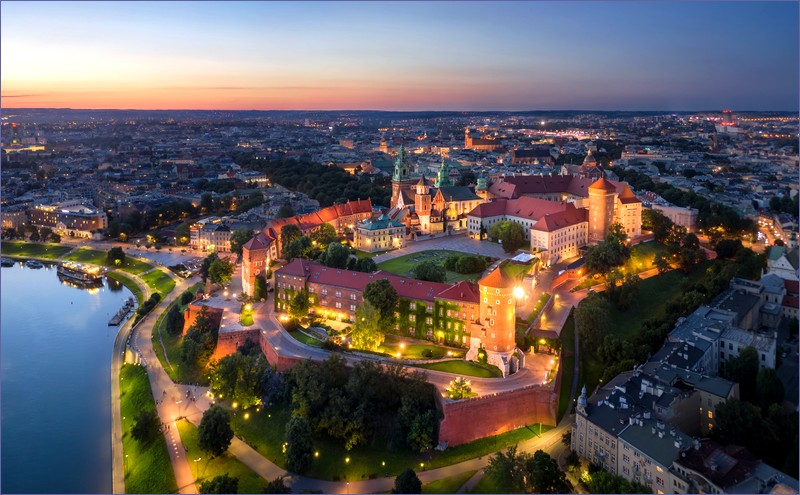
Train travel in Poland is a complicated topic. There are many regional operators, offers and travelcards but there are problems with mutual honoring tickets between various carriers, and the terms and conditions of network tickets and promotional offers often changes. In recent years, a lot of money has been invested in both infrastructure and renewal of rolling stocks.
Last updated: 25.01.2026
Trains in Poland are very popular among commuters and tourists. There are many trains running between the major cities, and there are also frequent suburban trains from the most important cities to the nearby towns, from where students and employees commute.
People in Poland love to travel. A large part of the population earns very well and is entitled to high social benefits and discounts, so they travel on every day off and on every weekend. Many of travelers choose the train and trains are often overcrowded.
Poles complain that they are poor, but poverty in Poland means that they can afford ten or more trips abroad during a year and additionaly several dozen trips around Poland a year, combined with visits to fashionable and expensive tourist attractions.
Table of contents:
1. Long-distance trains
2. Regional trains
3. Train categories
4. The best starting points for one-day train trips
5. Heritage trains
6. Railway museums in Poland
7. Most important train stations
8. Narrow-gauge railways in Poland
9. Funicular railways in Poland
10. Horse-drawn tram in Mrozy
11. Scenic railways
12. International trains
13. What to see
1. Train travel in Poland – long-distance trains
Almost all long-distance trains in Poland are operated by state-owned PKP Intercity. Seat reservation is compulsory in all of the international trains and most domestic trains launched by PKP Intercity. You can pick specified seat when booking on the internet. Depending on the train category and rolling stock type, different surcharges and reservation requirements apply for domestic travel.
PKP Intercity – official website; online shop
rozklad.pkp.pl – timetable (long-distance and regional trains)
koleo.pl – the best Polish train ticket seller (long-distance and regional trains)
In 2025 Czech operator Regiojet launched Krakow – Warsaw train. In 2026 the operator runs passenger trains on the following routes:
Krakow – Warsaw (-Gdynia)
Warsaw – Poznan
Regiojet – private operator, online shop
In March 2026 Leo Express plans to launch passenger trains between Krakow and Warsaw.
Trains operated by PKP Intercity reach many of the most beautiful and popular cities in Poland. Long-distance trains are the best choice if you want to visit the largest Polish cities. A large part of the railway lines between the major Polish cities have been upgraded and trains run at high speed (top speed is 200 km/h)
The ticket price depends on the distance of the route and the train occupancy.

PKP Intercity – the best offers
The best offer for tourists is Multiprzejazd – a network ticket valid from 00:00 on Tuesday until 24:00 on Thursday. The Multiprzejazd pass allows you to unlimited travel in PKP Intercity trains for three days – but you need to get a seat reservation. There are two variants of the ticket:
Multiprzejazd – valid in TLK and IC trains only. You can choose between 1st and 2nd class.
Multiprzejazd MAX – valid in all trains (TLK, IC, EIC and EIC Premium). If you want to travel in EIC Premium train, seat reservation is mandatory with an additional fee and must be purchased before each the journey begins.
PKP Intercity – additional information and prices (in Polish)
Multiprzejazd ticket is not valid for journeys in couchettes and sleeping cars.
Sample itinerary:
Tuesday: departure station: Kraków. A train ride from Kraków to Wrocław, a few hours in Wrocław and in the afternoon a train ride to Poznań. Accommodation in Poznań.
Wednesday: a walk around the center of the Poznań city, then a train trip to Gdańsk. Sightseeing in Gdańsk. Accommodation in Gdańsk.
Thursday: train journey from Gdańsk to Warsaw, possibly return to Kraków.
Most popular domestic routes:
Krakow – Warszawa
Krakow – Przemysl
Krakow – Wroclaw
Krakow – Lodz
Wroclaw – Warszawa
Wroclaw – Poznan
Poznan – Gdansk
Poznan – Szczecin
Warszawa – Gdansk
Warszawa – Poznan
Warszawa – Lublin
Warszawa – Lodz

2. Train travel in Poland – regional trains
The regional railway transport market in Poland is divided between several carriers. Some of them are owned by local governments. The largest carrier providing regional transport is Polregio (formerly Przewozy Regionalne). Polregio trains run in many parts of the country. Each carrier has its own promotional offers, some also offer network tickets with restrictions.
Interrail and Eurail tickets are not valid in trains operated by many of regional carriers in Poland.
Useful websites:
Arriva RP – non-electrified railway lines in the Kuyavia-Pomerania voivodeship.
Koleje Dolnośląskie – regional passenger train operator in the Lower Silesia voivodeship.
Koleje Małopolskie – regional passenger train operator in the Lesser Poland voivodeship.
Koleje Mazowieckie – regional passenger train operator in the Masovia voivodeship.
Koleje Śląskie – regional passenger train operator in the Upper Silesia voivodeship.
Koleje Wielkopolskie – regional passenger train operator in the Greater Poland voivodeship.
Łódzka Kolej Administracyjna – regional passenger train operator in the Lodz voivodeship.
Polregio – regional passenger train operator in many parts of the country.
Pomorska Kolej Metropolitalna – local train operator serving Gdańsk, Gdynia and Lech Walesa Airport.
Poznańska Kolej Metropolitalna – local train operator in the Poznan area
SKPL – local train operator on the route Pleszew – Pleszew Miasto
Szybka Kolej Miejska (Warsaw) – urban and suburban trains in Warsaw area
Szybka Kolej Miejska (Trojmiasto) – urban and suburban trains in Gdansk, Sopot and Gdynia.
Warszawska Kolej Dojazdowa – local railway operator between Warsaw and Grodzisk Mazowiecki.
The largest number of passenger trains are in the following voivodeships: Greater Poland, Lesser Poland, Lower Silesia, Upper Silesia.
The fewest trains run in Lubusz (trains are often replaced by buses), Opolskie, Subcarpathia (except the Rzeszow – Przemysl route) and Warmia-Masuria voivodeships.

3. Train travel in Poland – train categories
There are a several categories of the trains in Poland:
regional train (R) – slow train. Regional trains stop at all stations along the way. Only 2nd class. Reservation is no required. Trains operated by Warszawska Kolej Dojazdowa (WKD) and Szybka Kolej Miejska Warszawa (SKM Warszawa) have no toilet on board.
InterRegio (IR) – semi-fast train operated by Polregio. Mainly on the route between Warsaw and Lodz. IR trains stop at most medium-sized towns and cities along the route. Regional operators have own categories for semi-fast trains, for example “Sprinter”.
Twoje Linie Kolejowe (TLK) – fast trains, usually comprised of non-refurbished old carriages and old diesel multiple units.
Intercity (IC) – fast trains comprised of refurbished carriages with compartments or coaches. IC trains are equipped with air-conditioning. Some of them have dining car.
EIC (Express Intercity) – modern trains run on the routes between major cities, for example from Kraków to Warsaw. Tickets are much more expensive than for Intercity trains but comfort is the same. EIC trains stop only at most important stations.
EIP (Express Intercity Premium) – high-speed Pendolino trains run on the routes from Warsaw to Gdańsk, Wrocław and Kraków, in summer season also to Kołobrzeg. First and second class, dining car, no compartments. Reservation is mandatory. Passengers can not buy tickets from a conductor (ticket inspector). Tickets are very expensive, but EIP trains are fast and comfortable. No standees.
Eurocity (EC) – comfortable international trains with bistro or restaurant carriages.
Euronight (EN) – international overnight trains.

4. The best starting points for one-day train trips
A good way to explore Poland, especially for railfans, is to choose a city where we have accommodation and use it as a starting point for day trips by train around the region. The largest cities have the best rail connections, but sometimes cheaper and better accommodation for the same price can be found in a nearby town that also has good train links —for example, instead of Kraków, we could choose Oświęcim, or instead of Lublin, stay in hotels in Świdnik.
Below, I have listed suggestions for day trips by regional trains from various Polish cities.
Day train trips from Bydgoszcz
Day train trips from Gdansk
Day train trips from Krakow
Day train trips from Lublin
Day train trips from Lodz
Day train trips from Olsztyn
Day train trips from Poznan
Day train trips from Warsaw
Day train trips from Wroclaw
5. Heritage trains in Poland
There are three types of heritage trains in Poland. In Greater Poland there are regular steam hauled trains between Wolsztyn and Leszno or Zbąszynek on weekdays (depending on timetable) and from Wolsztyn to Poznań (on weekends). Throughout the year, Turkol operates retro trains on various railway lines in Poland. There are also seasonal heritage trains in summer.
Heritage trains in Poland are very popular among locals, railway enthusiasts and tourists.
Wolsztyn to Zbąszynek and Poznań – regular trains in Greater Poland Voivodeship between Wolsztyn and Zbąszynek or Leszno on weekdays (depending on timetable) and from Wolsztyn to Poznań (on weekends). Steam hauled trains with vintage carriages run all year round, but it may change in the future, so check an official website of the Wolsztyn Roundhouse. Trains are operated by Koleje Wielkopolskie, regular tariff applies. World-famous Wolsztyn Roundhouse is open for tourists.
Wolsztyn Roundhouse – timetable of heritage trains
Koleje Wielkopolskie – regional passenger operator
Turkol – an operator of the tourist trains on various routes in the country. Trains are usually comprised of historic diesel or steam locomotives and vintage carriages, sometimes also railbuses on shorter routes. Many events – one-day trips on routes closed to passenger traffic, three-day trips, short trips. Tickets are expensive.
Turkol – official website
Chabówka to Osielec and Zakopane – seasonal heritage trains in Lesser Poland Voivodeship on the route Kraków – Zakopane. Railway Museum in Chabówka runs steam hauled retro trains on weekends in summer season and on certain days in winter.
Railway Museum in Chabówka – official website
Małopolskie Szlaki Turystyki Kolejowej – heritage trains in Lesser Poland Voivodeship from June to December on designated dates. Steam hauled trains with vintage carriages run on the scenic Nowy Sącz – Krynica-Zdrój route, on routes from charming city of Tarnów (Tarnów – Tuchów and closed to passenger traffic line Tarnów – Żabno) and from Nowy Sącz to pretty town Biecz and Gorlice.
Małopolskie Szlaki Turystyki Kolejowej – official website

6. Railway museums in Poland
There are several large railway museums in Poland. Most important is the Stacja Muzeum in Warsaw in the building of the Warsaw Główna Osobowa station (it’s not Warsaw Centralna Station). Stacja Muzeum took over the collections of the Railway Museum in Warsaw, which was closed on March 31, 2016. The biggest attraction is the rich collection of locomotives. Stacja Muzeum has a branch in Sochaczew – the Narrow Gauge Railway Museum.
Stacja Muzeum – official website
It is also worth visiting other railway museums in various parts of Poland. The most popular ones are located in the following towns:
– Jaworzyna Śląska (35 minutes by train from Wrocław)
– Kościerzyna (90 minutes by train from Gdańsk)
– Wolsztyn (roundhouse – 80 minutes by train from Poznań)
– Chabówka (on the route from Kraków to Zakopane)
Railway museums in Poland – a list of the museums
7. Most important train stations
Many train stations in Poland have been renovated since 2010. There are beautiful historic railway stations throughout the country, modern station buildings constructed on sites of demolished old stations and in recent years many railway stations in small towns were built according to a uniform design.
Generally, railway stations in Poland are clean and well-kept. Renovated stations are wheelchair accessible, equipped with lifts.
Luggage lockers are available on largest stations and in popular tourist destinations. Toilets are free at stations in small towns, but people people have no respect for public property and over time free toilets become dirty and vandalised. At larger stations toilets are paid – prices are very high for foreigners but cheap for Poles who have well-paid jobs and plenty of social benefits.
Showers are available on Warsaw Central, Kraków Główny, Gdańsk Główny, Gdynia Główna, Wrocław Główny, Tarnów and Katowice station
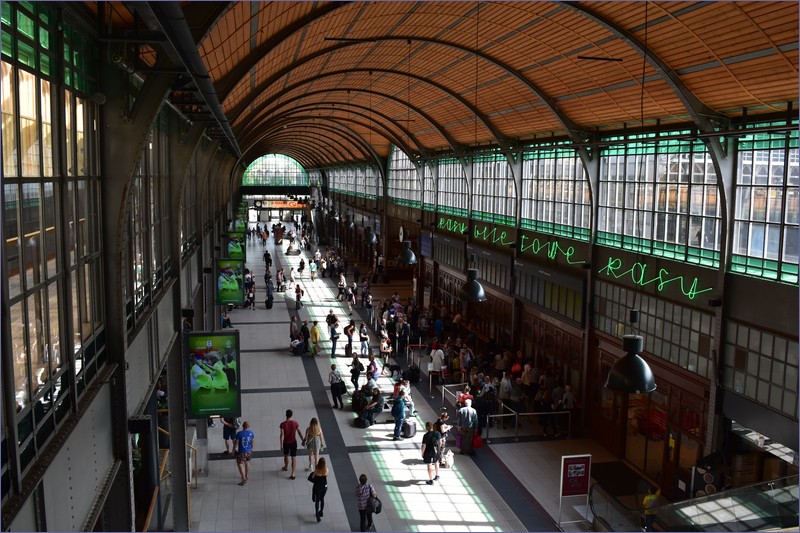
Most beautiful railway stations in Poland are Wrocław Główny, Przemyśl Główny, Gdańsk Główny, Gdynia Główna, Malbork, Chojnice, Piła Główna, Tarnów, Bielsko-Biała Główna, Iława Główna, Nowe Skalmierzyce, Wałbrzych Szczawienko and Węgliniec.
“Główny” means “main station”. The main station not always is located in the city centre. For example “Wałbrzych Główny” train station is located 5 kilometers from the city centre, on the outskirts of the city. “Wałbrzych Śródmieście station” is situated closest to the centre (1,5 km), but newly constructed train stop “Wałbrzych Centrum” is situated about 500 meters from the downtown of the city of Wałbrzych.
“Śródmieście” means “downtown”.
Most important train stations:
Warszawa Central Station – in English Warsaw Central Station. The largest train station in Warsaw located in the city centre.
Kraków Główny – main station in Kraków. Located within walking distance from many tourist attractions, clean and well-maintained.
Przemyśl Główny – beautiful railway station, important from passengers travelling between Poland and Ukraine.
Wrocław Główny – one of the largest railway junctions in Poland, it serves many regional, long-distance and international trains.
Gdańsk Główny – main station in Gdańsk. It lies close to most beautiful part of the city.
Katowice – a large railway hub in Upper Silesia.
Poznań Główny – main station in Poznań, an interesting city and perfect starting point for one-day train trips.
Łódź Fabryczna – main station in Łódź. A modern, vast station not far from Piotrkowska Street.
Oświęcim – small town and regional railway junction. The station is important for tourists who visit Auschwitz Museum and Memorial.
8. Narrow-gauge railways in Poland
Poland has about 15 operational passenger narrow-gauge railways. Almost all of them run seasonally. Additionaly, you can ride five miniature railways in various regions of the country and three garden railways.
Most important narrow-gauge railways:
Bieszczady Forest Railway – most famous Polish narrow-gauge railway situated in remote area of the Bieszczady Mountains.
Koszalin Narrow-Gauge Railway – an interesting narrow-gauge railway from Koszalin to Rosnowo (20 km).
Piaseczno Narrow-Gauge Railway – a popular narrow-gauge railways near Warsaw.
Przeworsk Narrow-Gauge Railway – 46 km long narrow-gauge railway line from Przeworsk to Dynow in Subcarpathia voivodeship. Przeworsk lies on the main railway line Krakow – Przemysl.
Seaside Narrow-Gauge Railway – one of the most dynamically operating narrow-gauge railways in Poland. In the summer season trains run daily on two routes: Gryfice – Pogorzelica (40 km) and Trzęsacz- Pogorzelica (10 km).
Sochaczew Narrow Gauge Railway Museum – a worth-visit railway museum in Sochaczew dedicated to the narrow-gauge railways. In season it launches also heritage train.
Zulawska Kolej Waskotorowa – a narrow-gauge railway near Gdansk. During spring and summer railway operates daily.
Mine railways for tourists operated in Bochnia, Nowa Ruda, Zloty Stok and probably in Zabrze. You can find abandoned narrow-gauge railways in Krosniewice, Chorzow, Ostrow Wielkopolski and Czarna Bialostocka.
Narrow-gauge railways in Poland – a complete list and contacts

9. Funicular railways in Poland
There are four funicular railways in Poland:
Funicular Railway to Mount Żar (Silesian voivodeship)
Funicular Railway to Gubalowka in Zakopane (Lesser Poland)
Funicular Railway in Krynica-Zdroj (Lesser Poland)
Funicular Railway in Gdynia (Pomerania)
Funicular railways in Poland – additional information
10. Horse-drawn tram in Mrozy (Mazovia)
Poland has an unique attraction – horse-drawn tram or railway near Warsaw. The only operational horse-drawn railway in Poland runs seasonally on the Mrozy – Rudka Sanatorium route on tracks with a gauge of 900 mm. Built in 1902, service was later suspended in 1967. Thanks to wise individuals, this extraordinary tourist attraction was saved. The railway is managed by the Mrozy Municipal Office, and the route is 1.75 km long. Despite protests of animal lovers, the horse-drawn is more and more popular.
In Mrozy, trains of the Masovian Railways stop, running between Warsaw and Siedlce, along with selected express trains.
Horse-drawn tram in Mrozy – official website

11. Scenic railways
There are a few operational scenic railways in Poland with regular passenger services:
Gdynia – Hel (Pomerania)
Klodzko – Walbrzych (Lower Silesia)
Swidnica – Jedlina-Zdroj (Lower Silesia)
Tarnow – Muszyna (Lesser Poland)
Elblag – Braniewo and Jelenia Gora – Lwowek Slaski railway lines are closed for passenger traffic. On the short section of the Elblag – Braniewo railway in Frombork draisines are available seasonally.
The scenic Żywiec – Sucha Beskidzka railway line will be renovated in the coming years.
Scenic railways in Poland – additional information

12. Train travel in Poland – international trains
Poland has rail connections with most of the adjacent countries. You can choose between regional trains and much more expensive long-distance trains.
Germany:
There are many passenger trains between Poland and Germany. Long-distance trains are operated by PKP Intercity in cooperation with Deutsche Bahn. These trains run on the following routes:
Berlin – Warsaw (via Poznan)
Berlin – Gdansk and Gdynia (via Poznan)
Berlin – Krakow (via Wroclaw and Katowice)
Leipzig – Przemysl (via Wroclaw, Katowice and Krakow)
PKP Intercity – online shop
Deutsche Bahn – online shop
There are cheap promotional tickets but they are limited and you must buy tickets in advance.
Regional trains between Poland and Germany are operated by many Polish and German regional operators.
Szczecin – Berlin (operated by Deutsche Bahn)
Kostrzyn nad Odrą – Berlin (Niederbanimer Eisenbahn)
Zielona Góra – Gubin (Polregio)
Zielona Góra – Frankfurt am Oder (Polregio)
Zielona Góra – Görlitz (Polregio)
Jelenia Góra – Görlitz (Koleje Dolnośląskie)
Wrocław – Görlitz (Koleje Dolnośląskie)
Świnoujście Miasto – Stralsund (DB Regio Nordost)
Trains from Görlitz to Zittau stop at Krzewina Zgorzelecka station. The station is located in Poland, 50 meters from the German-Polish border and serve small German town of Ostritz.
Trains between Poland and Germany – a comprehensive guide
Czech Republic
There are trains from Prague to Katowice Krakow, Warszawa and Przemysl. In December 2024 PKP Intercity inaugurated long-distance train from Gdynia to Prague via Gdansk, Poznan and Wroclaw. Trains branded “Baltic Express” several times a day. Ceske Drahy and PKP Intercity offers promotional tickets – compare the websites to find the cheapest tickets.
In July and August passengers can travel by train from Bohumin to seaside resort towns in Poland. I recommend traveling in a sleeping car, old Czech carriages with seats are uncomfortable, especially in hot weather.
Ceske drahy – online shop (Prague – Krakow/Warsaw trains)
PKP Intercity – online shop
Regiojet – private operator, online shop (Prague – Przemysl train)
Leo Express – private operator, online shop (Prague – Krakow train)
There are regional trains between Czech Republic and Poland:
Katowice – Bohumin (operated by Koleje Slaskie)
Cieszyn – Frydek-Mistek (operated by Ceske drahy)
Sedzislaw – Kralovec/Trutnov (operated by GW Train Regio)
Wroclaw – Lichkov (operated by Koleje Dolnoslaskie)
Szklarska Poreba – Liberec (operated by Ceske drahy)
Frydlant v Cechach – Zawidow (operated by Ceske drahy)
Trains between Poland and the Czech Republic – a comprehensive guide
Slovakia
Train transport between Poland and Slovakia leaves much to be desired. Direct long-distance trains run from Warsaw and Krakow to Bratislava and continue their journey to Budapest. If you want to travel to Zilina or Kosice, you need to get out in Bohumin, Czech Republic and change train.
PKP Intercity – online shop
Slovak Railways – online shop
There are regional trains from Cadca or Skalite to Zwardon, Poland, operated by Železničná spoločnosť Slovensko. Regional trains from Zwardon to Katowice are operated by Polish regional railway operator Koleje Śląskie. You need to buy separate tickets for Slovak and Polish section.
Seasonal trains between Poland and Slovakia run on the following routes:
Poprad – Muszyna (weekends in winter and summer holidays) in cooperation with Koleje Małopolskie
In 2026 summer trains between Sanok and Medzilaborce probably will not run
Trains between Poland and Slovakia – a comprehensive guide
Austria
There are daytime Eurocity trains from Gdynia, Warsaw and Przemysl to Wien, Graz and an overnight train from Warsaw to Monachium via Wien, Linz and Salzburg. Trains from Poland to Austria pass through the Czech Republic.
PKP Intercity – online shop
Austrian Railways – online shop
Hungary
There are daytime trains from Warsaw to Budapest and overnight trains between capitals of Poland and Hungary
PKP Intercity – online shop
Hungarian Railways – online shop
Belarus
There are no passenger trains between Poland and Belarus due to invasion of migrants on the Polish-Belarusian border.
Trains between Poland and Belarus – a comprehensive guide
Kaliningrad Oblast
There are no passenger trains between Poland and Kaliningrad Oblast due to the political tensions between Poland and Russia.
Lithuania
In 2026 there are three trains between Poland Lithuania: Krakow – Vilnius (via Warszawa and Bialystok), Szczecin – Vilnius (via Poznan, Warszawa and Bialystok) . Polish fast trains terminate at Mockava station. On the same platform wait trains Mockava – Vilnius. Polish trains are operated by PKP Intercity, the Lithuanian by LTG Link.
Train from Krakow to Mockava is comprised of modern, comfortable and air-conditioned carriages with compartments and coaches. From Mockava you will continue your journey in LTG Link’s diesel multiple unit PESA630MiL or PESA730M manufactured in Poland. It’s a modern train equipped with air-conditioning and vacuum toilet, seats are arranged 2+2 and you can buy snacks and drinks.
Ticket prices:
Vilnius – Warsaw – 29 EUR
Vilnius – Krakow – 35 EUR
Kaunas – Warsaw – 24 EUR
Kaunas – Krakow – 29 EUR
Kaunas – Suwalki – 15 EUR
LTG Link – timetable, prices and online shop
PKP Intercity – online shop
Summer weekend train from Bialystok to Kaunas was ceased.
Ukraine
Due to the war in Ukraine, passenger traffic between countries in limited. Currently, there are following trains between Ukraine and Poland:
Przemysl – Kyiv (daytime and an overnight train)
Przemysl – Kharkov (overnight train
Warsaw – Kyiv (overnight train)
Warsaw – Lvov (with a change at Rava Ruska station)
Ukrainian Railways – online shop

13. Train travel in Poland – what to see
Poland is a beautiful country with hundreds of interesting places in every region. This list includes the most important tourist attractions for those planning their first, short trip to Poland. In the future, travel guides will be available for each region.
Warsaw – the capital and largest city of Poland, known for its dynamic blend of history, culture, and modern urban life. The city’s historic Old Town, a UNESCO World Heritage Site, features the Royal Castle, Market Square, and colorful townhouses meticulously rebuilt after World War II. Other highlights include Łazienki Park with the Palace on the Isle, the Wilanów Palace, and the POLIN Museum of the History of Polish Jews. Warsaw also offers vibrant cafés, theaters, and a lively modern skyline.
Krakow – one of Poland’s most historic and culturally rich cities, located in the southern part of the country. The Old Town avoided war damages and is UNESCO-listed. Most important places in the Old Town are the Main Market Square (Rynek Główny), St. Mary’s Basilica, and the historic Cloth Hall (Sukiennice). Wawel Castle and Cathedral, perched on Wawel Hill, are iconic landmarks reflecting the city’s royal heritage. Visitors can also explore the Kazimierz district, known for its Jewish heritage, and nearby attractions such as the Wieliczka Salt Mine. I also recommend the Podgórze district and Nowa Huta district. Kraków is a top destination for travelers to Poland.
Torun – a historic city in northern Poland, renowned as the birthplace of the astronomer Nicolaus Copernicus and for its well-preserved medieval Old Town, a UNESCO World Heritage Site. Key attractions include the Gothic Toruń Cathedral, the medieval Town Hall, and the charming Market Square lined with colorful historic buildings. The city is also famous for its traditional gingerbread, with museums and workshops dedicated to this local specialty. Toruń is a captivating destination for visitors interested in medieval Poland.
Oswiecim – a town in southern Poland, internationally known for its historical significance during World War II. The main attraction is the Auschwitz-Birkenau Memorial and Museum, a UNESCO World Heritage Site, which preserves the former Nazi concentration and extermination camp and serves as a solemn reminder of the Holocaust. Visitors can explore the preserved barracks, watchtowers, and exhibitions documenting the lives of the victims. In addition to its historical sites, Oświęcim features a small historic town center with churches, parks, and cultural institutions such as Regional Museum located in the castle and Jewish Museum in synagogue. The city is an important destination for those seeking to learn about history, remembrance, and human rights.
Gdansk – a historic port city on Poland’s Baltic coast, visited by tourists colorful architecture, and vibrant cultural life. The city’s main attractions include the Long Market (Długi Targ) with its iconic Neptune Fountain, the Gothic-Renaissance Town Hall, and St. Mary’s Church, one of the largest brick churches in the world. Visitors can also explore the European Solidarity Centre, which commemorates the Solidarity movement, and take strolls along the scenic Motława River waterfront.
Lublin – a historic city in eastern Poland, The city’s main attractions is the Lublin Castle, which houses a museum and offers panoramic views of the old town. Lublin has the beautiful and revitalised Old Town with its cobbled streets, Renaissance-style houses, and Krakowska Gate. Visitors can also explore the Majdanek State Museum, a former Nazi concentration camp, and enjoy numerous cultural events, theaters, and galleries.
Zamosc – an interesting city in southeastern Poland, often called the “Padua of the North” for its Renaissance architecture and carefully planned layout. Its Old Town is a UNESCO World Heritage Site, featuring the Grand Market Square, the Town Hall with its distinctive tower, and arcaded houses with colorful façades. Other attractions include the Zamość Fortress, the Cathedral of the Resurrection and St. Thomas the Apostle, and various museums showcasing the city’s history and culture. With its unique urban design, rich heritage, and vibrant atmosphere, Zamość is a captivating destination for history and architecture enthusiasts.
Poznan – a large city in western Poland, an important railway junction and perfect starting point for railway trips. The city’s main attractions are the Renaissance-style Old Town with the colorful Market Square, the Town Hall featuring the famous billy goats clock, and St. Peter and Paul Cathedral, one of Poland’s oldest churches. Visitors can also explore the Imperial Castle, Malta Lake recreational area, and a variety of museums, theaters, and lively cafés.
Wroclaw – a popular city in southwestern Poland, situated on the Oder River with picturesque architecture and vibrant cultural life. The city’s highlights include the Market Square (Rynek) with its colorful townhouses, the Gothic-style Wrocław Town Hall, and the impressive Wrocław Cathedral on Ostrów Tumski (Cathedral Island). Visitors can also explore the Centennial Hall, the University of Wrocław with its historic Aula Leopoldina, and the city’s famous dwarf statues scattered throughout the streets.
Related articles
Railways in Europe by country
Narrow-gauge railways in Poland
Funicular railways in Poland
Railway museums in Poland
Koleje Dolnośląskie – a passenger’s guide
Koleje Małopolskie – a passenger’s guide
Koleje Mazowieckie – a passenger’s guide
Koleje Śląskie – a passenger’s guide
Koleje Wielkopolskie – a passenger’s guide
Łódzka Kolej Aglomeracyjna – a passenger’s guide
SKM Warszawa – a passenger’s guide
Warszawska Kolej Dojazdowa – a passenger’s guide