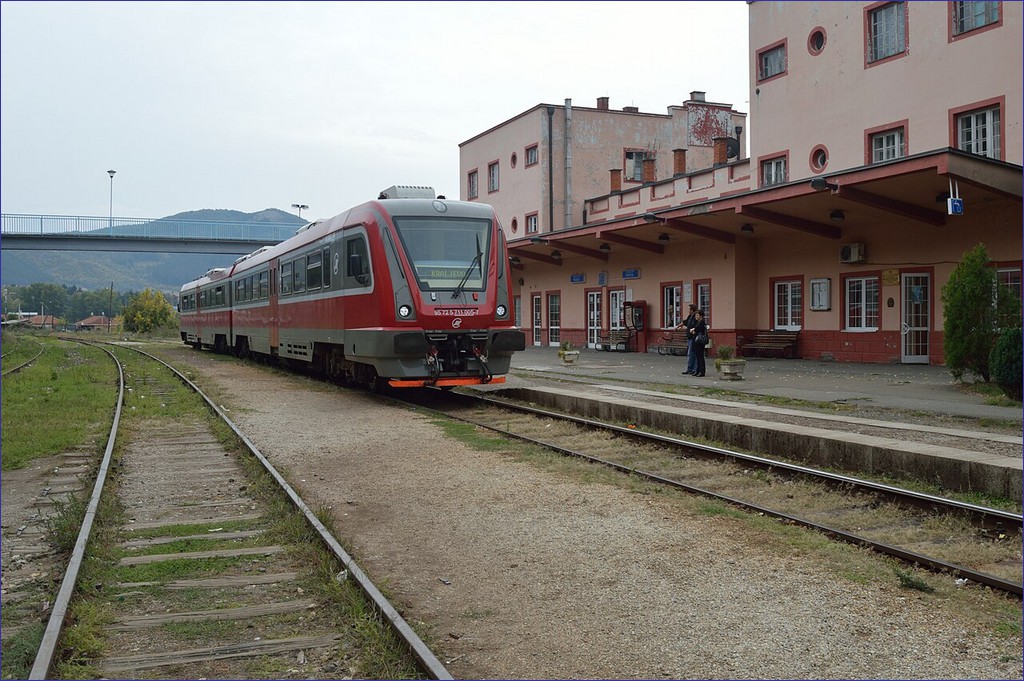
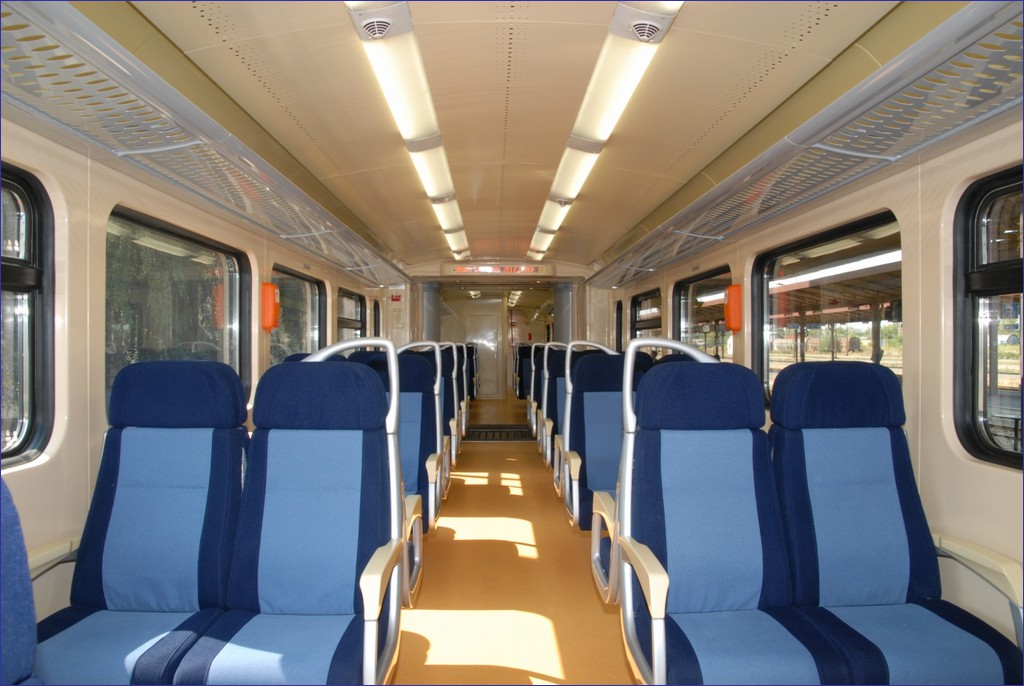
Train from Kraljevo to Rudnica runs through a scenic railway line. The train is operated by Srbija Voz. There are no large cities alongside, but if you get off at Raška station, you can get bus to Novi Pazar – the largest city of the historic Raška region located about 11 km from Raška. There are plans to build a railway line from Raška to Novi Pazar, but it’s unclear whether the project will be realize and when. Rudnica is a small station near border with Kosovo.
The connection is served by Russian-made diesel multiple units of Srbija Voz.
The railway line will be renovated in the next years, so you need to prepare for distruptions and bus replacement.
Useful websites:
Srbija Voz – timetable
Train travel in Serbia – a general overview
Most important towns and cities:
Kraljevo – a medium-sized city in situated at the confluence of the Ibar and West Morava rivers. Its territory lies at an important crossroads between central Serbia, the Raška region and the route towards Montenegro and Kosovo. It’s an important railway junction. The city centre is dominated by Trg srpskih ratnika (Square of Serbian Warriors), laid out according to a plan associated with Prince Miloš Obrenović in the 19th century. The National Museum of Kraljevo contains archaeological, historical, ethnological and artistic collections. Kraljevo is an excellent base for visiting Žiča Monastery, Maglič Fortress and Studenica Monastery.
Kraljevo – Kragujevac train – a general overview
Kraljevo – Kruševac train – a general overview
Krajlevo – Požega train – a general overview
Raška – a small town on the Ibar River, south of Kraljevo and north of Novi Pazar. Raška is surrounded by mountainous landscapes and is close to Kopaonik, one of Serbia’s most important mountain and ski resorts. The area is particularly interesting for visitors interested in medieval Serbian history because of its proximity to Studenica, Gradac, Stari Ras and other medieval monuments.
Novi Pazar (by bus from Raška)– a large city famous for its old bazaar, mosques, traditional houses and Ottoman monuments. One of the best-known monuments is the Isa-beg Ishaković Hamam, an Ottoman bath dating from the early period of the city’s development. Novi Pazar has a predominantly Bosniak Muslim population, giving the city a cultural character distinct from most of central Serbia. The city is an excellent starting point for exploring the medieval Serbian heritage of the surrounding area.
Nearby are Stari Ras, Sopoćani Monastery, Đurđevi Stupovi Monastery and the Church of St Peter and Paul. These monuments form the UNESCO World Heritage property Stari Ras and Sopoćani, inscribed in 1979. Stari Ras was the first capital of the Serbian state under the Nemanjić dynasty and was an important political and cultural centre from the 12th to the early 14th century.
Novi Pazar therefore offers a particularly interesting combination of Ottoman Islamic heritage and medieval Serbian Orthodox heritage.
Attractions along the railway line:
Maglič Fortress – one of the most spectacular medieval fortresses in Serbia. It stands on a rocky ridge above the Ibar River, roughly 20 km south of Kraljevo. The fortress dates from the 13th century. Its exact founder is uncertain, although its construction is generally associated with the Serbian rulers of the Nemanjić dynasty. The fortress has an irregular polygonal plan, dictated by the shape of the rocky ridge. Its impressive remains include seven towers, massive defensive walls, a keep, a church dedicated to St George, a palace, a bakery and water cisterns. Maglič is regarded as one of the finest surviving examples of medieval Serbian military architecture. The fortress is sometimes nicknamed the “Serbian Camelot” because of its dramatic location and well-preserved medieval appearance. There is a perfect viewpoint for railway line.