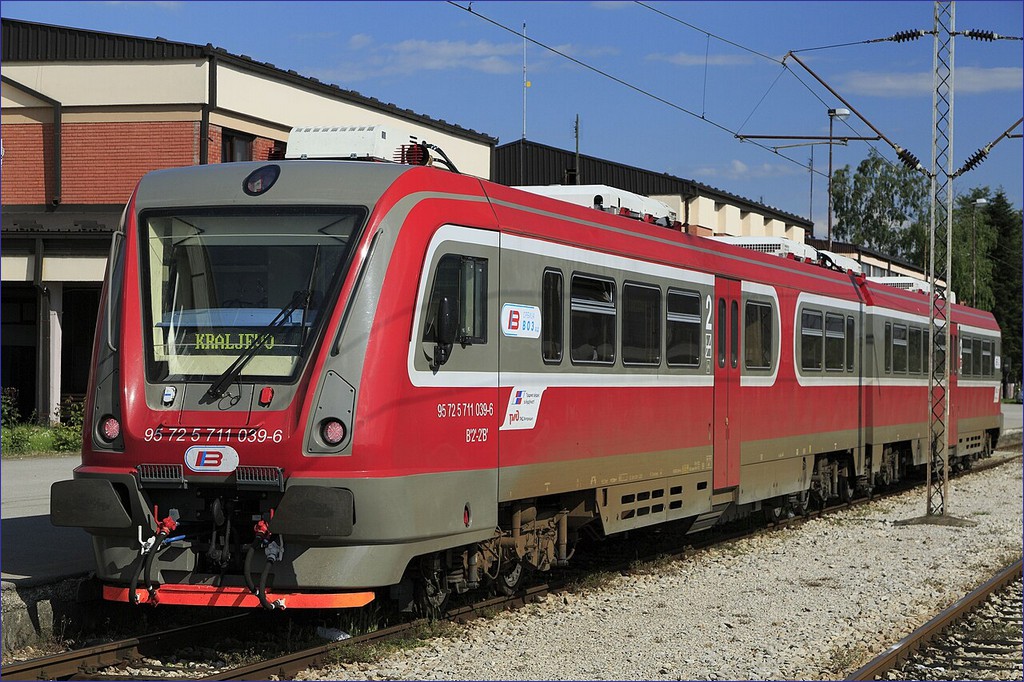
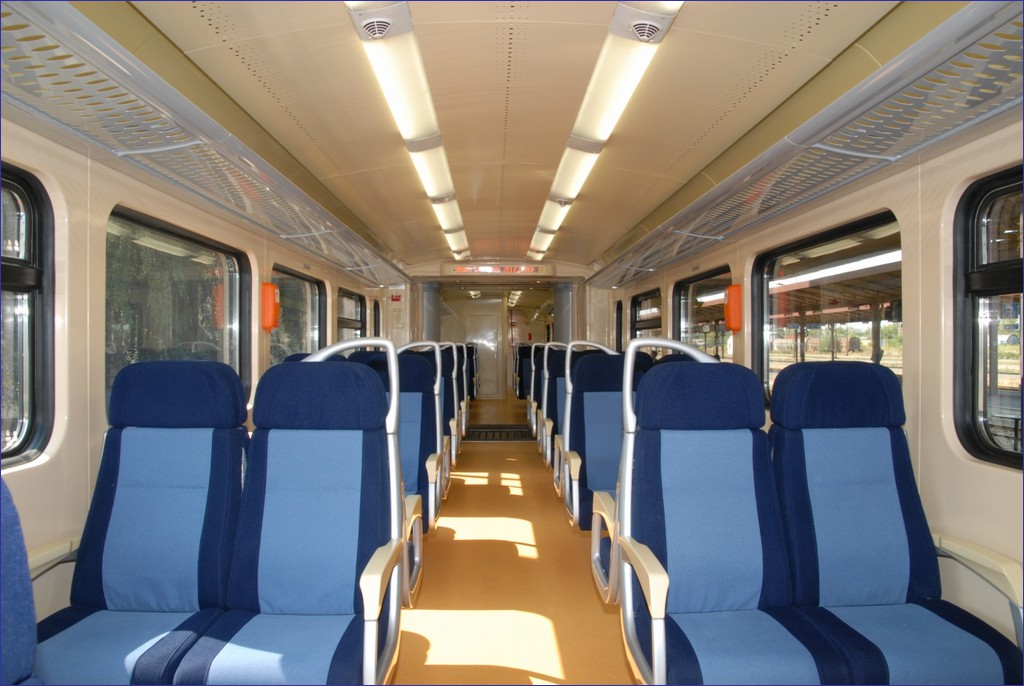
Train from Kraljevo to Požega is a regional train connecting two important Serbian railway junctions. There are usually 3 trains in each direction, the journey lasts about 90 minutes. The most important intermediate stop is the town of Čačak. Požega lies on the route from Belgrade to Bar, so you can change trains and travel toward Belgrade or to Montenegro. Kraljevo is a regional railway junction – there are a few trains daily to Rudnica, Lapovo (via Kragujevac) or to Jagodin via Kruševac.
The connection is served by Russian-made diesel multiple units of Srbija Voz.
Useful websites:
Srbija Voz – timetable
Train travel in Serbia – a general overview
Most important towns and cities:
Kraljevo – a medium-sized city in situated at the confluence of the Ibar and West Morava rivers. Its territory lies at an important crossroads between central Serbia, the Raška region and the route towards Montenegro and Kosovo. It’s an important railway junction. The city centre is dominated by Trg srpskih ratnika (Square of Serbian Warriors), laid out according to a plan associated with Prince Miloš Obrenović in the 19th century. The National Museum of Kraljevo contains archaeological, historical, ethnological and artistic collections. Kraljevo is an excellent base for visiting Žiča Monastery, Maglič Fortress and Studenica Monastery.
Kraljevo – Kragujevac train – a general overview
Kraljevo – Kruševac train – a general overview
Krajlevo – Rudnica train – a general overview
Čačak – one of the principal cities of central and western Serbia, situated in the West Morava valley. The city was particularly important during the First Serbian Uprising against Ottoman rule. One of its best-known historical monuments is the Church of the Ascension of Christ, whose origins date to the medieval period. The National Museum of Čačak contains archaeological, historical and ethnographic collections from the region. Čačak is closely associated with the Ovčar-Kablar Gorge, one of the most attractive natural areas of central Serbia. The gorge contains numerous medieval monasteries and is sometimes called the “Serbian Mount Athos” because of the concentration of monasteries in the surrounding mountains. Among the most famous monasteries are Ovčar Monastery, Nikolje Monastery, Blagoveštenje Monastery and Sretenje Monastery. Čačak is an important industrial, educational and cultural centre. The city and surrounding region are also known for fruit growing, especially plums and other orchard crops.
Požega – a small town in western Serbia, situated in the Skrapež River valley between the mountains of western Serbia. The town is surrounded by mountains, including Ovčar, Kablar, Maljen and Jelova Gora in the wider region. Požega is particularly important for Serbian railway enthusiasts because of its railway history. The town centre contains a some of traditional buildings and a main square typical of smaller Serbian settlements. The surrounding area is known for raspberries, plums and other fruit crops. The town is a convenient base for excursions towards Mokra Gora, Zlatibor, Tara National Park and Ovčar-Kablar Gorge, but accomodation in the town is rather expensive.