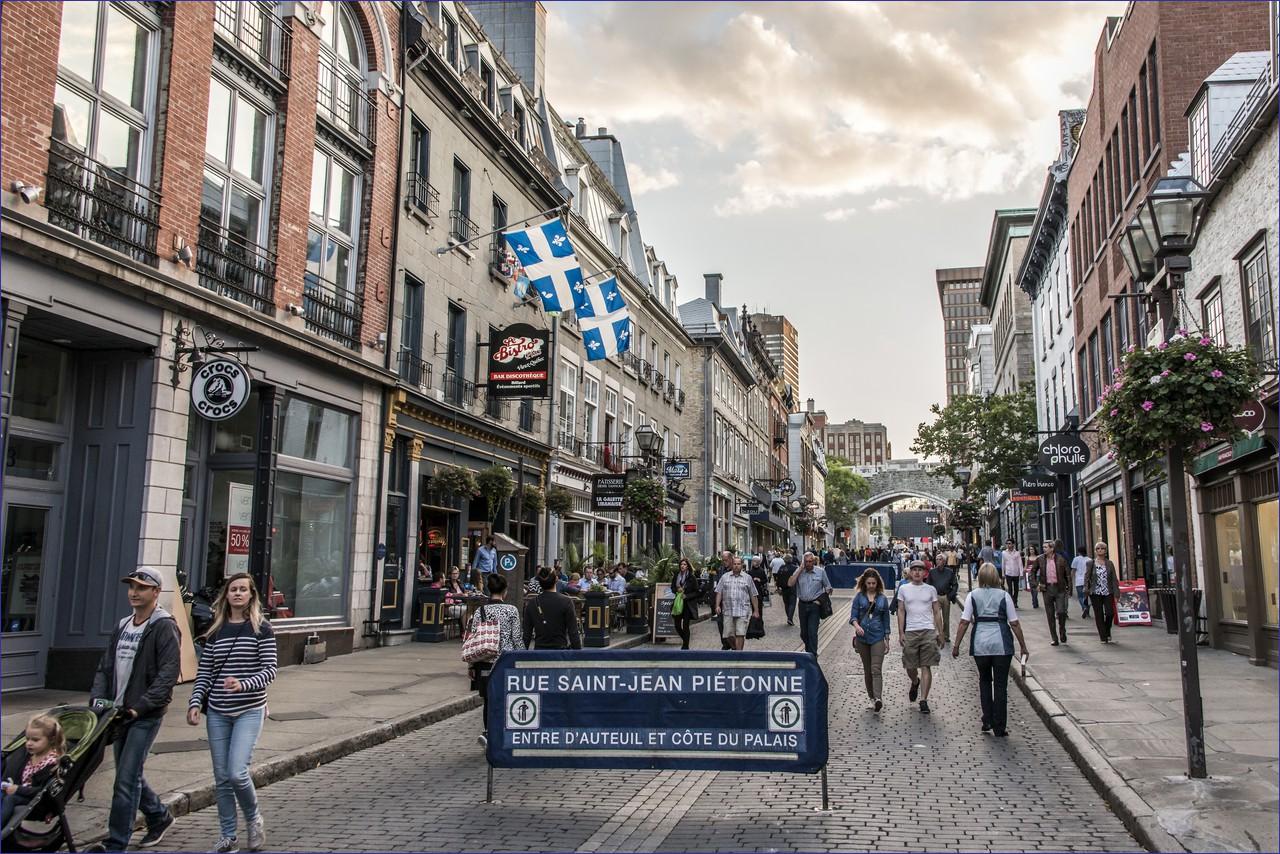
Canada is a vast country with huge distances between major cities. The train is not the primary means of transportation in Canada, although traveling by train is a very good way to move between the major tourist attractions. Long-distance trains usually do not run daily. Suburban and regional passenger services are available in largest cities.
Railway is used primarily for freight traffic. There are many freight traffic operators in the country.
The first railway line in Canada from La Prairie on the St Lawrence River to St Jean sur Richelieu (25 km) was opened in 1836
Last updated: 01.10.2026
Table of contest:
1. Train travel in Canada – useful websites
2. Long-distance trains
3. Most popular long-distance trains in Canada
4. Trains between Canada and the United States
5. The Canadian
6. Sudbury – White River train
7. Rocky Mountaineer
8. Royal Canadian Pacific
9. Train des Charlevoix
10. Ontario Northland
11. Railway museums in Canada
12. Funicular railways in Canada
13. Most popular heritage railways
14. Suburban trains in Canada
15. UP Express
16. What to see
You can support this project by one-time small donation
1. Train travel in Canada – useful websites
Via Rail – long-distance passenger operator
Keewatin Railway – operator of the train The Pas to Pukatawagan
Map of the passenger connections operated by Via Rail
2. Train travel in Canada – long-distance trains
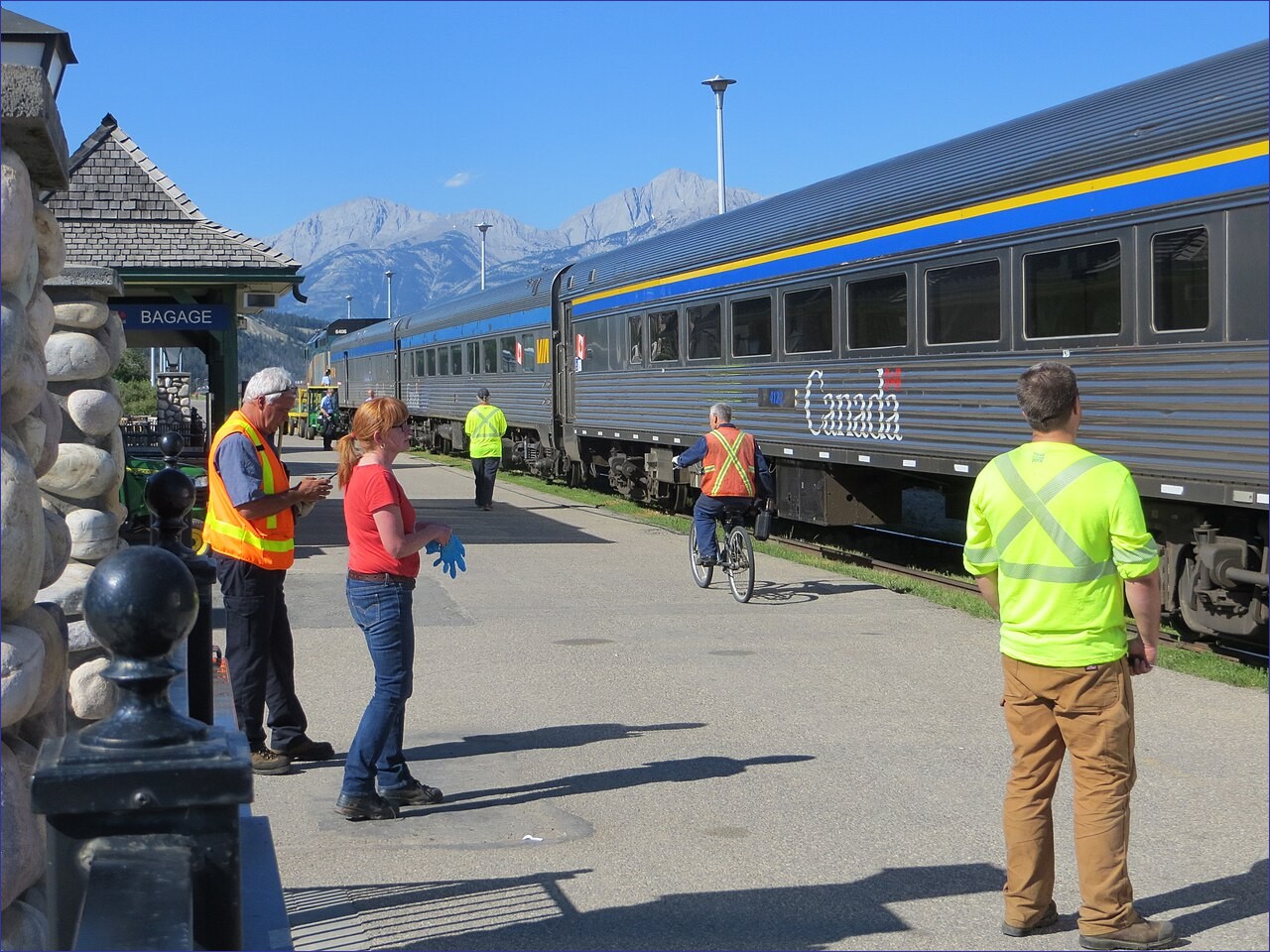
Almost all long-distance trains in Canada are operated by Via Rail. Timetable, journey planner and online shop are available on website linked above. Most popular is “The Canadian” between Toronto and Vancouver.
In 2022, Via Rail discontinued the popular network passes that allowed explore Canada by train for affordable prices. Despite announcements, new offers intended to replace the discontinued ones were not available at the time of the article update. The Via Rail website has a discounts section where new offers should appear once they are introduced. Currently, there are no network passes for tourists.
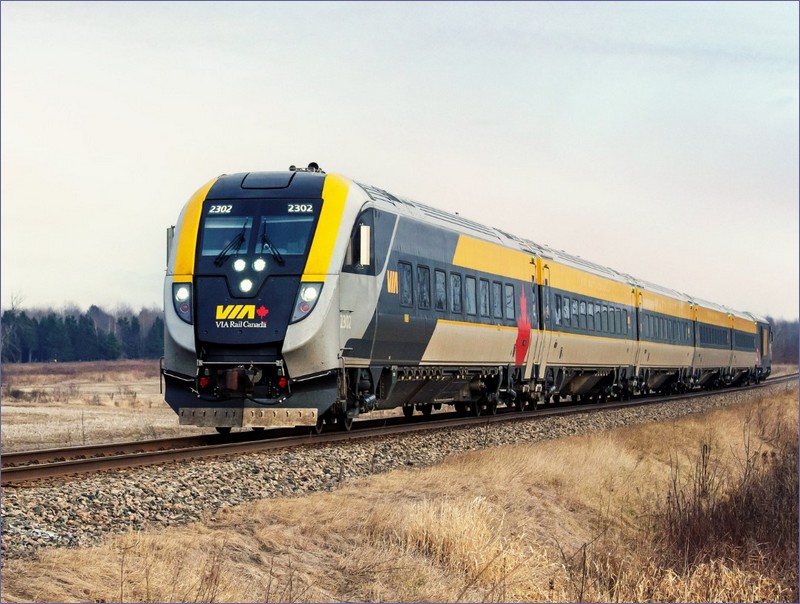
The rolling stock fleet is old but comfortable. Via Rail replaced some of the old trains by new diesel multiple units – new trains were introduced on the Quebec – Windsor corridor in 2023 (travelling between Québec City, Montréal, Ottawa and Toronto)
Via Rail train routes in Canada:
Toronto – Vancouver
Montreal – Halifax
Toronto – Montreal
Toronto – Ottawa
Quebec – Ottawa
Toronto – Windsor
Toronto – Sarnia
Montreal – Jonquière
Montreal – Senneterre
Sudbury – White River
Winnipeg – Churchill
Jasper – Prince Rupert
Passenger train from The Pas to Pukatawagan in northern Manitoba is comprised of Via Rail rolling stock fleet but the connection is operated by Keewatin Railway.
Train tickets in Canada are relatively expensive. Via Rail has special offers and if yoy book as early as possible you can find cheap tickets.
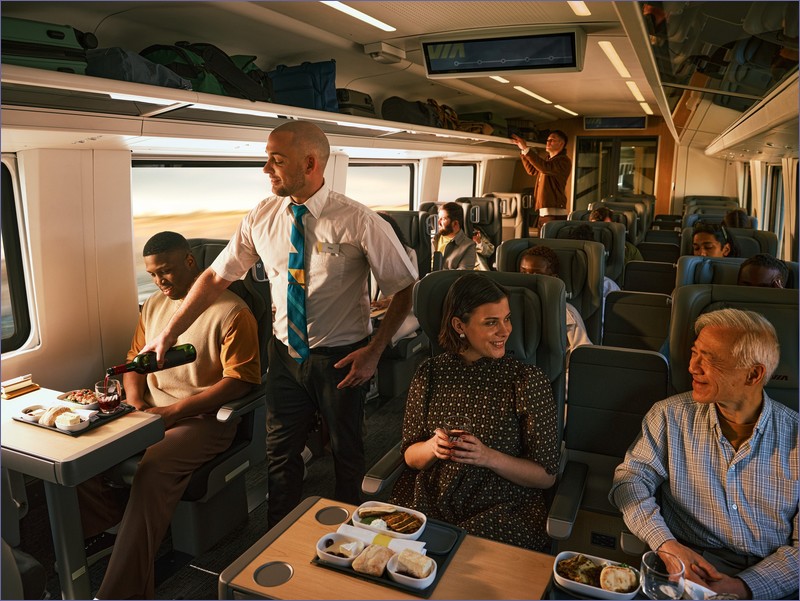
New trains on the routes between Québec City, Montréal, Ottawa and Toronto have ergonomic seats and large panoramic windows. The trains are are fully accessible and barrier-free. Business class have seat arrangements 2+1, spacious seats and you can wait for the train in Business lounges at main stations. In Business class, you can bring up to two carry-on items on the train, plus one personal item.
3. Most popular long-distance trains in Canada
Note: The trains which covert the distance less than 1000 km are considered in Canada as a regional trains.
The Abitibi – the common name for VIA Rail Canada’s passenger service between Montréal and Senneterre, in the Abitibi-Témiscamingue region of northwestern Québec. VIA Rail officially presents it as the Montréal–Senneterre train. It is one of Canada’s more remote passenger services, travelling 717 km from Montréal through the Laurentian and Mauricie forests into the boreal landscapes of Abitibi. The current journey takes about 13 hours 30 minutes, with three departures per week. The scenery changes during the journey from agricultural landscapes near Montréal give way to dense forests, lakes and rivers, followed by the boreal forest and granite hills of Abitibi. The train has the large number of request stops. VIA Rail also permits passengers on the Montréal–Senneterre route to request a stop between scheduled stations, making it possible to access remote outdoor locations. Such a stop must be arranged at least 48 hours in advance and is made at a specified railway mile marker. The route is served by HEP 1 car with Economy Class only.
The Hudson Bay – a long-distance regional service between Winnipeg and Churchill, Manitoba, on the shores of Hudson Bay. It is one of the most remote passenger railway services in North America and provides an important year-round surface connection to Churchill and several isolated communities in northern Manitoba. The railway covers approximately 1,694 km and the complete journey takes around 1 day 21 hours. VIA Rail currently lists two departures per week between Winnipeg and Churchill. Main intermediate points are located in Portage la Prairie, Dauphin, The Pas, Gillam and Thompson. Business Class is no available. The train serves numerous tiny railway locations, many of them only on request.
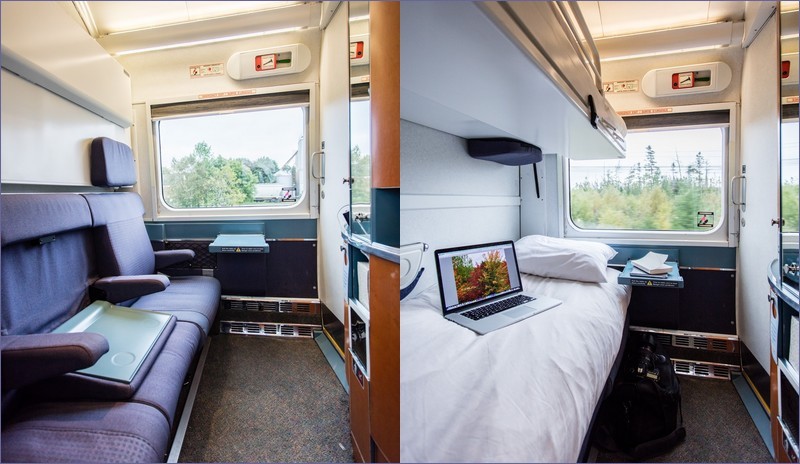
The Ocean – a long-distance passenger train linking Montréal, Québec, with Halifax, Nova Scotia, via New Brunswick. At approximately 1,352 km, it is one of Canada’s longest scheduled passenger routes and one of the country’s most interesting trains for railway travellers. The journey takes roughly one night and one day, crossing Québec, New Brunswick and Nova Scotia. The service currently operates three times per week in each direction. The Ocean has Sleeper Plus accommodation. Passengers can travel in sleeping cars with private accommodation, including rooms for two and rooms for two with a shower. Sleeper Plus passengers also have access to the dining car, while Economy passengers can use the service car for meals, snacks and drinks. There is no dome car on the current train. Some seats and sleeping rooms may face backwards depending on the train configuration. The train began operating in 1904, making it one of the oldest named passenger trains in North America.
The Saguenay – VIA Rail Canada’s passenger service between Montréal and Jonquière, in the Saguenay–Lac-Saint-Jean region of Québec. It is one of VIA Rail’s most unusual routes because it leaves the main Montréal–Québec City railway corridor and travels deep into the forests of central and northern Québec. VIA Rail currently lists the service as Montréal–Jonquière, with an average journey time of about 11 hours 22 minutes over 508 km. Currently, there are three departures per week in each direction, according to VIA Rail’s route information. Business Class is not available. The train passes through the Laurentian and Mauricie forests, with numerous lakes, rivers and remote settlements. There are also numerous small flag stops and request stops in the remote sections of the route.
The Skeena – the former name commonly used for VIA Rail Canada’s passenger service between Jasper, Alberta, and Prince Rupert, British Columbia. Today, VIA Rail officially presents it simply as the Jasper–Prince Rupert train, but “Skeena” remains a useful historical name because the train follows the Skeena River for a substantial part of its journey. It is one of Canada’s most scenic trains, crossing the Rocky Mountains, the interior of British Columbia and the spectacular Skeena Valley before reaching the Pacific coast. The length of the route is about 1177 km and journey lasts approximately 1 day 10 hours 40 minutes. The train runs three Times a week. Business class is no available. Among the most interesting sections are the Robson Valley, the Bulkley Valley and, especially, the Skeena Valley. The railway follows the Skeena River towards the coast, passing through deep valleys, forests, mountains, bridges and numerous waterways. The journey from Jasper to Prince Rupert is therefore not a continuous 34-hour train ride: the train stops overnight in Prince George before continuing towards the coast. VIA Rail notes that accommodation in Prince George is not included in the train ticket, so passengers travelling the complete route need to arrange their own overnight accommodation.
4. Trains between Canada and the United States
There are three daytime passenger services between Canada and the United States. Trains are operated by Amtrak in cooperation with Via Rail.
Adirondack – an international passenger train operated by Amtrak between New York City, United States, and Montréal, Canada. It is one of the most scenic rail routes in the northeastern United States, travelling through the Hudson Valley, the Adirondack region of New York State and along the shores of Lake Champlain before crossing the Canadian border and reaching downtown Montréal. The train runs on the route New York City – Albany – Saratoga Springs – Plattsburgh – Rouses Point – Montréal and covers the distance of approximately 610 km. Journey time is about 11 hours. The train starts from New York Penn Station and Montreal Central Station.
The route is especially popular with railway enthusiasts because it offers a full-day alternative to flying between New York and Montréal while allowing passengers to observe the changing landscape near the foothills of the Adirondacks and around Lake Champlain.
Amtrak Cascades – an international passenger train service connecting Vancouver, British Columbia (Canada), with cities in Washington and Oregon in the United States. It is one of the most important cross-border railway services in North America and one of the most scenic Amtrak routes, running through the Pacific Northwest along the Cascade Mountains, Puget Sound and the Pacific Coast region. The length of the route is about 740 km but Not every train runs the entire route; services are divided mainly between: Vancouver – Seattle, Seattle – Portland and Portland – Eugene. The route follows the important Pacific Northwest Rail Corridor, one of the busiest passenger railway corridors in the western United States.
Maple Leaf – an international passenger train operated jointly by Amtrak and VIA Rail Canada, connecting New York City, United States, with Toronto, Canada. It is one of the most important cross-border passenger rail services in North America and provides a direct railway link between two major cities. The route combines Amtrak’s Empire Corridor in New York State with VIA Rail’s Québec City–Windsor Corridor in Ontario. The train run from New York Penn Station to Toronto Union Station via Albany, Buffalo and Niagara Falls (875 km). The complete journey lasts about 12 hours. There also Coach Class seating and Business Class on some services.
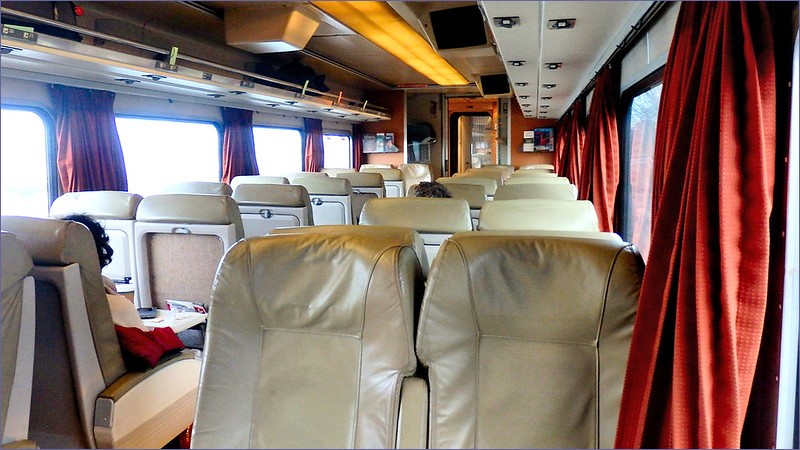
5. The Canadian
The Canadian is VIA Rail Canada’s famous transcontinental passenger train linking Toronto and Vancouver. It is one of Canada’s best-known long-distance railway journeys and crosses the country from the Great Lakes region to the Pacific coast. The present-day train celebrated its 70th anniversary in 2025, having first entered service in 1955.
The train runs from Toronto to Vancouver via Winnipeg, Jasper with intermediate stops including major destinations such as Sioux Lookout, Saskatoon and Kamloops.
The distance between Toronto and Vancouver is approximately 4,406 km. The journey lasts 4 days and 4 nights.
The route crosses several very different landscapes, including the forests and lakes of northern Ontario, the vast Prairies and the Canadian Rockies.
VIA Rail currently offers three classes on the route:
Economy – a reclining seat and access to the Skyline car; food and drinks are available for purchase.
Sleeper Plus – sleeping accommodation ranging from berths to private cabins, together with meals and access to additional services.
Prestige – the highest class, with larger private cabins and enhanced services.
The train has large panoramic windows and a Skyline dome car, allowing passengers to observe the landscape from an elevated viewpoint.
Carriages are old but there are plans to buy a new rolling stock for this railway connection.
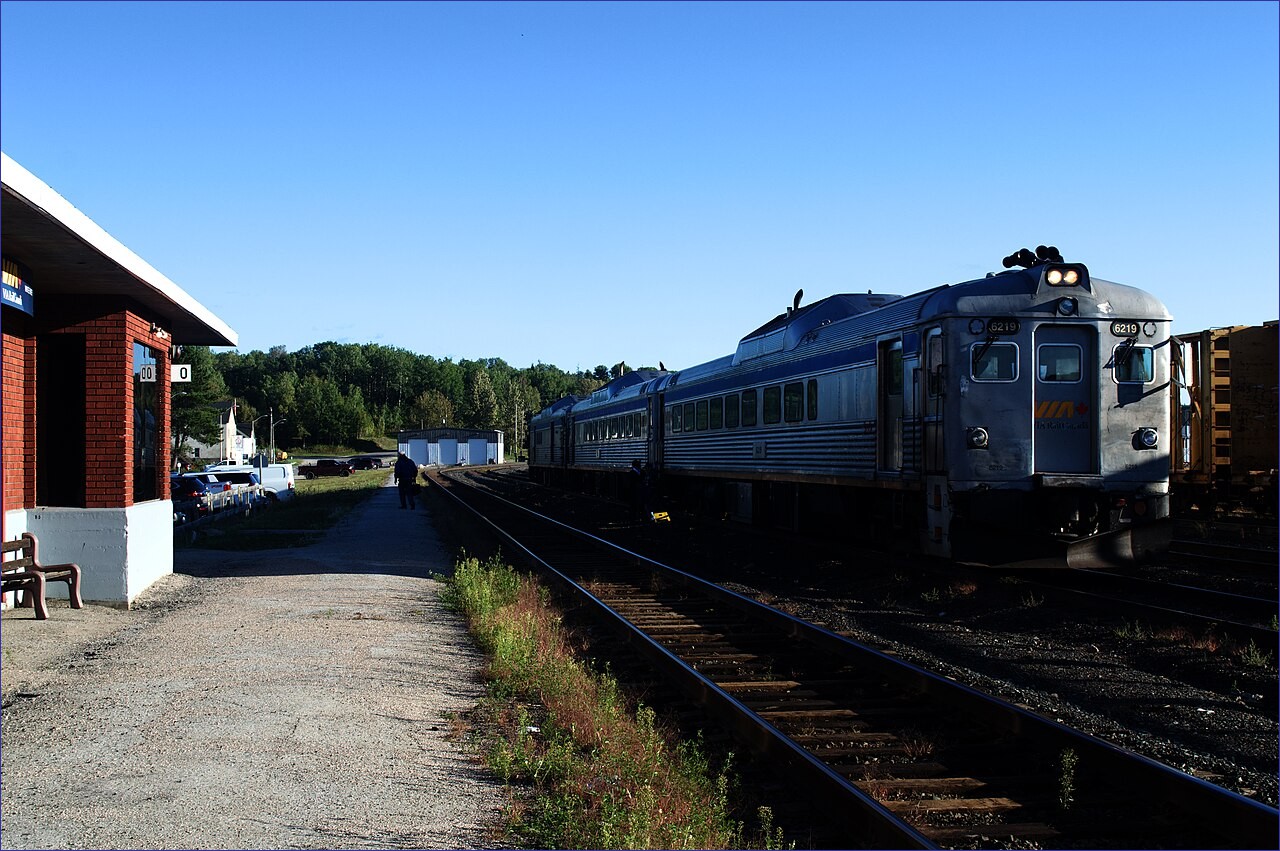
6. Sudbury – White River Train
Train between Sudbury and White River is an interesting regional train connections operated by Via Rail. It connects Sudbury with White River across a remote part of the province and is particularly interesting because it provides passenger access to communities and wilderness areas that have very limited alternative public transport.
Train number 185/186 coverts the route between stations in about 8 hours (483 km). The train runs three Times a week in each direction.
One of the most interesting features of this train is the large number of remote stops. The current timetable lists more than 30 locations between Sudbury and White River, including places such as Benny, Stralak, Pogamasing, Woman River, Kormak, Kinogama, Girdwood and O’Brien. Some are extremely small settlements or railway points rather than conventional towns with large stations.
The train is particularly famous among railway enthusiasts because it uses Budd Rail Diesel Cars (RDCs). VIA Rail’s RDC-1 cars were built by the Budd Car Company between 1956 and 1958 and are diesel-powered self-propelled passenger cars. VIA says that its RDCs, used primarily on the Sudbury–White River route, are the only remaining RDCs in the world still providing regular service. Only Economy class is available.
The route crosses a remote part of northern Ontario dominated by Canadian Shield landscapes, including forests, lakes, rocky terrain and numerous isolated settlements. There is no complimentary Wi-Fi; passengers can purchase snacks, hot drinks and water during the journey.
Sudbury station is about 10 km from Sudbury Junction, and VIA Rail states that there is no shuttle service between them.
The line appeared in television series Chris Tarrant – Extreme Railways.
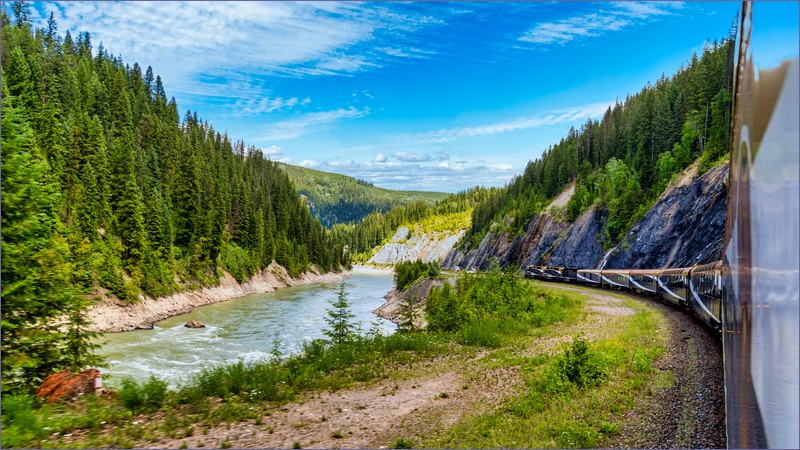
7. Rocky Mountaineer train
Rocky Mountaineer is a well-known excursion train operating on various Canadian routes. It consists of air-conditioned, modern, panoramic cars with glass roofs (Golden Leaf class). Passengers are provided with meals during the journey and overnight stays in hotels. There are three classes available: Red Leaf, Silver Leaf, and Golden Leaf, ranging from regular open-plan cars with seating to double-decker panoramic cars.
A sample excursion:
First Passage to the West
Route: Vancouver – Kamloops – Lake Louise – Banff – Calgary
The excursion lasts 6 days, including five nights. Passengers travel by train for only two days, while the remaining three days are designated for car travel (included in the price). All nights are spent in hotels, with two breakfasts and two lunches provided on board the train.
The website offers many excursion options. They are very expensive but popular among people from all over the world.
The Rocky Mountaineer brand also includes a train that was known until a few years ago as the Whistler Mountaineer.
More information about the offers is available on the train’s website.
Rocky Mountaineer – official website
8. Royal Canadian Pacific
Royal Canadian Pacific is a world-renowned luxury excursion train in Canada. The trains consist of stylish retro cars with sleeping compartments reminiscent of an apartment, all furnished with opulence. A luxurious journey through Canada offers an unforgettable experience. Previously, the operator offered several routes through Canada’s most beautiful regions, with the price including amenities such as airport transfers and a welcome banquet.
Since 2015, the train operates as a charter service, meaning trains are run on special order for larger groups or travel agencies. Currently, there are no public tours available for individual tourists.
Royal Canadian Pacific – official website
9. Train des Charlevoix
Train des Charlevoix is a tourist train in Quebec province. It runs between Quebec City and La Malbaie. Train stops in Baie-Saint-Paul and in the winter at the Le Massif ski area, a distance of about 140 kilometres (87 mi). It is owned and operated by Le Massif de Charlevoix, which also owns the Le Massif ski area. Journey time between Quebec and La Malbaie is about 4 hours.
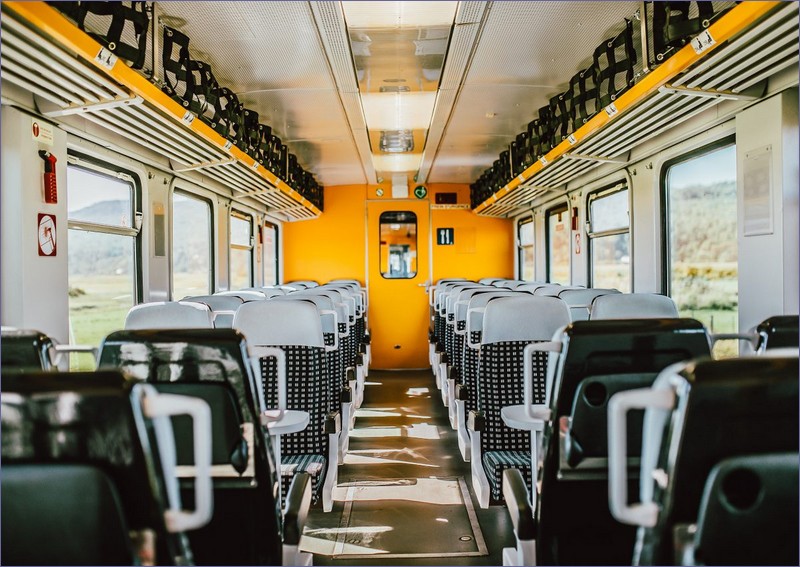
The connection is served by old diesel multiple units acquired from Deutsche Bahn – national railway operator in Germany. These diesel multiple units were built in 1981. Trains are not wheelchair accessible and are not equipped with air-conditioning. Toilets are available in each carriage.
Tickets are relatively expensive.
List of the stations:
– Chutes Montmorency in Quebec City
– Sainte-Anne-de-Beaupré
– Petite-Rivière-Saint-François
– Baie-St-Paul
– Les Éboulements
– Saint-Irénée
– La Malbaie
Train des Charlevoix – official website
10. Ontario Northland
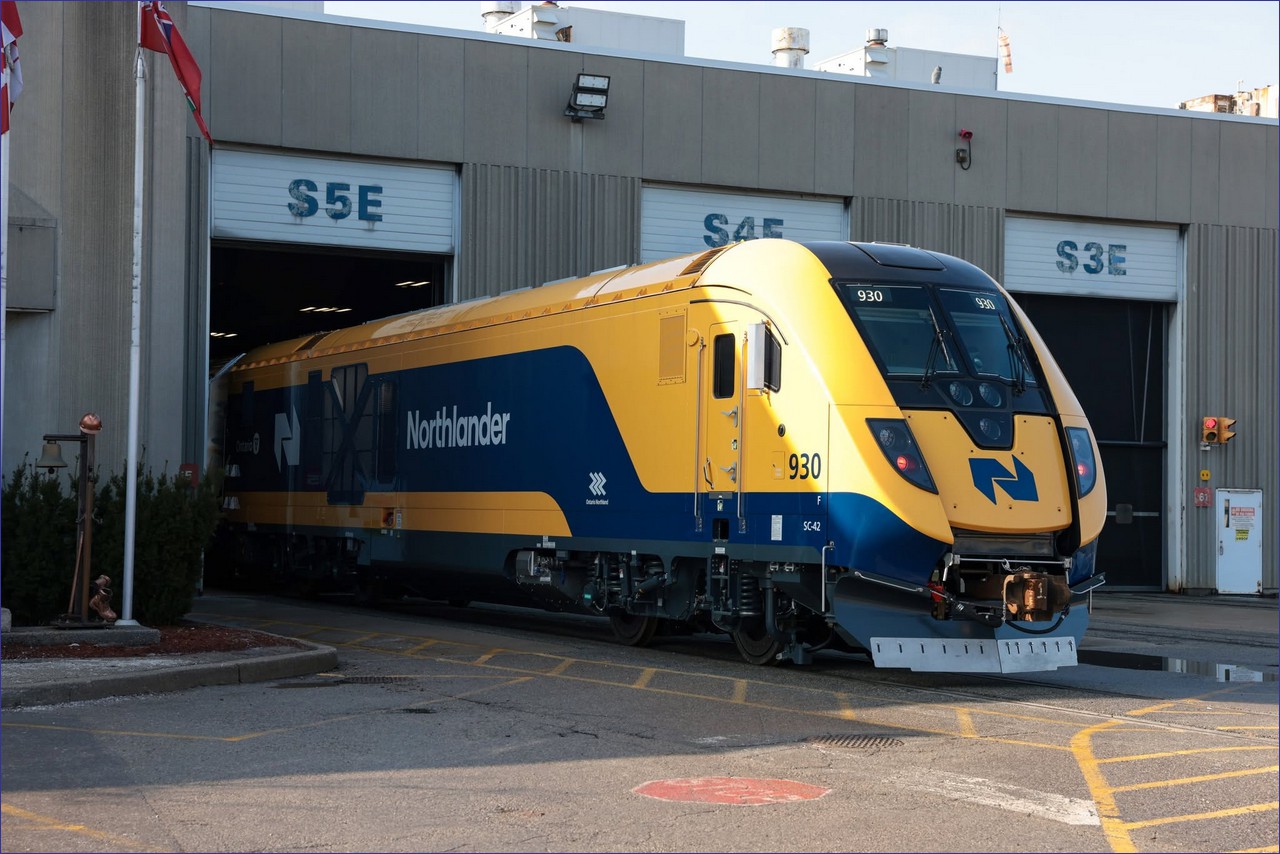
Ontario Northland is a provincial transport agency in Ontario which run a popular Polar Bear Express. The second popular train – Northlander – is expected to be reinstated in the nearest future.
Northlander – the passenger train operated by Ontario Northland. The original Northlander connected Toronto with northeastern Ontario, but passenger service was discontinued in 2012. A new Northlander service is now being prepared for launch in 2026, using new trains and upgraded railway infrastructure. The planned route of the new train is Toronto (Union Station) – Timmins with a rail connection onward to Cochrane. The distance between Toronto and Timmins is about 740 km. The route crosses a large part of central and northeastern Ontario, changing from the heavily populated Toronto area to the forests and lakes of the Canadian Shield and eventually the more remote landscapes of northeastern Ontario.
Cochrane is particularly important because the Northlander will connect with Ontario Northland’s Polar Bear Express, which operates between Cochrane and Moosonee on James Bay. Ontario Northland’s proposed timetable provides connections between the two services in Cochrane. This will allow passengers travelling from Toronto and southern Ontario to continue by train towards Moosonee and the James Bay coast.
The restored service will use three new Siemens trainsets purchased by the Ontario government. Each trainset consists of one locomotive and three passenger cars and has 169 seats.
The proposed timetable is particularly interesting because the train is designed as an overnight service in the northern part of the route. A southbound train is planned to leave Timmins around midnight and reach North Bay in the early morning before continuing to Toronto. Northbound trains are planned to leave Toronto in the evening and reach northern Ontario the following morning.
Polar Bear Express – a passenger train operated by Ontario Northland between Cochrane and Moosonee in northern Ontario. It is one of Canada’s most unusual regional railway services, travelling north through the remote boreal forest towards James Bay. The train is important not only for tourists but also for residents of remote communities along the railway, many of which have limited road access. The length of the route is 186 km and journey time is about 5 hours. The train runs year-round. The timetable varies seasonally.
The journey is particularly interesting because the railway passes through a vast area of boreal forest, wetlands, rivers and lakes. There are long stretches with almost no roads or permanent settlements. The Polar Bear Express remains an important transportation link for people living along the line.
The train consists dining cars where staff serves freshly prepared breakfast, lunch and dinner, with menus changing seasonally. This is unusual for a relatively short regional train and adds to the character of the journey.
Ontario Northland – official website
11. Railway Museums in Canada
In Canada, there are over 10 museums dedicated to railways and their history. The most important railway museums can be found in Toronto and Saint-Constant near Montreal. Also noteworthy is the Alberta Railway Museum located 10 kilometers from Edmonton, and the railway rolling stock exhibition at Winnipeg Union Station.
Most important railway museums in Canada
12. Funicular railways in Canada
There are four operational funicular railways in Canada:
Funiculaire du Vieux Quebec in Quebec City
Falls Incline Railway near Niagara Falls
Two funiculars in Edmonton
Funicular railways in Canada – more information
13. Most popular heritage railways
There are dozens of heritage, tourist and miniature railways in Canada. Most of them are situated in remote areas, far from regular passenger services. The list below includes only most popular of them. Heritage railways usually run seasonally on weekends.
Agawa Canyon Tour Train – a seasonal tourist railway operating from Sault Ste. Marie, Ontario, into the remote wilderness of northern Ontario. It travels approximately 114 rail miles (183 km) north to Agawa Canyon on the historic Algoma Central Railway, then returns to Sault Ste. Marie the same day. The journey is particularly famous for the forests, lakes, rivers, Canadian Shield rock formations and autumn colours along the route. The railway crosses spectacular trestles, including the Montreal River trestle, before reaching the more mountainous terrain around Agawa Canyon. The excursion lasts about 10 hours. The train’s destination is Agawa Canyon Park, which is not accessible by public road. Passengers leave the train for a short period to explore the canyon on foot. There are several hiking trails, waterfalls and viewpoints. The train is especially popular in September and early October, when the deciduous forests turn red, orange and yellow. The coaches have large windows designed for sightseeing. An onboard commentary provides information about the landscape, railway and history of the region. Locomotive-mounted cameras also provide an engineer’s-eye view on screens inside the coaches. It operates from August to October.
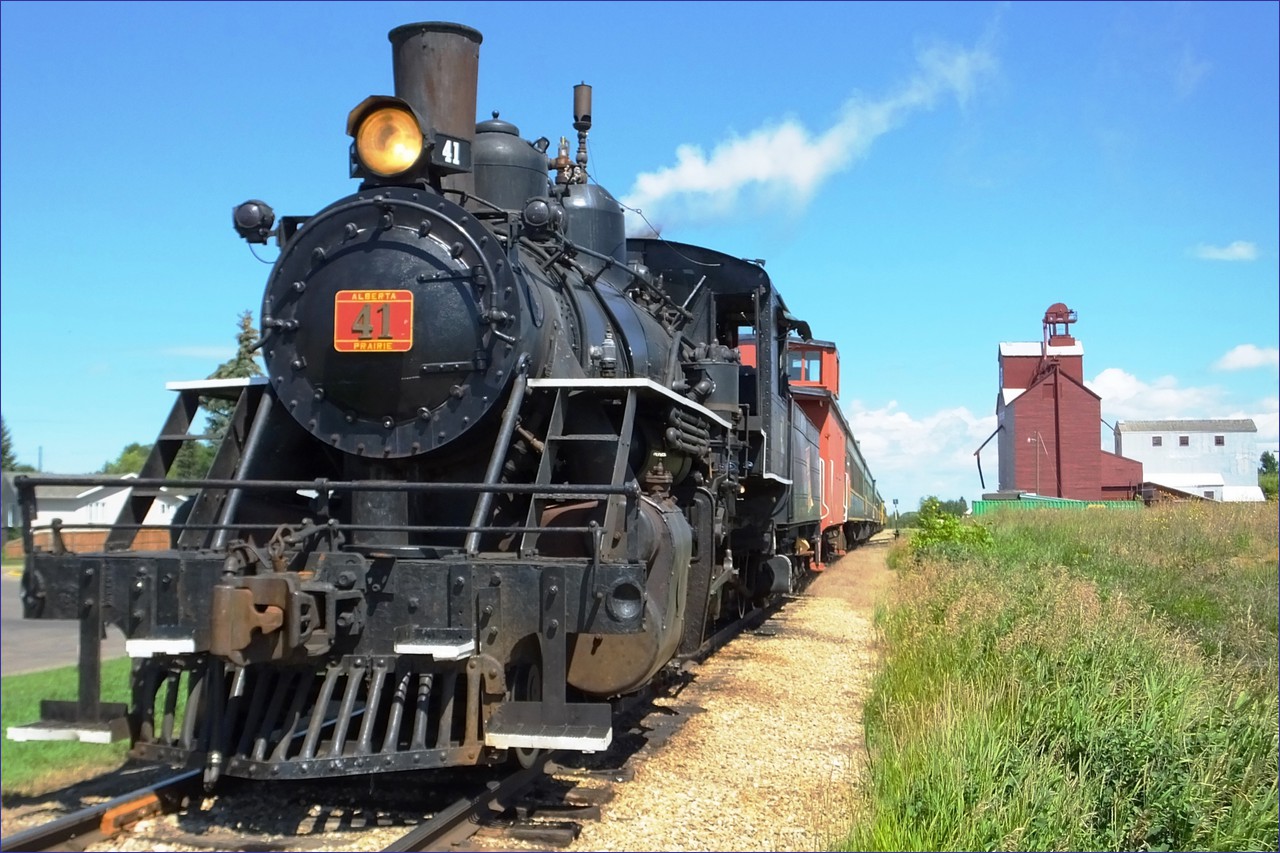
Alberta Prairie Railway Excursions – a heritage railway based in Stettler, Alberta, operating excursion trains through the agricultural landscape of central Alberta. The railway began operations in 1990 and uses a section of former Canadian Northern Railway track between Stettler and Big Valley. It is one of Alberta’s best-known heritage railway attractions, combining historic trains with meals, entertainment and sightseeing. The principal historic route runs from Stettler to Big Valley, a distance of roughly 48 km (30 miles) each way. The railway passes through open Alberta Parklands and Prairie scenery, with farmland, grassland and wildlife along the route. The trains normally make a substantial stop at Big Valley, which was once an important railway point on the Canadian Northern system. APRE also operates some excursions to its Country Hideaway at Warden Junction. The railway’s most famous locomotive is No. 41, a 1920 steam locomotive. Many excursions include a buffet-style meal at the destination and a programme of music, historical interpretation or themed activities.
Edmonton, Yukon & Pacific Railway (EY&PR) – a historic-style steam railway operating inside the Fort Edmonton Park in Edmonton, Alberta. It is named after the Edmonton, Yukon & Pacific Railway, the real railway that brought the first train across the North Saskatchewan River into Edmonton in 1902. The Fort Edmonton Park railway is therefore both a visitor attraction and a reminder of an important part of Edmonton’s railway history. The railway operates on a short closed circuit inside Fort Edmonton Park. The train connects the different historical sections of the park and provides an unusual way to experience the reconstructed 19th- and early-20th-century Edmonton. An interesting railway feature is the level crossing with the Edmonton Radial Railway streetcar system inside the park. The most recognizable locomotive is Edmonton, Yukon & Pacific No. 107, a 2-6-2 Prairie-type steam locomotive built by Baldwin Locomotive Works in Philadelphia in 1919.
Kettle Valley Steam Railway – a heritage and tourist railway based in Summerland, British Columbia, in the Okanagan Valley. It operates on a preserved section of the historic Kettle Valley Railway, originally built by the Canadian Pacific Railway between 1910 and 1915. Tourist operations began in 1995. The preserved section has 16 km. The standard excursion is approximately 90 minutes long. Trains depart from Prairie Valley Station in Summerland and travel through the agricultural landscape of the Okanagan Valley. The route passes orchards, vineyards and fields before reaching the spectacular Trout Creek Trestle. The bridge is approximately 238 ft (73 m) above the canyon floor and provides views towards Okanagan Lake. Passengers can travel in restored vintage enclosed coaches or in open-air cars. Historical commentary and onboard entertainment are also part of the standard excursion. The railway’s most famous locomotive is No. 3716, a 2-8-0 Consolidation steam locomotive built by the Montreal Locomotive Works in 1912.
Prairie Dog Central Railway – a heritage railway near Winnipeg, Manitoba, operated by the Vintage Locomotive Society Inc. It runs excursion trains through the prairie countryside north of Winnipeg, mainly between Inkster Junction and Grosse Isle, with some services continuing towards Warren. It is a tourist and heritage railway rather than a regular passenger service. The railway is particularly famous for Steam Locomotive No. 3, built in Scotland in 1882 and regarded as Canada’s oldest operating steam locomotive. The train uses historic passenger coaches, many of which are around a century old. Among the notable vehicles is Coach 103, built by the Pullman Company in 1908. It has wooden construction, mahogany panelling, oak fittings and original details. Another historic coach, No. 107, was built by Canadian Pacific at its Angus Shops in 1911. The journey takes place in the flat agricultural landscape surrounding Winnipeg. The railhttps://pdcrailway.com/way runs through prairie and farmland, with Grosse Isle serving as the principal destination and stop on many excursions. The length of the route is about 15 km.
Waterloo Central Railway (WCR) – a heritage railway in Ontario operating on the Waterloo Spur, a historic railway line between Waterloo, St. Jacobs and Elmira. The present heritage railway operates between Waterloo Northfield ION station, the St. Jacobs Farmers’ Market, St. Jacobs village and Elmira. The railway therefore provides an interesting combination of heritage railway travel and access to several attractions in the Waterloo Region. At Northfield Drive, passengers can connect directly with the ION light-rail system. The regular Heritage Hopper is a hop-on/hop-off service. The complete round trip takes approximately 1 hour 45 minutes, with passengers able to leave the train at St. Jacobs Farmers’ Market, St. Jacobs or Elmira and board a later train. The route passes through the countryside north of Waterloo, including farmland, Mennonite farms, wooded areas and rural landscapes. The St. Jacobs area is particularly interesting for visitors interested in the region’s Mennonite heritage, while the railway also provides a convenient way to reach the popular St. Jacobs Farmers’ Market without relying entirely on a car. The standard coaches have traditional railway seating and large windows, while a Lounge Car offers upholstered seats and tables. A snack bar is available on the train.
Wheatland Express – a heritage and excursion train operating in east-central Saskatchewan, primarily between Wakaw and Cudworth, about an hour from Saskatoon. The Wheatland Railway owns and operates about 47 miles (76 km) of track between St. Louis and the Totzke junction, where it connects with the CN network. Tourist excursions normally use the section between Wakaw and Cudworth, a round trip of about 22 km. A typical excursion lasts 2–3 hours and travels at a leisurely speed of roughly 10–15 mph (16–24 km/h). The route passes through the agricultural landscape of central Saskatchewan, with wide prairie views and small rural communities. The passenger fleet includes several unusual American-built historic cars. Car 2017, originally a Union Pacific lunch-counter diner built in 1955, was later used by Amtrak and refurbished for Wheatland Express. Car 2018 began life as a 1954 Union Pacific sleeper before being rebuilt as a coach and later used as part of the Canadian Safety Train Express. Its excursions combine railway travel with theatre, music, food and local history.
Tourist railways in Canada – a comprehensive list
14. Suburban trains in Canada
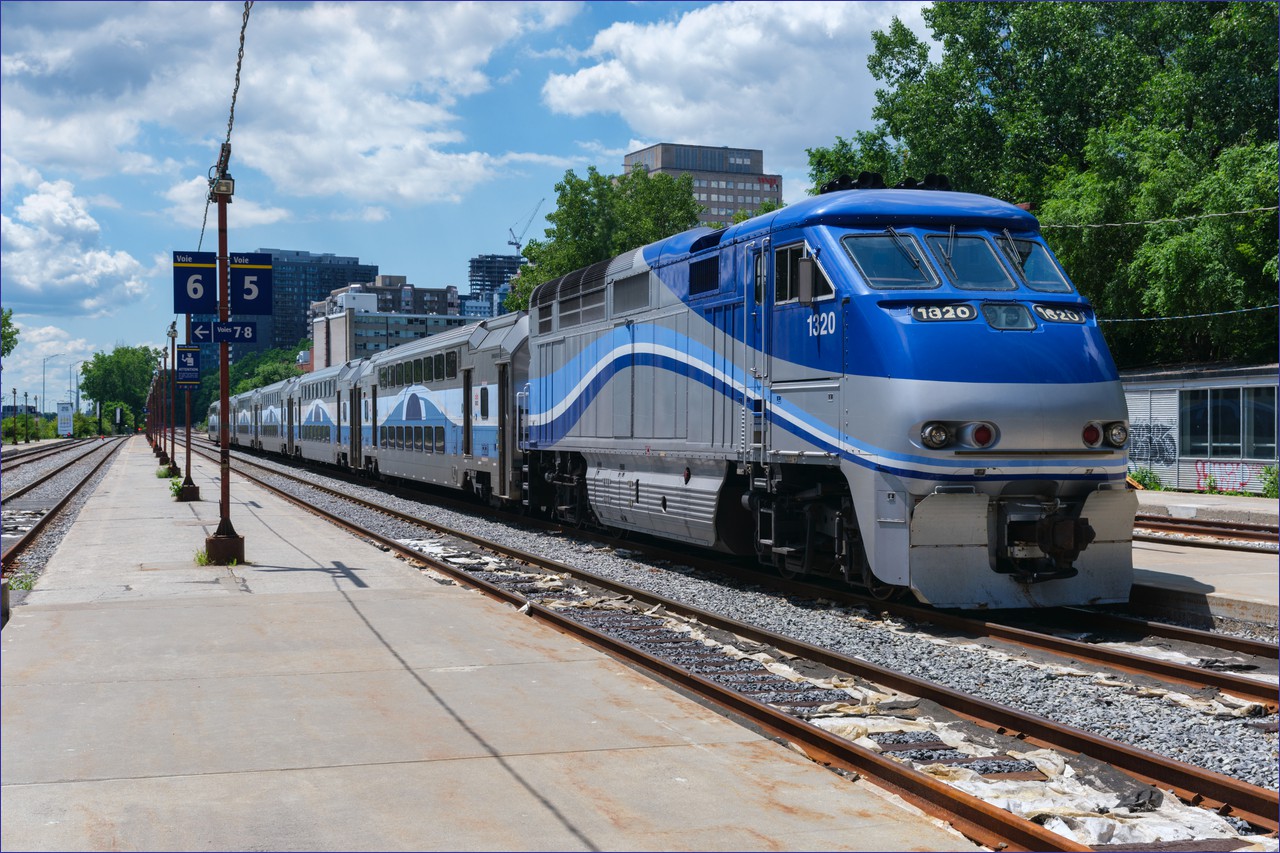
Exo – the commuter railway network of Greater Montréal in Québec. The system connects Montréal with surrounding suburbs on the North Shore, South Shore and western parts of the metropolitan area. Exo trains are mainly designed for commuters travelling into downtown Montréal, but they are also useful for tourists visiting places around the city. The network currently consists of five commuter rail lines and about 52 stations. Rolling stock consists diesel-electric locomotive-hauled push-pull trains with double-deck coaches. Exo trains share tracks with freight trains operated by major North American railway companies such as Canadian National Railway (CN) and Canadian Pacific Kansas City (CPKC).
Lines:
1. Vaudreuil–Hudson Line (Line 11) Montréal (Lucien-L’Allier) – Vaudreuil – Hudson
2. Saint-Jérôme Line (Line 12) Montréal – Laval – Blainville – Saint-Jérôme
3. Mont-Saint-Hilaire Line (Line 13) Montréal Central Station – Longueuil area – Mont-Saint-Hilaire
4. Candiac Line (Line 14) Montréal (Lucien-L’Allier) – Candiac
5. Mascouche Line (Line 15) Route: Montréal – Repentigny – Terrebonne – Mascouche
The only Exo line still using Gare Centrale as its Montréal terminus is Mont-Saint-Hilaire Line.
GO Transit – the regional commuter rail and bus system serving the Greater Toronto and Hamilton Area (GTHA) and the wider Greater Golden Horseshoe region of Ontario. It is one of Canada’s most important suburban railway systems, connecting downtown Toronto with surrounding cities such as Hamilton, Mississauga, Brampton, Oakville, Burlington, Oshawa, Barrie, Kitchener, Guelph and Niagara Falls. GO Transit has operated since 1967 and has grown from a single railway line along Lake Ontario into a large regional transport network. It was founded in 1967
Founded: 1967.
Rolling stock consists diesel locomotives with distinctive green-and-white bi-level coaches. The double-deck coaches provide high capacity and are designed for suburban journeys.
GO Train services operate on several main corridors radiating from Toronto Union Station: The Union Station is the heart of the network, with the majority of GO rail passengers travelling to or from downtown Toronto. It is the main interchange point between regional trains and long-distance rail services.
Go Train provide train connection to tourist attractions:
Niagara Falls – GO trains provide seasonal and regular connections from Toronto, making it possible to visit the famous waterfalls without a car.
Hamilton – useful for visiting the city, waterfront areas and nearby natural attractions.
Oakville and Burlington – access points for Lake Ontario waterfront areas.
Barrie – a gateway to Lake Simcoe and nearby recreational areas.
Kitchener–Waterloo – access to one of Ontario’s important university and technology regions.
The Tsal’alh Seton Train – a railcar service in British Columbia, Canada, operating between Lillooet and Seton Portage along the northern shore of Seton Lake in the remote Lillooet Country region. It is one of the most unusual passenger rail services in Canada because it combines the functions of a community transport link and a scenic railway journey through a very isolated mountain landscape.
The trains is operated by CN on the basis of partnership involving Seton Lake First Nation (Tsal’alh) and Canadian National Railway (CN) Unlike tourist, the Tsal’alh Seton Train primarily exists as an essential community service. It provides transport for residents of the isolated communities of Seton Portage and Shalalth to reach Lillooet for schools and other essential services.
The journey follows the northern shore of Seton Lake, surrounded by steep mountains, forests and wilderness landscapes. The most famous section is the passage through the Shalalth Tunnel, where the railway enters the mountains beside the lake. The current tunnel was opened in 1989 and is approximately 1.2 km long. Travel time is approximately 1 hour 40 minutes one way in the current operation.
West Coast Express (WCE) – a commuter railway service connecting Mission City in the Fraser Valley with downtown Vancouver (Waterfront Station) in British Columbia. It is operated by TransLink and is one of the few dedicated commuter rail services in western Canada. The line was opened in 1995 and was created to provide a fast public transport alternative for people travelling from the eastern suburbs of Metro Vancouver to the city centre.
The length of the line is 69 km. West Coast Express has 8 stations. The West Coast Express runs along the northern side of the Fraser Valley and uses railway corridors shared with freight trains. The route follows the Fraser River and provides attractive views of mountains, forests and suburban landscapes. The complete journey takes about 75 minutes.
Unlike SkyTrain, which operates throughout the day, West Coast Express is primarily designed for weekday commuting: Morning trains run westbound from Mission City to Vancouver.
Afternoon and evening trains run eastbound from Vancouver to Mission City. Regular service operates Monday to Friday, with no normal weekend service. The complete journey takes approximately 75 minutes, making it a practical alternative to travelling by road during peak hours.
A train can consist of up to 10 bi-level cars and carry large numbers of commuters.
15. UP Express
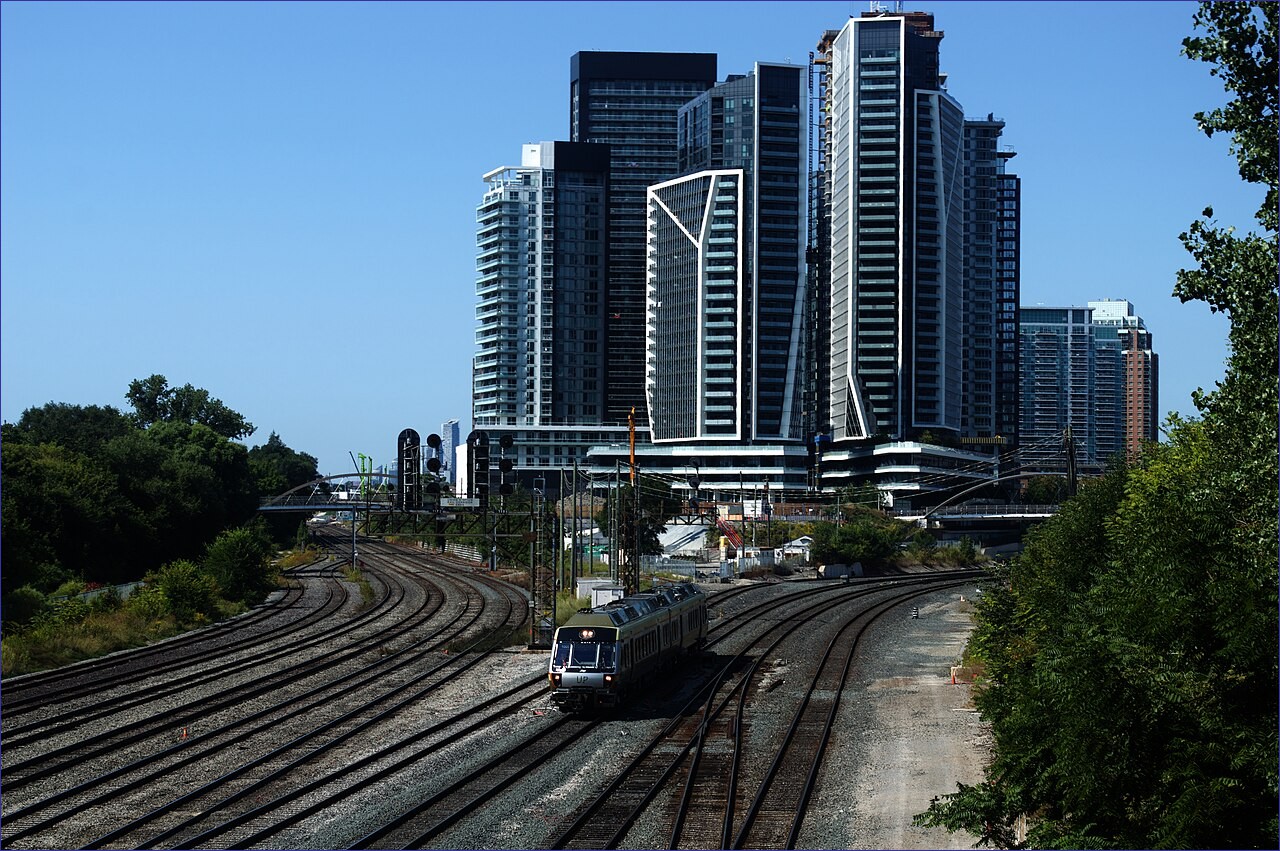
UP Express (Union Pearson Express) is a dedicated airport railway service connecting Toronto Pearson International Airport with Union Station in downtown Toronto. It is operated by Metrolinx and was opened in 2015 before the Pan American Games held in Toronto. The service was created to provide a fast rail connection between Canada’s busiest airport and the centre of Toronto. It was the first fast train service between airport and downtown in Canada
The length of the route Toronto Pearson International Airport – Union Station is approximately 23 km. Journey time is about 28 minutes. UP Express has five stations. The connection is served by modern diesel multiple-unit trains designed specifically for airport passengers. The trains provide: luggage space, free Wi-Fi, power outlets, flight information displays, accessible facilities for passengers with mobility needs.
Passengers can buy tickets online, at station machines or pay using the PRESTO electronic fare system. Contactless debit and credit card payments are also accepted.
UP Express – official website
16. What to see
Calgary (optional) – the largest city in Alberta and one of the main economic centres of western Canada. The city hosted the 1988 Winter Olympics, and many Olympic facilities remain in use. Calgary is also famous for its western heritage and hosts the annual Calgary Stampede, one of Canada’s best-known festivals. The city’s best known-landmark is Calgary Tower. The observation deck offers panoramic views of downtown, the surrounding prairies and, on clear days, the Rocky Mountains. In Calgary is located Heritage Park Historical Village, a large open-air museum presenting life in western Canada from the 1860s to the 1930s. It includes historic buildings, a steam railway, vintage vehicles and other attractions. Other museums in the city: Glenbow Museum dedicated to regional history and Studio Bell with exhibitions about Canadian music and recording technology. Worth visit is Inglewood, one of Calgary’s oldest neighbourhoods, with historic buildings, independent shops, restaurants and a lively local atmosphere.
Halifax (optional) – the capital of Nova Scotia and the largest city in Atlantic Canada. It is an important port, naval centre and transportation hub on the Atlantic coast. Most popular area in Halifax is the Waterfront with a long boardwalk along the harbour, historic buildings, restaurants, shops and museums. The city’s best-known historic landmark is the citadel. The large star-shaped fortress occupies the top of Citadel Hill and was built to protect Halifax’s strategically important harbour. Visitors can see military buildings, fortifications and daily historical demonstrations. Halifax has a very nice a Victorian-era garden established in the 19th century. It contains ornamental flower beds, ponds, statues and mature trees and is one of the city’s most attractive green spaces. It’s highly recommend to visit Fairview Lawn Cemetery – a cemetery where 121 victims of the Titanic disaster are buried. The former immigration terminal where more than one million immigrants entered Canada between 1928 and 1971. Today it houses the Canadian Museum of Immigration at Pier 21.
Montreal – the largest city in the province of Québec and one of the main cultural and economic centres of Canada. It lies on the Island of Montréal, at the confluence of the Ottawa and St. Lawrence rivers. Montréal is also an important railway junction, with Montréal Central Station serving VIA Rail and Amtrak trains, while the city’s extensive Métro network is useful for exploring the main districts. Old Montréal (Vieux-Montréal) is the city’s historic heart, with cobblestone streets, historic buildings, cafés, galleries and restaurants. Particularly interesting are Place d’Armes, Rue Saint-Paul, Place Jacques-Cartier and Marché Bonsecours. Notre-Dame Basilica of Montréal – the Gothic Revival church, built between 1824 and 1829, is famous for its richly decorated blue interior, stained glass, sculptures and large Casavant organ. Tourists visit also Old Port (Vieux-Port) – the waterfront area along the St. Lawrence River, suitable for walking and cycling. Attractions include the Clock Tower, river cruises and La Grande Roue de Montréal, a large observation wheel. Most popular museum in Montreal is the Pointe-à-Callière, an archaeology and history museum built on the site associated with the founding of Montréal. It presents the city’s history through archaeological remains and exhibitions. Worth visit are also Mount Royal Park, RÉSO (Underground City) – a vast network of underground pedestrian passages connecting shopping centres, hotels, offices and metro stations.
Ottawa – the capital of Canada and the fourth-largest city in the country. The city is known for its monumental government buildings, museums, parks and canals, while the Rideau Canal is one of its most important landmarks and a UNESCO World Heritage Site. One of the symbols of the city is Canadian Tulip Festival held each spring and particularly famous for the huge displays of tulips around the city. Main attraction is the Parliament Hill, the political heart of Canada. The impressive Gothic Revival buildings include the Centre Block, East Block and West Block. The Peace Tower offers views over the city and Ottawa River. There are many interesting museums: Canadian War Museum, Canadian Museum of History, National Gallery of Canada, Canadian Museum of Nature, Canada Aviation and Space Museum, Canadian Museum of Agriculture and Food and historic buildings such as Rideau Hall, Supreme Court of Canada or NOtre-Dame Cathedral Basilica.
Québec City – the capital of the province of Québec and one of the oldest European-founded cities in North America, famous for its Old Québec (Vieux-Québec) , divided into Upper Town and Lower Town. Its narrow streets, stone buildings, squares and fortifications give it a distinctly European appearance. Especially noteworthy is the Petit-Champlain – a picturesque historic street in Lower Town, lined with stone buildings, shops, restaurants and cafés. The nearby Place Royale is associated with the early history of the city. The city’s most recognizable landmark is the hotel Château Frontenac. The huge château-style building dominates the skyline above the St. Lawrence River. Québec is the only city north of Mexico with its historic defensive walls and historic gates largely preserved. There are also interesting museums: Musée national des beaux-arts du Québec (MNBAQ) and Musée de la civilisation. About 12 km from the city centre is located a spectacular waterfall. At 83 metres, it is higher than Niagara Falls.
Toronto – the capital of Ontario and the largest city in Canada. It is located on the northwestern shore of Lake Ontario and is one of the country’s most important economic, cultural and transportation centres. The city has a large modern downtown dominated by skyscrapers, but it also contains historic neighbourhoods, extensive parks and a long waterfront. Toronto is an especially important destination for railway travellers because it is the main hub of VIA Rail Canada and GO Transit. Most popular attraction in Toronto is the CN Tower, one of the world’s best-known telecommunications towers. The observation levels provide panoramic views of the city and Lake Ontario, while the EdgeWalk allows visitors to walk around the outside of the main pod. In the historic Roundhouse near the CN Tower is located Toronto Railway Museum dedicated to the railway development of the city. Royal Ontario Museum (ROM) is Canada’s largest museum, with collections covering natural history, world cultures, archaeology, art and dinosaurs. Hockey Hall of Fame is a major attraction for ice-hockey fans, documenting the history of the sport and displaying the original Stanley Cup. Toronto has many places where you can slowly stroll and admire surroundings, for example High Park, Toronto Islands reachable by ferry, Younge Streets. Ontario Science Centre is a popular attraction for families.
Vancouver – the largest city in British Columbia known for its multicultural population, mild climate, modern architecture and easy access to mountains, forests and the sea. Main attractions of Vancouver include Stanley Park located on a large peninsula beside downtown and contains forests, walking and cycling paths, beaches, gardens and the famous Seawall, Granville Island – a former industrial area transformed into a lively cultural and food distric with The Granville Island Public Market, Canada Place – a distinctive waterfront building with five white sail and Vancouver Lookout – an observation deck in the Harbour Centre tower offering panoramic views of downtown, the mountains, ocean and surrounding areas. Many tourists visit Vancouver’s oldest neighbourhood, Gastown, known for historic brick buildings, cobbled streets, independent shops and restaurants or Chinatown with traditional-style Chinese garden. You can spend leisure time in Vancouver Art Gallery, Vancouver Aquarium, Science World or Museum of Anthropology at the University of British Columbia. The city and surroundings are famous for nice parks such as Capilano Suspension Bridge Park and Lynn Canyon Park north of Vancouver, centred on a suspension bridge crossing a forested canyon. The parks also contains elevated forest walkways and hiking trails.
Related articles:
Trenopedia – main site
Railways in Americas by country