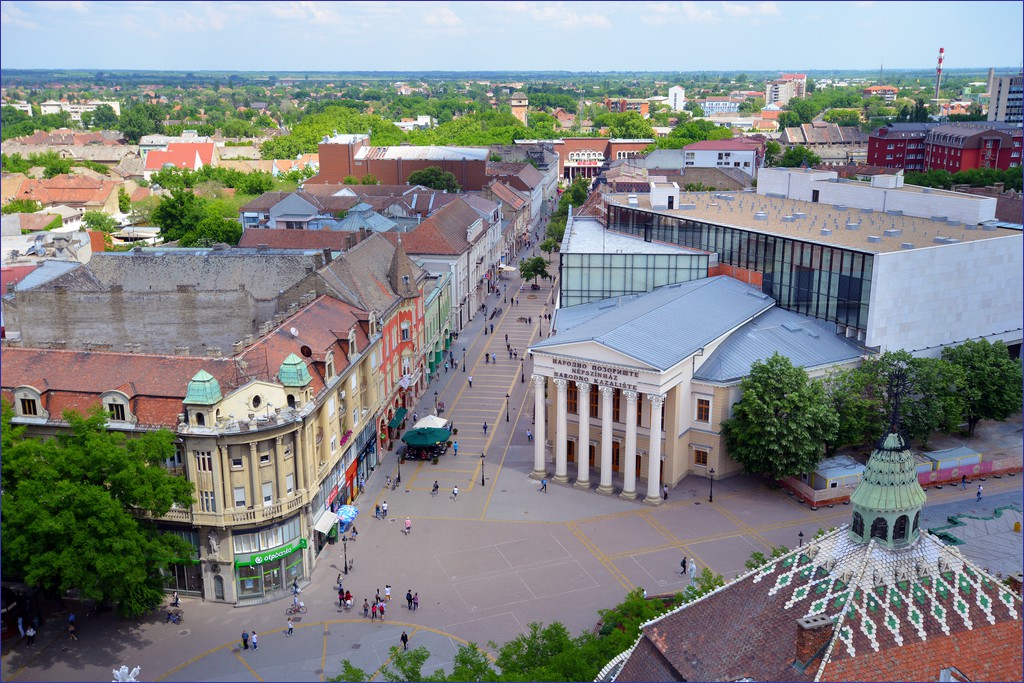
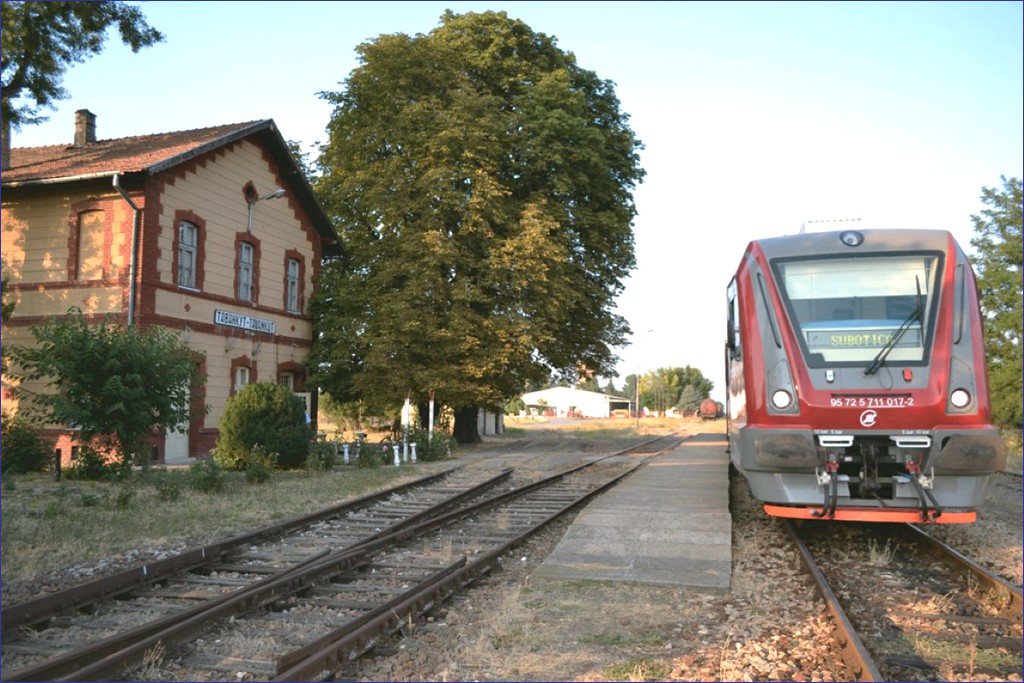
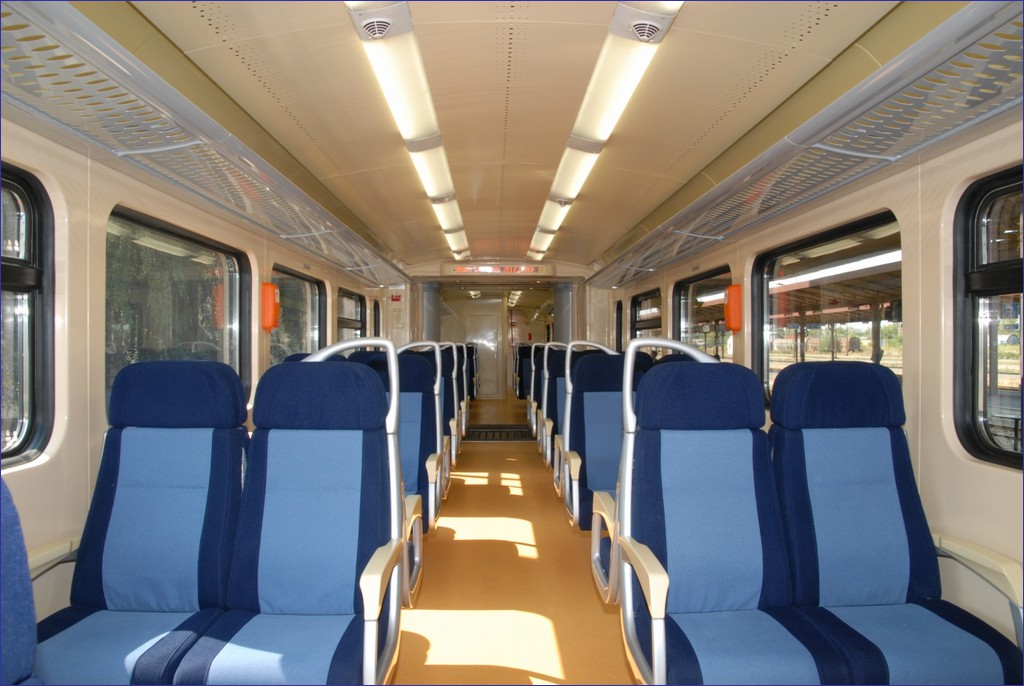
Train from Subotica to Sombor is a regional train connection between two interesting cities in Vojvodina, Serbia. The Russian-made diesel multiple units travel through rural landscape and the journey in one direction lasts 90 minutes. Sombor has a very ugly railway station (the renovation is planned) but the town is definitely worth visit. There are regional trains from Sombor to Novi Sad, Subotica is a main railway junction with trains to Szeged, Belgrade and Kikinda.
Useful websites:
Srbija Voz – timetable
Train travel in Serbia – a general overview
Most important towns and cities:
Subotica – the largest city in northern Bačka, very close to the Hungarian border. It is one of Serbia’s greatest architectural destinations. The city has a strongly Central European character, reflecting centuries of Hungarian and Habsburg influence. It is famous for its outstanding collection of Art Nouveau / Secession architecture. The most recognisable landmark is the spectacular Subotica City Hall, completed in 1912. The Subotica Synagogue, completed in 1902, is one of the finest surviving examples of Hungarian Art Nouveau synagogue architecture. Raichle Palace, built in 1904, is another masterpiece of the city’s Secession architecture. Subotica has historically had a Hungarian majority or substantial Hungarian population. The city is only a few kilometres from the Hungarian border, making it a natural gateway between Serbia and Hungary.
Train from Belgrade to Subotica – a general overview
Sombor – a historic city in western Bačka, close to the border with Hungary and Croatia. It is famous for its greenery, spacious streets and Austro-Hungarian architecture. In the 18th century Sombor received the status of a free royal city, which encouraged economic and cultural development. The city is often called the “greenest city in Serbia” because of its numerous parks, tree-lined streets and particularly large number of mature trees. One of its characteristic features is the extensive network of tree-lined avenues, including streets lined with plane trees. The impressive Županija building houses the administrative centre of the West Bačka District. Its interior contains a huge painting, The Battle of Senta, by Ferenc Eisenhut.
Sombor’s historic centre contains numerous Baroque, Classicist and Secessionist buildings. The Gallery of Milan Konjović is dedicated to one of Serbia’s best-known 20th-century painters.
Sombor is associated with Šokci, a Catholic South Slavic community that has traditionally lived in the surrounding region. The town is also famous for its fiacres (horse-drawn carriages), which are a characteristic part of its tourist image. Nearby Gornje Podunavlje Nature Reserve protects wetlands and forests along the Danube and is an important habitat for birds and other wildlife.