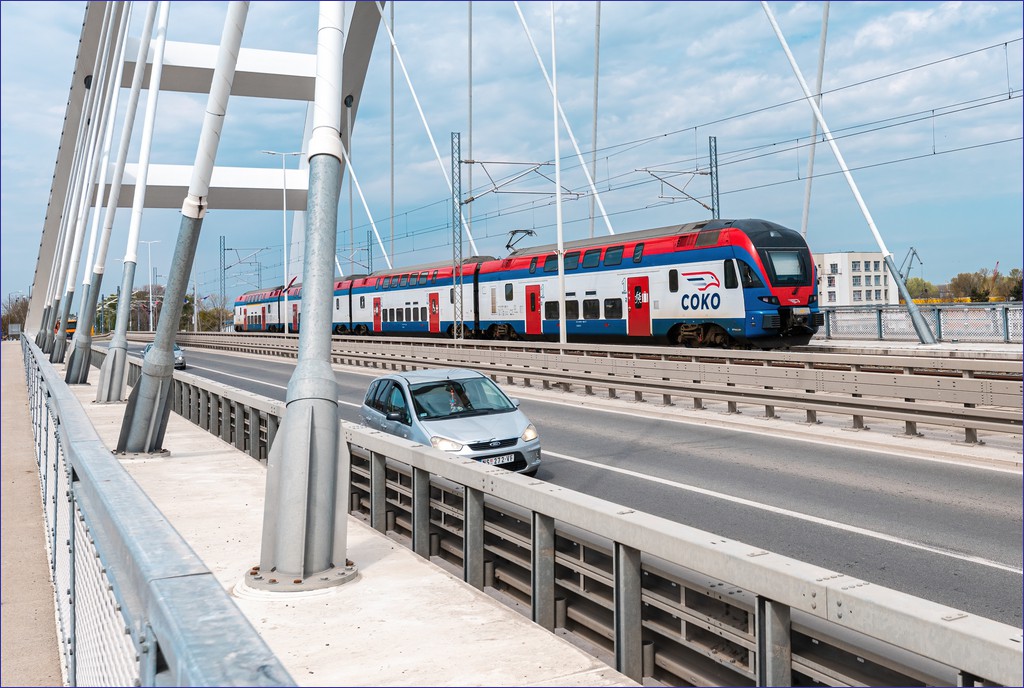
Trains from Belgrade to Subotica run through new main railway line connecting Budapest and Belgrade. The entire line was built in 21st century, the stretch from Subotica to Novi Sad was opened in 2025. The journey is fast and comfortable, especially if you choose SOKO trains. The trains reaching speeds of up to 200 km/h.
There are mainly two types of trains:
SOKO – a modern high-speed trains Stadler KISS from Subotica to Belgrade. These trains are bi-level and stop only at most important stations.
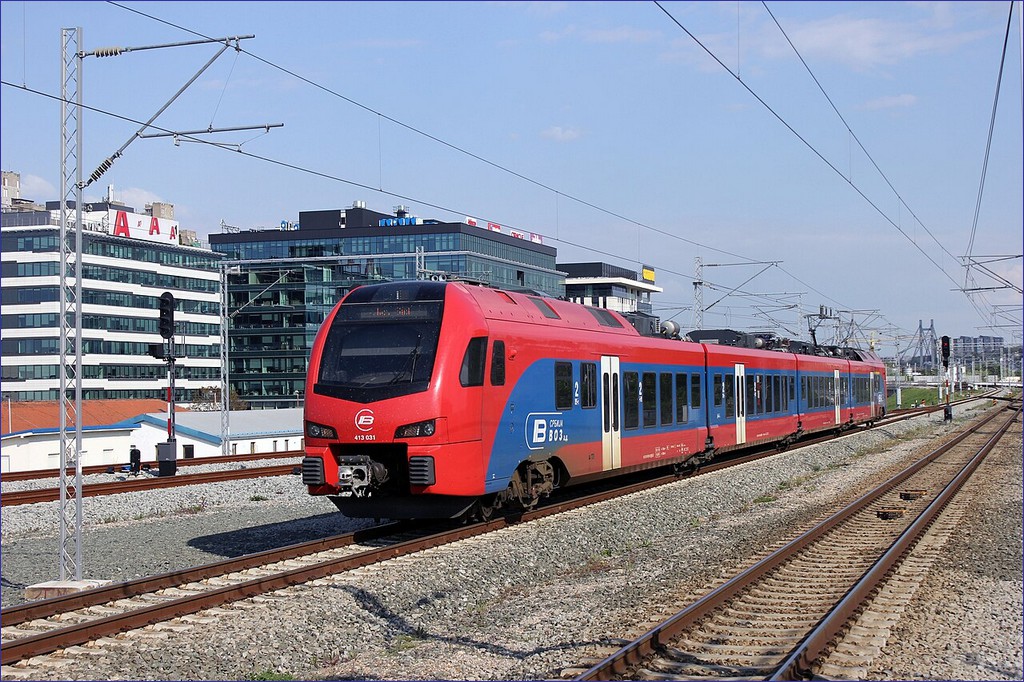
RE/IR trains – a new electric multiple units of Srbija Voz. These trains stop at many stations, the journey is slower, often are overcrowded but the tickets are cheaper.
Additionaly, Belgrade – Budapest trains run this way on the Serbian territory.
Useful websites:
Srbija Voz – timetable
Train travel in Serbia – a general overview
Most important towns and cities:
Belgrade – the capital and largest city of Serbia, situated at the confluence of the Sava and Danube rivers. The most famous historical landmark is Belgrade Fortress, surrounded by Kalemegdan Park. The site contains remains from Roman, Byzantine, medieval Serbian, Ottoman and Austro-Hungarian periods. Belgrade became the capital of modern Serbia in the 19th century and has remained the country’s political, economic and cultural centre. The monumental Church of Saint Sava is one of the largest Orthodox churches in the world. Knez Mihailova Street is the principal pedestrian and shopping street in the historic centre
Another popular attraction is Skadarlija – a historic bohemian quarter, is famous for traditional restaurants, cafés and its 19th-century atmosphere.
Belgrade is an important railway hub, although its railway network has been substantially transformed by the construction of the modern Belgrade–Novi Sad–Subotica high-speed line. Beograd Centar train station is located a quite far from the city centre.
Sremski Karlovci (only RE/IR trains) – a small historic nice town on the Danube, immediately south of Novi Sad, at the foot of Fruška Gora. It is one of the most historically and culturally important small towns in Serbia. The is best known internationally for the Treaty of Karlowitz, signed here in 1699 The treaty ended the Great Turkish War between the Ottoman Empire and The town is famous for its elegant Baroque and Classicist architecture. The Patriarchal Palace, St Nicholas Cathedral and Karlovci Gymnasium are among its most important buildings. The Karlovci Gymnasium, founded in 1791, is one of the oldest Serbian secondary schools. The town is surrounded by the vineyards and forests of Fruška Gora. Nearby Fruška Gora is famous for its concentration of Serbian Orthodox monasteries, many dating from the medieval and early modern periods.
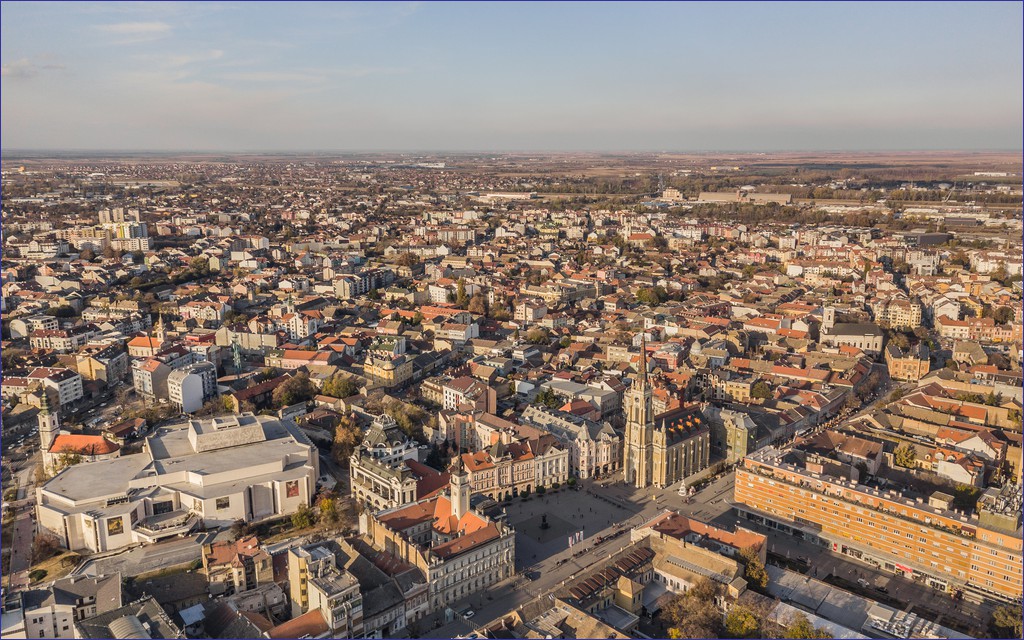
Novi Sad – the second-largest city in Serbia and the capital of the autonomous province of Vojvodina. It lies on the Danube River, opposite the Petrovaradin Fortress. Novi Sad was historically known as the “Serbian Athens” because of its importance as a centre of Serbian intellectual and cultural life. The city’s greatest landmark is Petrovaradin Fortress, built and expanded by the Habsburgs between the 17th and 18th centuries. The fortress is famous today for the EXIT music festival, held there every summer. The historic centre around Trg Slobode (Liberty Square) contains numerous 18th- and 19th-century buildings. The Name of Mary Church, with its distinctive tall tower, is one of the most recognisable buildings in the city centre. Novi Sad is home to Matica Srpska, one of Serbia’s oldest and most important cultural institutions. The Danube and the nearby Fruška Gora National Park provide numerous opportunities for cycling, hiking and recreation.
Subotica – the largest city in northern Bačka, very close to the Hungarian border. It is one of Serbia’s greatest architectural destinations. The city has a strongly Central European character, reflecting centuries of Hungarian and Habsburg influence. It is famous for its outstanding collection of Art Nouveau / Secession architecture. The most recognisable landmark is the spectacular Subotica City Hall, completed in 1912. The Subotica Synagogue, completed in 1902, is one of the finest surviving examples of Hungarian Art Nouveau synagogue architecture. Raichle Palace, built in 1904, is another masterpiece of the city’s Secession architecture. Subotica has historically had a Hungarian majority or substantial Hungarian population. The city is only a few kilometres from the Hungarian border, making it a natural gateway between Serbia and Hungary.