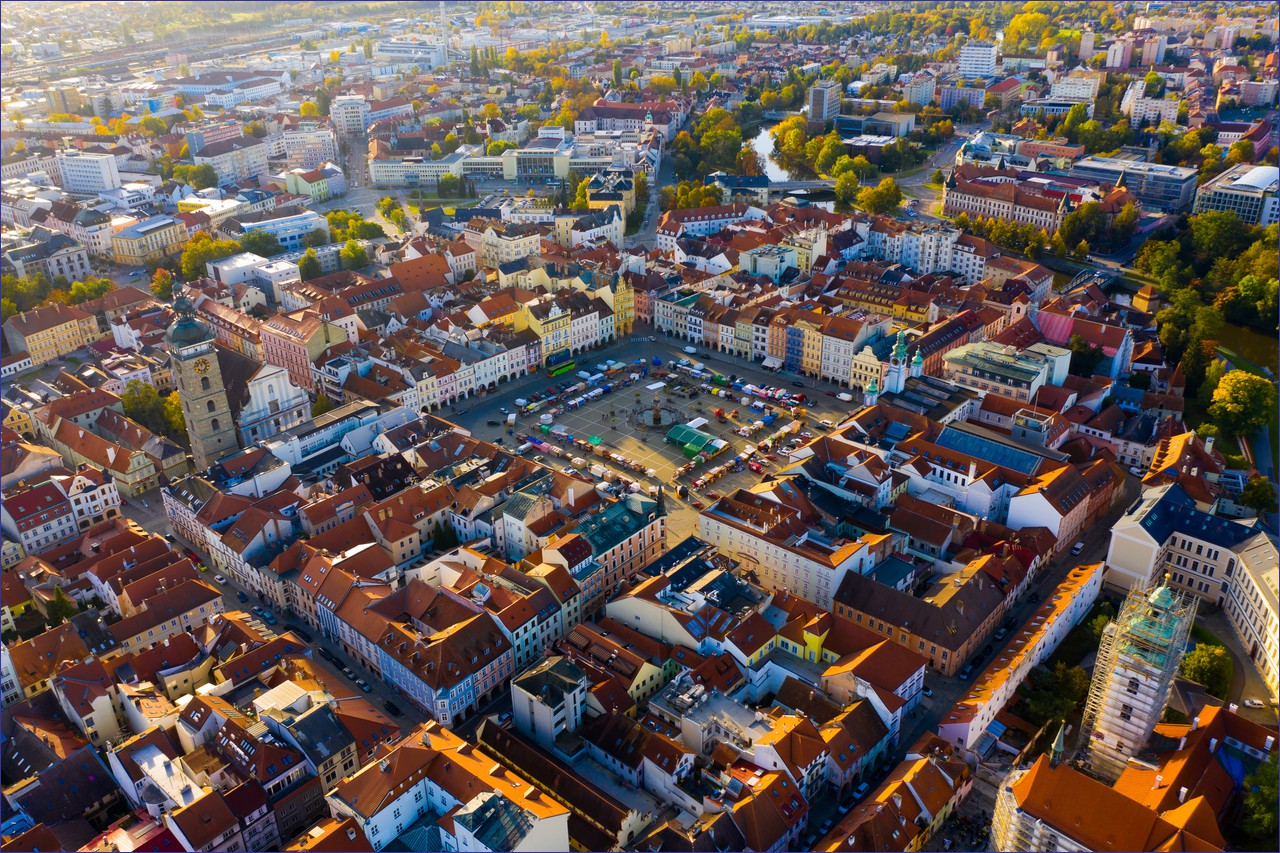
Brno and České Budějovice are two Czech cities perfect for one-day train trip. There are two most common ways to travel from Brno to České Budějovice by train:
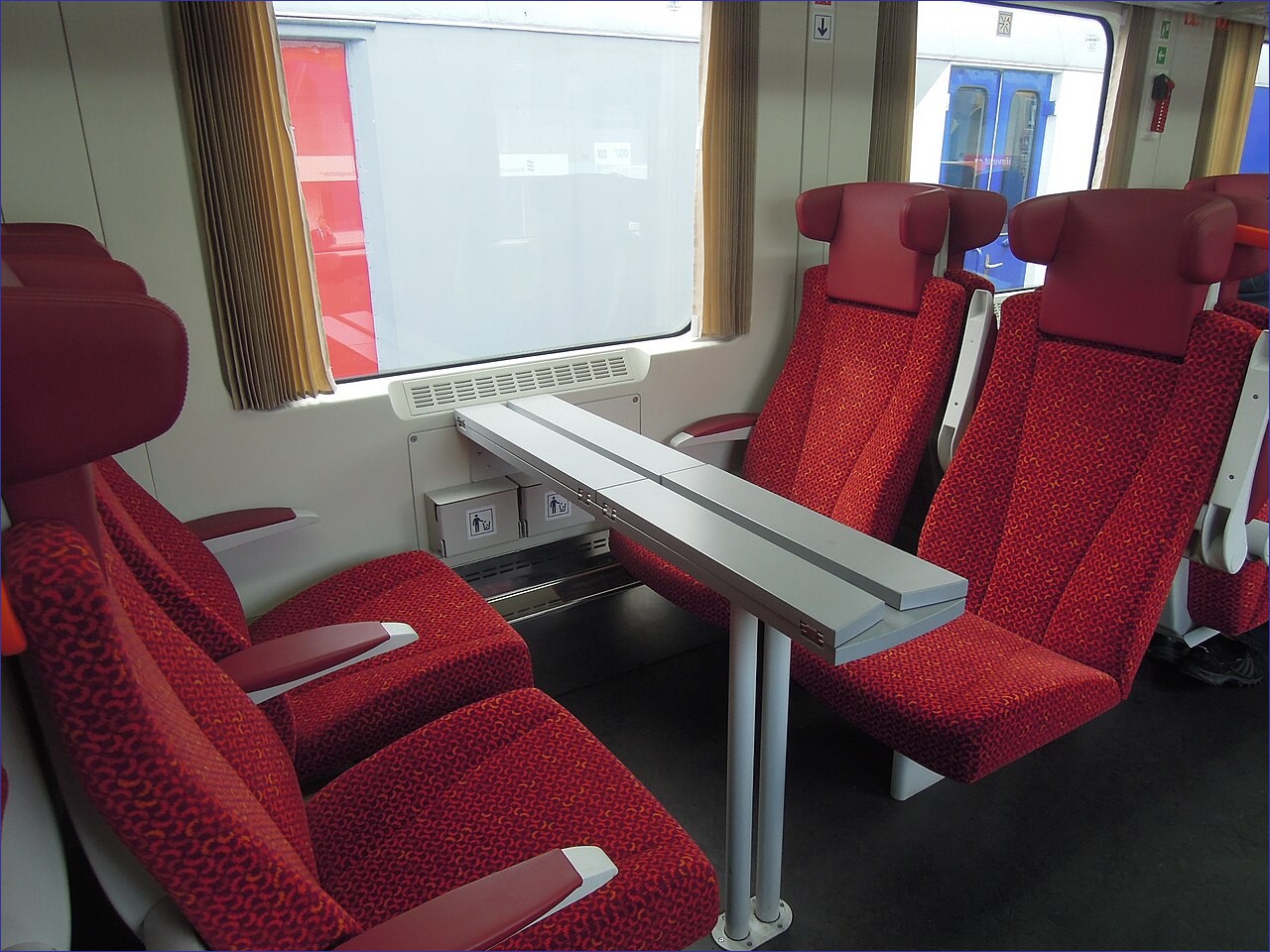
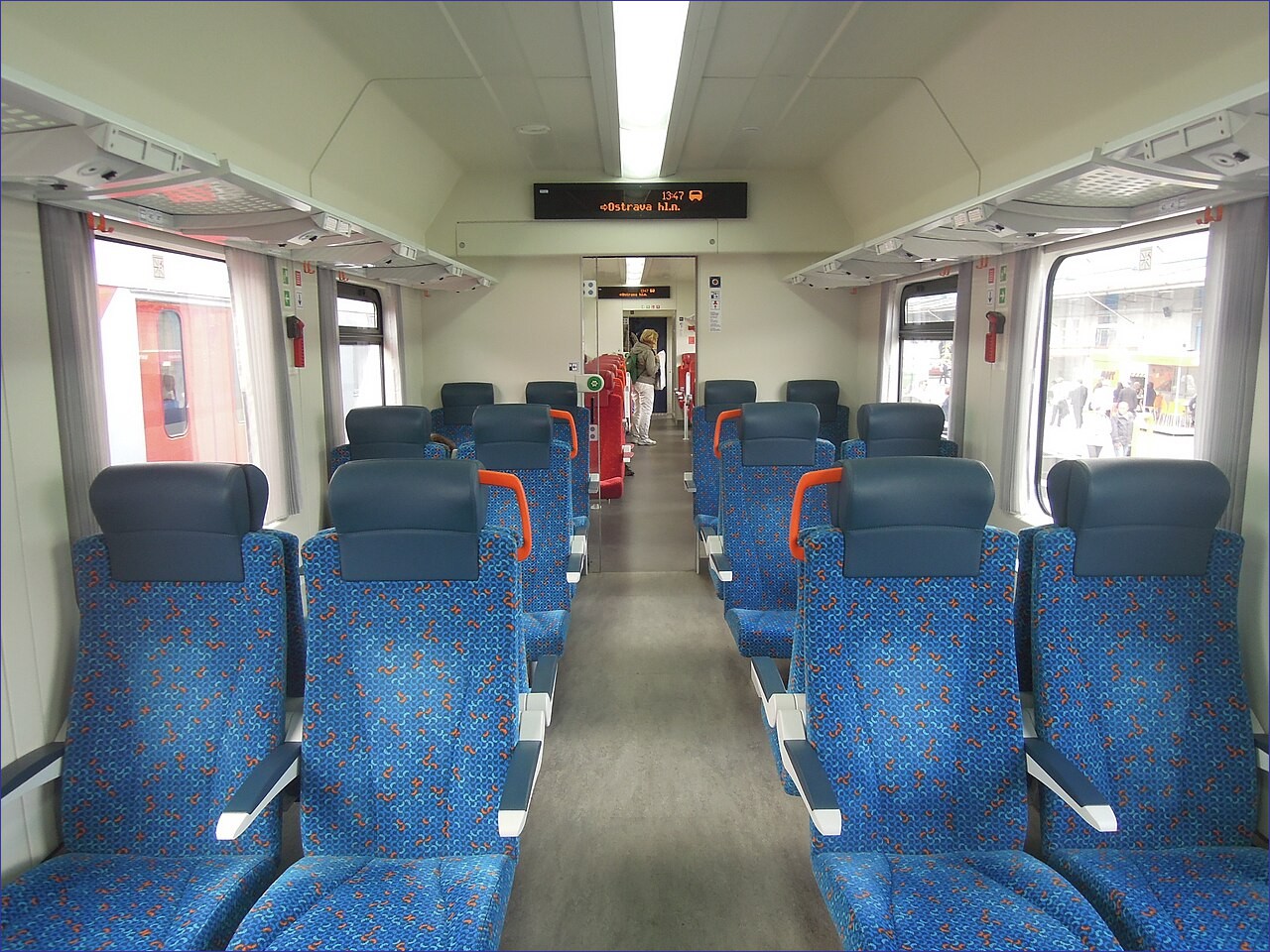
1) Direct trains from Brno to České Budějovice. There are direct fast trains between the cities. Unfortunately, these trains are rather slow and consist older carriages, but the route is a nice. The length of the route is 236 km and journey time is about 4 hours. There are some interesting places along the route and you can organize an interesting trip with short stops in towns and cities where trains stop. Unfortunately, due to engineering works trains are often replaced by buses on part of the route.
2) The longer and significantly more expensive route with train changes in Prague. I don’t recommend, but sometimes it may be faster than direct trains.
I prefer direct trains, so at Jihlava station you can change trains and travel by local trains to beautiful towns Telč or Slavonice.
Regional train Havlíčkův Brod – Slavonice – a general overview
Useful websites:
České dráhy – online shop
Travelling by train with bike
idos.cz – search engine for train and bus connections in the Czech Republic
Train travel in the Czech Republic – a general overview
Brno to České Budějovice – most important stations on the direct route:
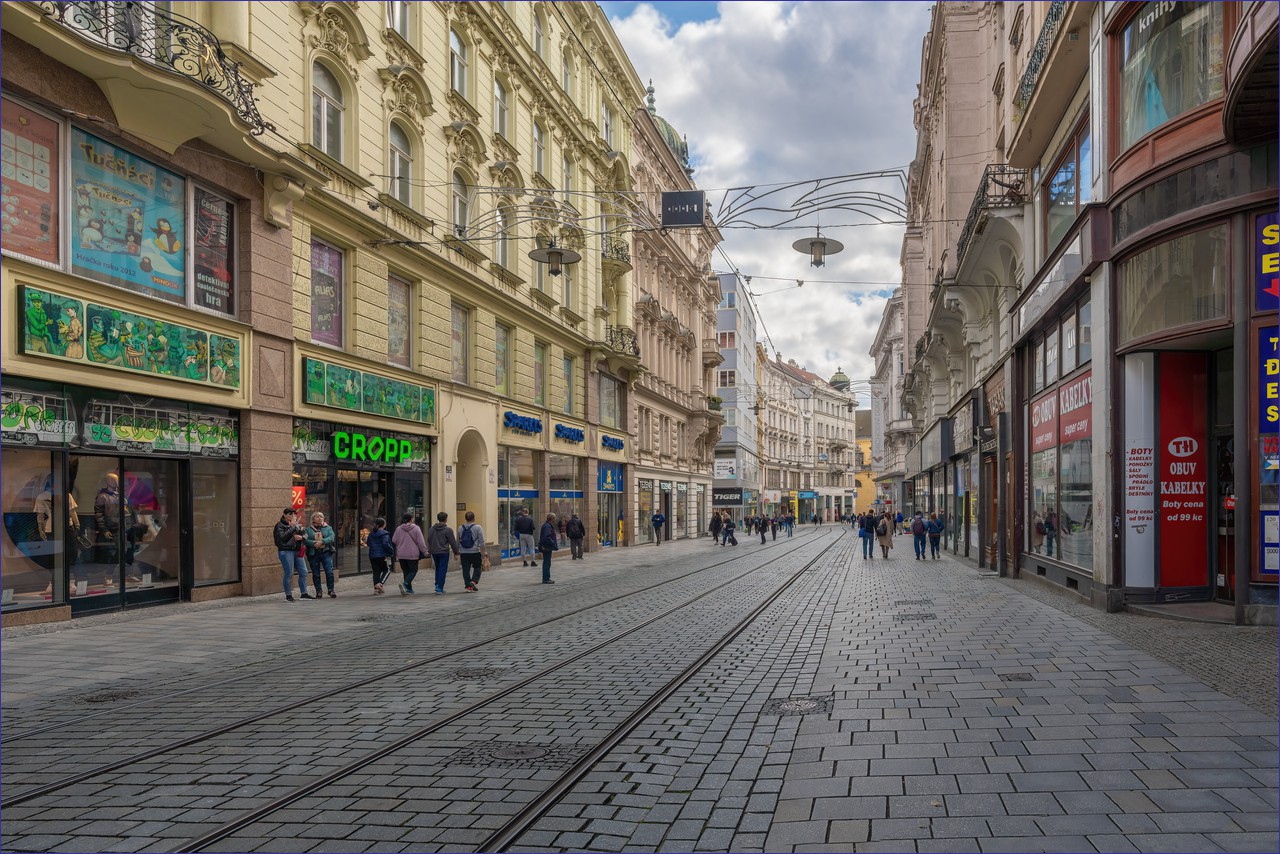
Brno – the second-largest city in the Czech Republic and the historic capital of Moravia located at the confluence of the Svitava and Svratka rivers. The compact city centre is very easy to explore by foot. Špilberk Castle is a major landmark on a hill above the city. The castle later became a notorious Habsburg prison. You can pass from the city centre to the castle through nice park on the slope of the hill. Contains numerous historic squares, churches and palaces, including the Old Town Hall with its famous dragon legend. Not far from the city centre you will find a gem of architecture: Villa Tugendhat – a masterpiece of modernist architecture designed by Ludwig Mies van der Rohe. It is a UNESCO World Heritage Site.
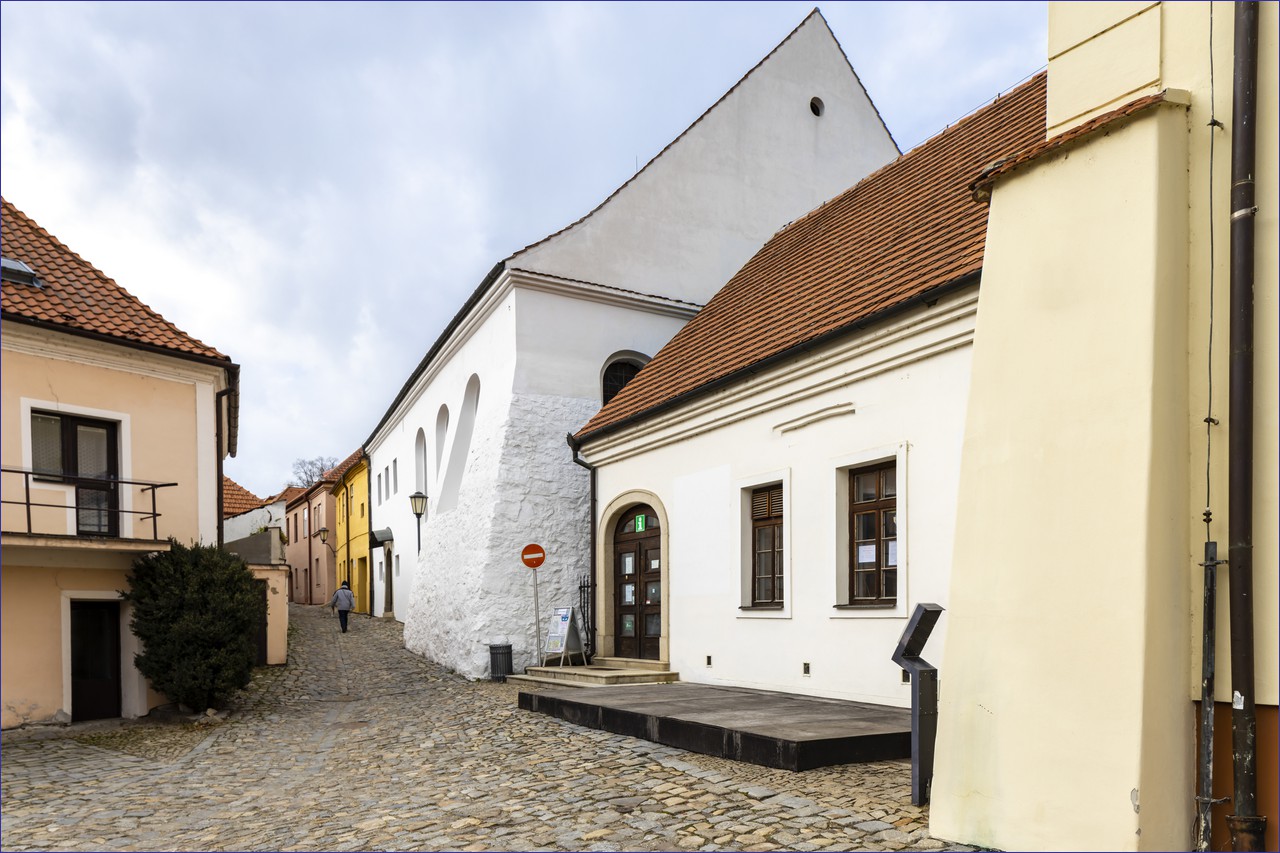
Třebíč – a must-see town on the Jihlava River and one of the most important UNESCO destinations in the Czech-Moravian Highlands. The town is famous for its Jewish Quarter, Jewish Cemetery and Basilica of St. Procopius which form a UNESCO World Heritage Site. The quarter contains narrow lanes, historic houses, two synagogues and other buildings associated with centuries of Jewish life. The cemetery on the hillside contains thousands of graves and is an important record of the town’s Jewish community. The town centre features a nice market square a distinctive historic clock tower.
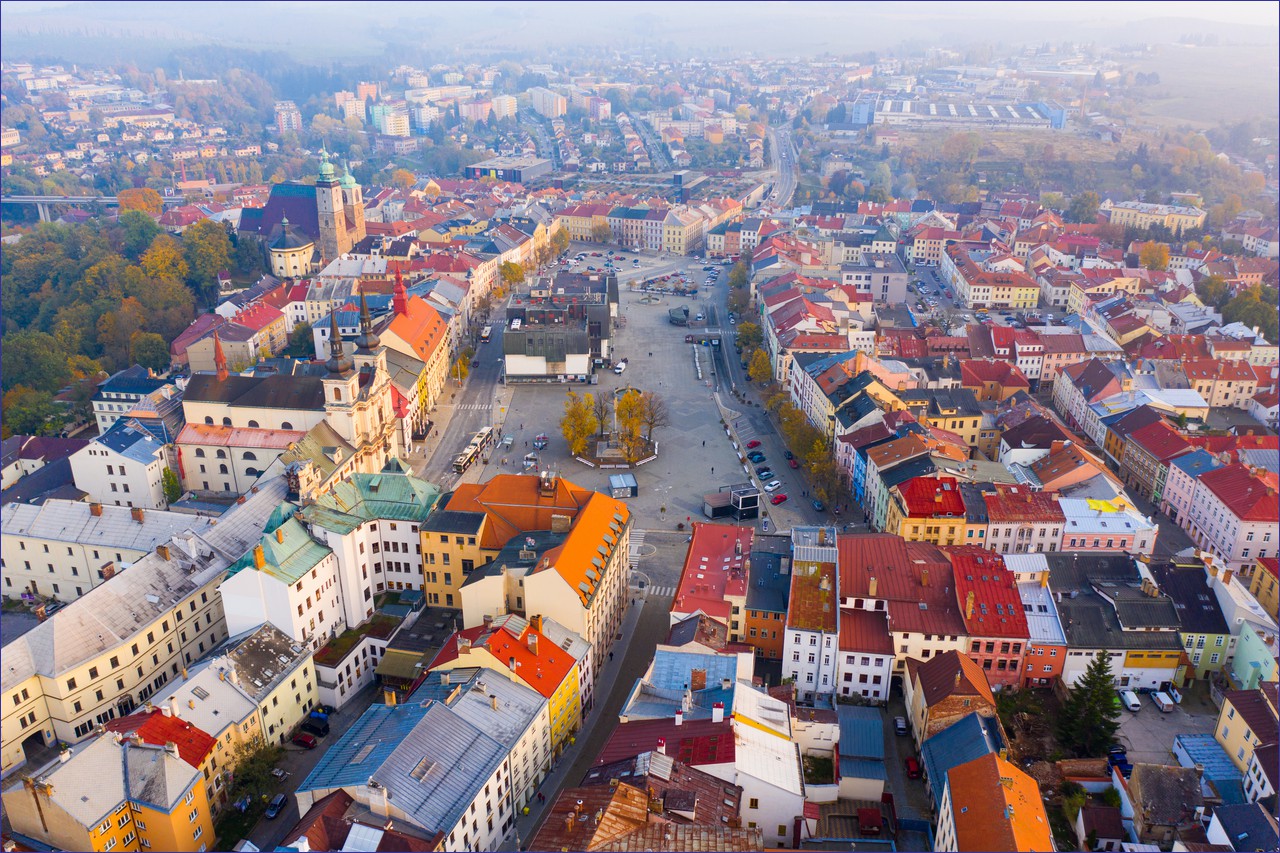
Jihlava – the historic capital of the Vysočina Region and one of the oldest royal mining towns in Czechia. The large Masaryk Square is surrounded by colourful historic houses, arcades and important public buildings. It is one of the largest historic squares in Czechia but there is also an ugly department store in the middle of main square. Significant sections of the medieval fortifications, including towers and gates, have survived. There are three interesting churches in Jihlava: Church of St. James the Greater, its towers provide a distinctive silhouette over the historic centre, Church of the Exaltation of the Holy Cross and Baroque Jesuit Church of St. Ignatius Beneath the historic centre is an extensive network of underground passages and cellars, created by connecting medieval cellars. They are among the city’s most unusual attractions. The Jihlava ZOO is located in a wooded valley close to the city centre and specialises particularly in smaller and medium-sized animal species. You can also visit Vysočina Museum dedicated to the history, archaeology and natural environment of Jihlava and the surrounding Vysočina region. The city centre is compact and easy to stroll. You need 2-3 hours to see main landmarks.
Note: Jihlava train station is located about 1.5 km from the city centre. You can take a trolleybus to the Masaryk Square. Jihlava město train stop is located about 300 meters from the city centre.
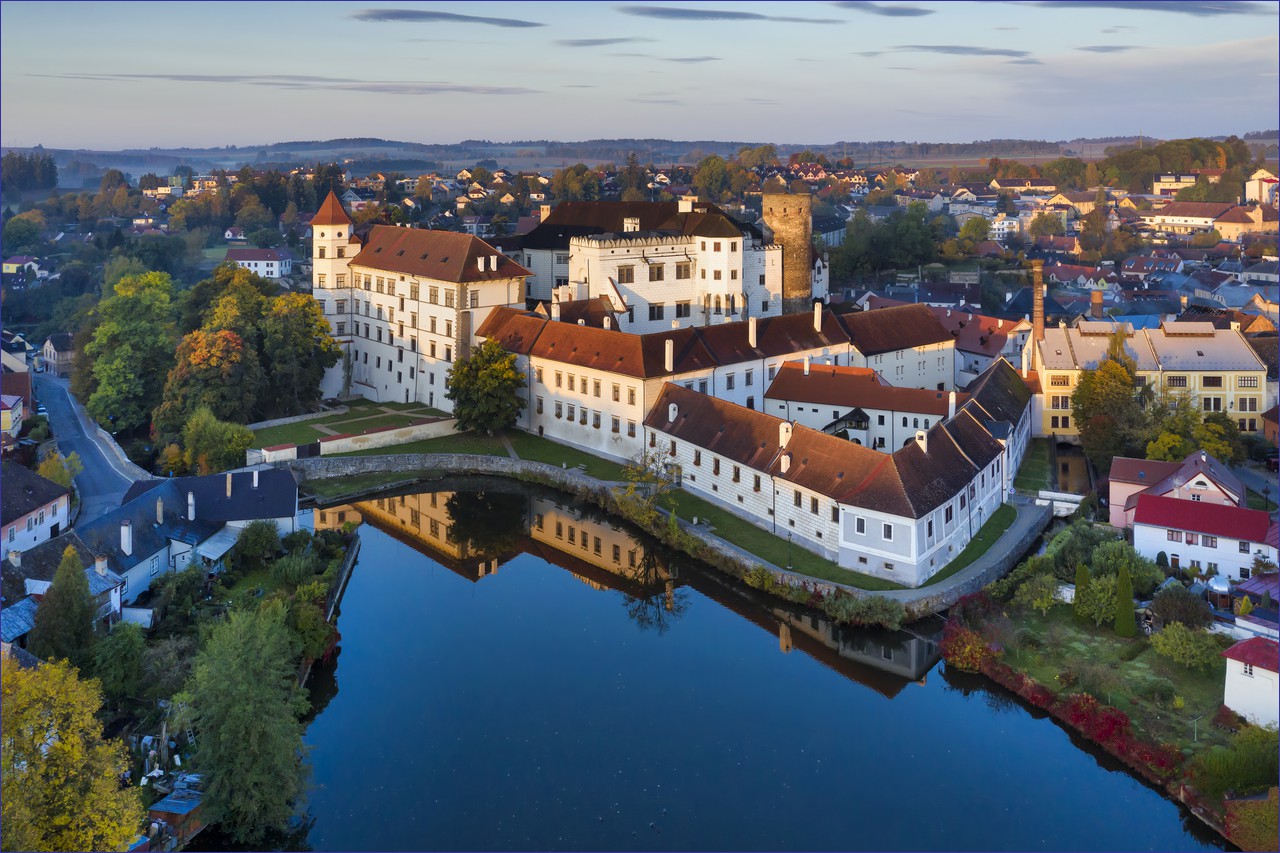
Jindřichův Hradec – a worth-visit town dominated by a huge Renaissance château surrounded by picturesque pond. The enormous château complex combines Gothic, Renaissance and Baroque architecture and is one of the largest historic residences in Czechia. The château’s famous Adam’s Building and Rondel are outstanding examples of Renaissance architecture.
The main square and surrounding streets contain colourful Renaissance and Baroque houses. In the middle of the square stands Holy Trinity Column – a prominent Baroque monument stands on the main square The Jindřichův Hradec Museum presents regional history and crafts. Jindřichův Hradec was historically the main centre of the Jindřichův Hradec narrow-gauge railways, famous for their 760 mm gauge. Currently, the future of the narrow-gauge railway is uncertain.
České Budějovice – the largest city in South Bohemia and the regional capital. It is a historic city at the confluence of the Vltava and Malše rivers, famous for its spacious main square, beer-brewing tradition and attractive old town. It’s a perfect destination for one-day train trip from Prague or a perfect starting point for one-day train trips. The medieval street layout has survived remarkably well, with Renaissance and Baroque houses surrounding the central square. Přemysl Otakar II Square is one of the largest medieval squares in Europe, measuring roughly 133 × 133 metres. In the middle of the square stands monumental Baroque Samson’s Fountain. Nearby the Černá věž (Black Tower) is a 16th-century bell and lookout tower. From the top there are excellent views over the historic centre and surrounding South Bohemian countryside. The Baroque Cathedral of St. Nicholad stands beside the Black Tower and forms one of the city’s most recognizable architectural ensembles. The former Dominican monastery, including the Church of the Presentation of the Virgin Mary, is among the oldest surviving complexes in the city. The two rivers, Vltava and Malše, meet in the city and provide pleasant riverside walking and cycling opportunities. České Budějovice is internationally famous for its brewing tradition, particularly Budweiser Budvar, known in Czechia as Budějovický Budvar. It’s possible to take a guided tour around the brewery. The South Bohemian Museum has extensive collections covering the history, archaeology, nature and culture of South Bohemia.
České Budějovice was the starting point of the famous Budweis–Linz horse-drawn railway, one of the earliest public railway systems on the European continent, opened in stages between 1827 and 1832. Today the city is one of the most important railway hubs in southern Czechia, with routes towards Prague, Plzeň, Český Krumlov, České Velenice, Tábor and Linz in Austria. The railway station is located within walking distance from the Old Town.