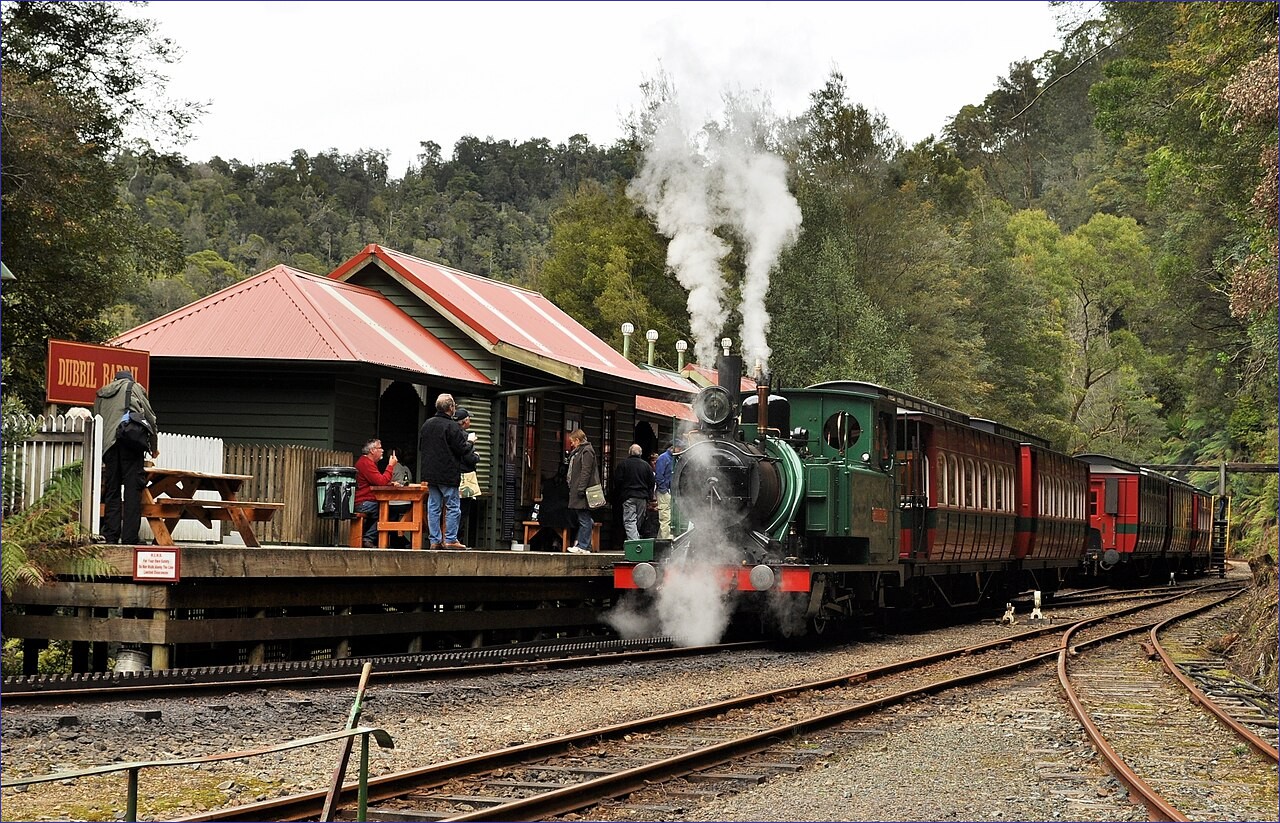
There are no regular passenger trains in Tasmania. The state-owned state-owned railway company TasRail operates freight trains around the Island but train travel in Tasmania is possible only on tourist trains which runs seasonally on designated days. Tasmania once had an extensive passenger railway network, but regular passenger services ended in 1978.
TasRail operates a network covering much of Tasmania’s industrial regions. Most important are lines Brighton – Western Junction – Launceston area which links southern Tasmania with northern freight routes, Western Line Launceston / Western Junction – Devonport – Burnie which connects with major ports on the north coast and Melba Line Burnie – Rosebery / West Coast mining region. The last one line provides access to Tasmania’s remote western mining areas.
Tasmania has several important tourist railways using historic railway infrastructure. Most popular is the West Coast Wilderness Railway between Queenstown – Strahan. The railway uses Abt rack railway.
Table of contest:
- Tourist railways
- Miniature railways
- Draisine railways
- Tasmanian Transport Museum
- Margrate train
1. Train travel in Tasmania – tourist railways
Derwent Valley Railway – a heritage railway organisation and preservation project based in New Norfolk, Tasmania. It preserves the historic Derwent Valley Line, locomotives, carriages and railway equipment connected with Tasmania’s railway history. The railway is operated by the Derwent Valley Railway Preservation Society, a volunteer-based not-for-profit organisation.
The DVR aims to restore heritage passenger train operations through the scenic Derwent Valley, eventually reconnecting New Norfolk with destinations towards Mount Field National Park.
The railway was originally built by Tasmanian Government Railways to connect rural communities and industries in the Derwent Valley with Hobart and the wider Tasmanian railway network. The railway followed the River Derwent and later the Tyenna River, serving farms, timber industries and rural settlements.
Don River Railway – a heritage railway and railway museum located at Don, near Devonport, in northern Tasmania. It preserves Tasmania’s railway history through restored steam locomotives, diesel locomotives, railcars, carriages and historic railway equipment. The railway is operated by a not-for-profit organisation supported by volunteers. It uses 1067 mm gauge and was inauguerated as a heritage railway in 1976. The present tourist railway operates on a restored section of the former Don River branch line. Trains ride usually on the route Don Railway Station – Coles Beach – Don Railway Station. The journey follows the eastern bank of the Don River, rural Tasmanian scenery, forest and farmland landscapes.
Ida Bay Railway – a narrow-gauge railway located in the far south of Tasmania, near Lune River, approximately 95–105 km south of Hobart. It is known as Australia’s southernmost railway and one of the last surviving examples of a Tasmanian bush tramway. The railway originally transported high-quality limestone from quarries near Ida Bay to the coast for industrial use. It was preserved as a tourist railway offering a scenic journey through forests, wetlands and coastal landscapes. The railway ran on 7 km length route Ida Bay Station – Elliott Beach – Ida Bay Station through coastal forest, rainforest vegetation, wetlands, bushland and offered views towards Recherche Bay and the Southern Ocean. After derailment in 2018 the operation is suspended. The future of the railway is uncertain.
Redwater Creek Railway – a narrow-gauge railway located at the Sheffield Steam and Heritage Centre in Sheffield, north-west Tasmania. The railway offers visitors a short but authentic steam train experience using historic locomotives and restored Tasmanian railway carriages. There is a more than 1 km operating railway. The railway is located in Sheffield, a town famous for its murals, rural scenery and its connection with the former railway network of north-west Tasmania. A typical journey includes: a short ride through the grounds of the heritage centre. The railway usually operates on selected weekends, especially the first full weekend of each month. Trains depart approximately every half hour. The railway uses a 1906 German Krauss steam locomotive, one of the highlights of the collection.
Wee Georgie Wood Steam Railway – a 610 mm narrow-gauge railway located at Tullah, on Tasmania’s rugged West Coast. It preserves the memory of the original Tullah Tramway, which for many decades was the only transport connection between the isolated mining settlement of Tullah and the outside world. The railway is operated by the Wee Georgie Wood Steam Railway Inc., a volunteer organisation that restored the locomotive, track and passenger facilities. Heritage train rides began in 1987. It offers short scenic steam train rides through the historic mining town of Tullah. Today’s heritage railway operates a short restored section of the former tramway. The journey lasts about 20 minutes. The journey recreates the atmosphere of early 20th-century travel in Tasmania’s isolated mining communities.
West Coast Wilderness Railway – one of Australia’s most spectacular heritage railways, operating through the remote wilderness of western Tasmania between Queenstown and Strahan. It follows the historic Mount Lyell Mining and Railway Company’s Abt Railway, originally built to transport copper ore from the rich Mount Lyell mines to the port of Strahan. The railway is famous worldwide for its Abt rack-and-pinion system, steam locomotives, rainforest scenery and remarkable engineering through some of Tasmania’s most difficult terrain. The length of the route is about 35 km, rack section 7 km. It uses 1067 mm gauge. The original railway was closed in 1963. Heritage operation began in 2002. The railway was once the only practical connection between Queenstown and the outside world before better roads reached the region. The railway crosses more bridges than kilometres of track, with around 40 bridges along the route.
2. Miniature railways
Evandale Light Railway & Steam Society (ELRSS) – a volunteer-run miniature railway and steam heritage organisation located at Morven Park, Evandale, in northern Tasmania, near Launceston Airport. It operates public miniature train rides and preserves small-scale steam and model railway technology. Unlike Tasmania’s historic mainline heritage railways such as the West Coast Wilderness Railway or Don River Railway, the Evandale Light Railway is a miniature railway attraction, designed to demonstrate railway technology on a smaller scale. It usually runs on Sundays (dependable on weather). Trains operate during daytime hours.
Friendly Beaches Railway – a private miniature railway located near Friendly Beaches on the Freycinet Peninsula in eastern Tasmania. It is a railway enthusiast’s project combining live steam, miniature locomotives and scenic train rides in a natural coastal setting. The railway is located on a private property near one of Tasmania’s most famous coastal areas, close to Freycinet National Park and Wineglass Bay. Unlike Tasmania’s historic industrial railways, the Friendly Beaches Railway was purpose-built as a miniature heritage railway, not converted from an old commercial railway line. The length of the entire system is about 3 km. The railway features several impressive miniature railway Bridges and 95 m long tunnel. It is open to public on designated days.
Ulverstone Miniature Railway – a volunteer-operated model engineering and miniature railway attraction located at Maskells Road Reserve, Ulverstone, on Tasmania’s north-west coast. It is operated by the North West Model Engineering Society (NWMES), a not-for-profit group dedicated to miniature locomotives, steam engineering and railway preservation. The railway is one of Tasmania’s best-known miniature railways, offering public train rides behind small-scale steam, petrol and electric locomotives in a landscaped park setting. The length of the route is about 1 km – 600 m plus loops, sidings and extentions. It operates on Public running days, mainly the first and third Sunday of each month. The railway runs through a pleasant park-like environment.
3. Train travel in Tasmania – Draisine railways
Launceston & North East Railway – a developing heritage railway and tourist rail experience in northern Tasmania, operated by the volunteer organisation Diesel Traction Tasmania Inc. It preserves part of the historic North East Railway line between Turners Marsh and Lilydale and aims to return rail tourism to the former Scottsdale branch corridor. The railway currently focuses on Railbug rides — small self-propelled rail vehicles that allow visitors to travel along the historic railway line through the rural landscapes of northern Tasmania. It uses Turners Marsh – Lilydale corridor, approximately 12.5 km section of the former North East line.
Railtrack Riders – a unique pedal-powered rail bike attraction located at Maydena, in Tasmania’s Derwent Valley. It allows visitors to ride along a historic railway line through the remote southern Tasmanian rainforest, combining railway heritage, outdoor recreation and nature tourism. It is recognised as the only tourism product of its type currently operating in Australia. The experience uses specially designed four-wheel pedal rail vehicles running on a former railway line that once served Tasmania’s timber industry. It uses 1067 mm gauge and the length of the route is approximately 4.8 km. The most popular trip follows the old railway towards Florentine. The route passes through rainforest that has reclaimed parts of Tasmania’s former timber railway network. The route provides views of a landscape that was once served by regular passenger and freight trains.
4. Tasmanian Transport Museum
The Tasmanian Transport Museum (TTM) is the largest transport heritage museum in Tasmania and one of the most important railway preservation sites in Australia. It is located in Glenorchy, approximately 8 km north of central Hobart. The museum preserves historic railway locomotives, carriages, trams, buses, trolleybuses and other vehicles connected with Tasmania’s transport history. The museum is operated by the Tasmanian Transport Museum Society Inc., a volunteer organisation founded in the 1960s to save disappearing examples of Tasmania’s transport heritage.
The museum recreates the atmosphere of a Tasmanian railway station, with historic infrastructure displayed alongside the vehicles.
One of the museum’s most famous locomotives is M5, a Tasmanian Government Railways steam locomotive built in 1952. The locomotive is preserved in operational condition for heritage trains. One of the museum’s most impressive features is the former New Town railway station. The station was originally located on the Tasmanian railway network, dismantled and moved to the museum site and later restored as part of the railway display.
The museum offers heritage trains rides on the route Glenorchy – Berriedale – return. The journey lasts about 25 minutes. The museum also operates historic bus excursions around Glenorchy on selected days.
Tasmanian Transport Museum – official website
5. Margate Train
The Margate Train is one of Tasmania’s most unusual railway attractions: a former passenger train that has been permanently displayed beside the Channel Highway in Margate, south of Hobart, with its carriages converted into shops, cafés and small businesses. It combines railway heritage with tourism and shopping. It is located about 18–20 km south of Hobart, the attraction is a popular stop for visitors travelling towards Kettering, Bruny Island and the Huon Valley.
The Margate Train was originally part of the Tasman Limited, Tasmania’s prestigious passenger train service connecting Hobart and Launceston operated by Tasmania Government Railways. It was built in England in 1950. The final journey took place in 1978. After withdrawal from railway service, the rolling stock was purchased by private owners and moved to Margate.
The former train has nickname The “Pancake Train” because of its popular pancake café. There are shops and cafés inside historic railway carriages.
It is not an operating railway — trains do not run — but it provides a rare opportunity to step inside former Tasmanian passenger carriages.
Related articles:
Train travel in Australia – a general overview
Trenopedia – railway of the world (main site)