Brazil is the largest country in South America and the fifth largest country in the world by area with rain forests, large highlands and vast coastlines. Brazil has one of the largest rail networks in the world but railway lines are used predominantly for freight traffic, except for two long-distance trains and couple of tourist services. In the largest cities there are suburban trains. There are no international trains in Brazil.
Last updated: 23.09.2026
The first railway line in Brazil from Port of Mauá to Raiz da Serra (14,5 km) was inaugurated on on 30 April 1854. The line was built for transport of the cargo from the ship Praça XV to Raiz da Serra.
The first railway in the state of São Paulo, connecting the Port of Santos with the coffee farms, was built in 1867.
In the end of the 19st century there were 9,583 km of active railways in Brazil. There were plans to build the railway line across Brazil, but the plan failed due to financial crisis.
In the first half of the 20st century there was significant expansion of the rail network which total long reached more than 29.000 kilometers.
During the ’70s and ’80s many railway lines were closed and abandoned.
In 2008, Brazil’s Transportation Ministry announced a high-speed train project connecting São Paulo, Rio de Janeiro and Campinas. Due to lack of money the project was abandoned.
Table of contents:
- Long-distance trains
- Serra Verde Express
- International trains
- Heritage trains
- Rack railways
- Funicular railways
- Incline railways
- Metropolitan railways
- Monorails
- Light rails and suburban railways
- Most beautiful train stations
You can support this project by one-time small donation
1. Train travel in Brazil – long-distance trains
There are two long-distance passenger trains in Brazil and some passenger services operate in urban areas. Long-distance trains are operated by Vale.
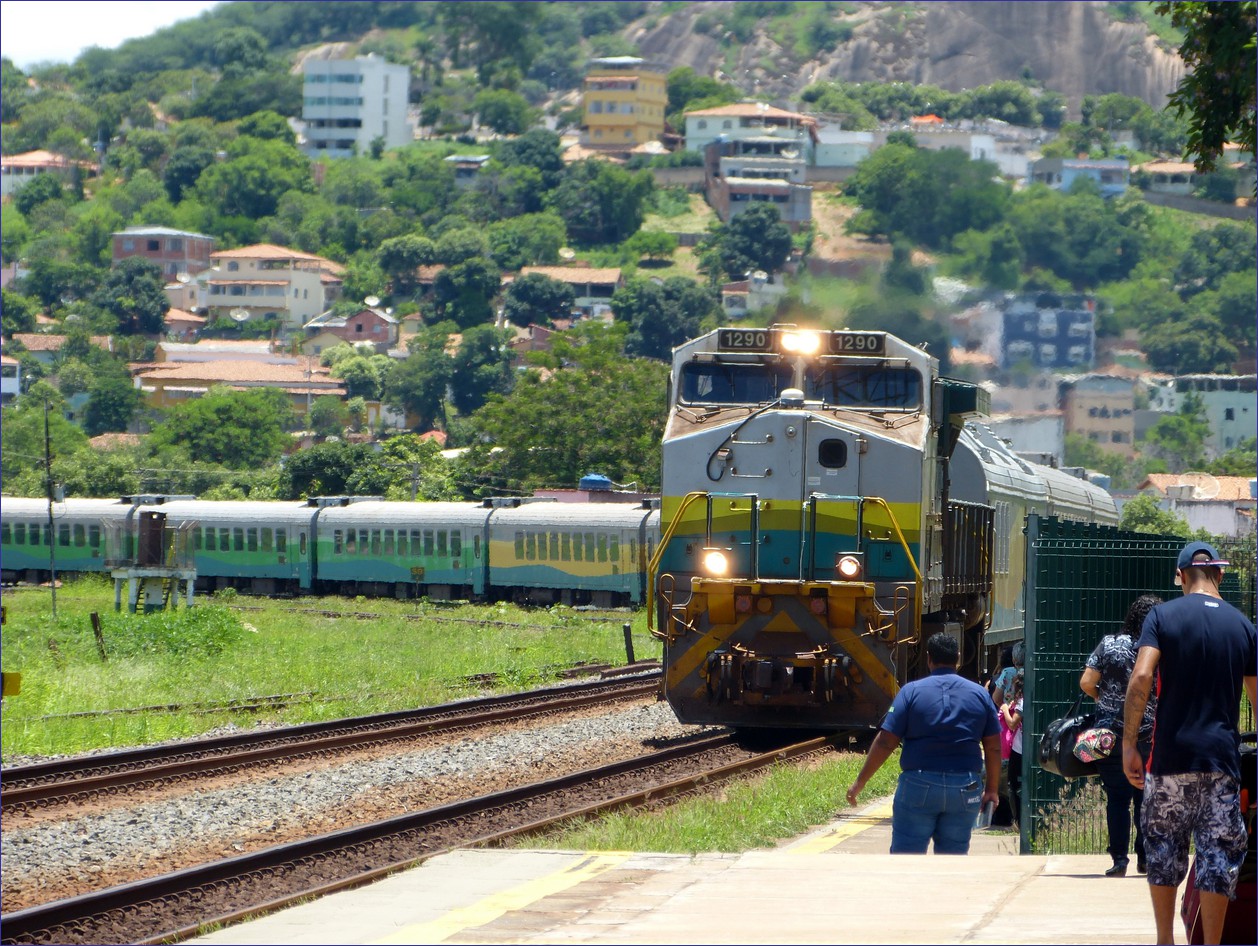
Estrada de Ferro Vitória a Minas – the first of long-distance passenger trains departs from Cariacica and ends the trip in Belo Horizonte. It’s a daytime service. Trains depart every morning from Cariacica and Belo Horizonte. There is also an additional train that runs between Itabira and Nova Era, both in Minas Gerais. Average journey time is 13 hours. The train covers a route of 662 km. There are 30 stops.
Estrada de Ferro Carajás – the second long-distance passenger train operated by Vale connects São Luís, in Maranhão and Parauapebas in the southeast of Pará. The train runs on Mondays, Tuesdays, Thursdays, Fridays, Saturdays and Sundays. The journey takes almost 4 hours. Train carriages are fitted with air-conditioning and you can eat something in buffet car or restaurant car.
In 2022 Vale ordered 62 passenger coaches from CRRC Sifang. The new coaches will operate on Vale’s Carajás and Vitória a Minas railways.
Vale.com – more information about trains
2. Serra Verde Express
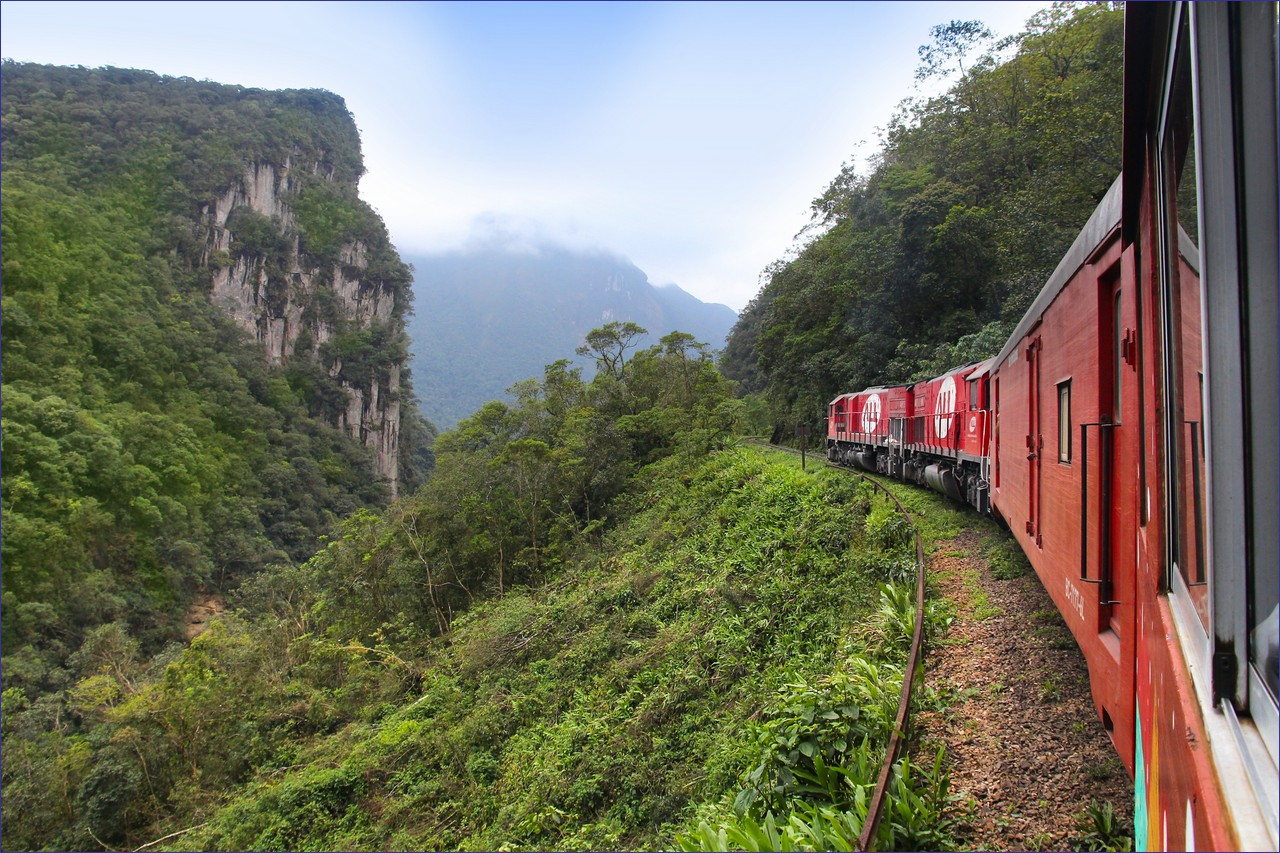
The most famous train in Brazil is a tourist train Serra Verde Express from Curitiba to Moretes in the Parana State. The train runs through Pico do Marumbi State Park – it’s the most beautiful section of the train route. The 110 km long railway line was completed in 1884. During the construction thousands of workers died of diseases and accidents.
The train crosses 30 bridges and viaducts and 14 tunnels. The most spectacular is Viaduto do Carvalho above a hillside of rock that stretches over lush forest.
The journey takes 3 or 4 hours. Sometimes the clouds surrounds the train when it rides along mountain range and you wouldn’t take beautiful pictures.
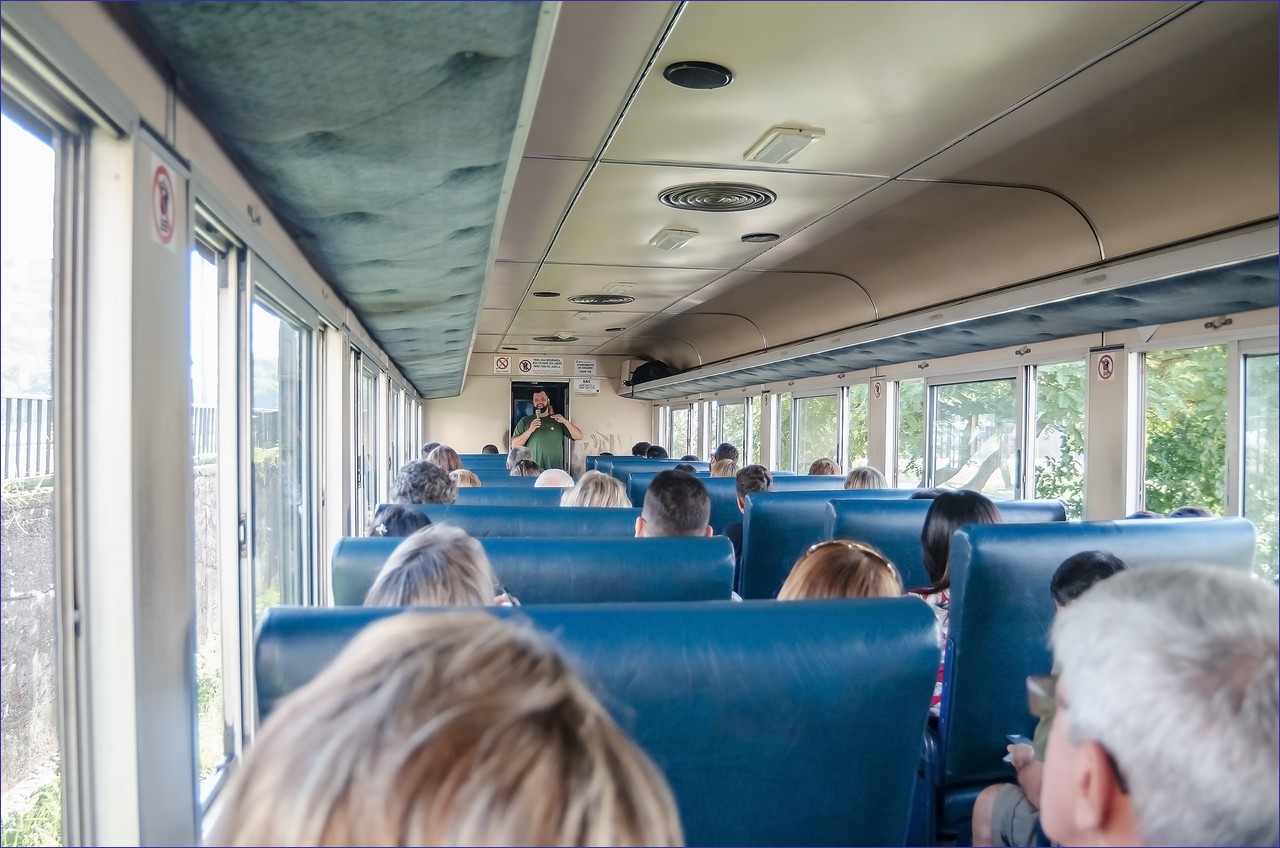
Passenger can choose between various classes. Most of the trains and carriages were produced in the 70’s but are very well maintained and you can open the windows during one of the most scenic rides in the world. The “Litorina de Luxo” carriage is air-conditioned and windows are closed for the whole journey. Boutique class is alike parlour car and at the end of the train is panoramic balcony. Tourist class with upholstered seats is recommended also. Economy class is cheapest but uncomfortable.
Official website – timetable, prices, photos
Train travel in Brazil – international trains
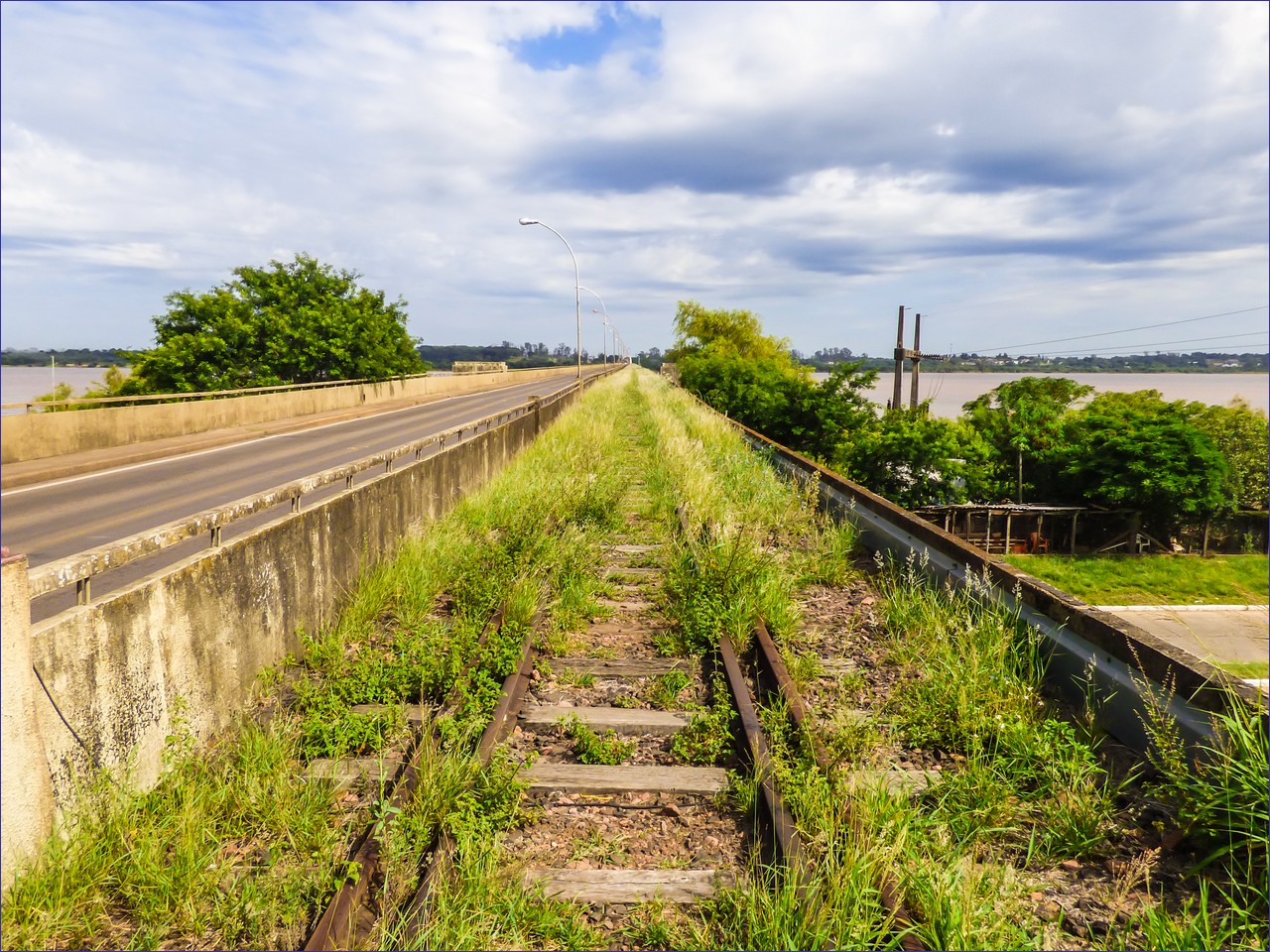
There are no international passenger trains between Brazil and adjacent countries.
Railway links with adjacent countries:
Argentina: Paso de los Libres (1435 mm)/ Uruguaiana (1000 mm)
Bolivia: Puerto Suarez (1000 mm)/ Corumba (1000 mm)
Uruguay: Rivera (1435 mm)/ Santana do Livramento (1000 mm)
Uruguay: Rio Branco (1435 mm)/ Jaguarao (1000 mm)
In Uruguay, passenger train Tucuarembo – Rivera ends several hundred meters from the Brazilian border. The city of Rivera is divided between Uruguay and Brazil.
4. Heritage railways
There are a some heritage railways but some of them recently underwent rehabilitation or changed operator, so it is better to check the official website before travelling, because I don’t know if these railways are active or not.
Estrada de Ferro Campos do Jordão (EFCJ) – a historic railway in the state of São Paulo connecting Pindamonhangaba with Campos do Jordão through the Serra da Mantiqueira. It is particularly interesting because of its steep mountain route, historic electric railway equipment and its origins as a railway intended to help patients reach the mountain climate of Campos do Jordão. Trains run on the rouite Pindamonhangaba – Piracuama – Santo Antônio do Pinhal – Campos do Jordão. The railway is approximately 47 km long. The line climbs from about 550 m above sea level at Pindamonhangaba to more than 1,570 m in Campos do Jordão. The mountainous section has much lower operating speeds because of the steep and winding route. Parts of the railway have been used for tourist services, including historic electric trams (bondes) in the urban area of Campos do Jordão. The railway also has a history of operating tourist trains between its mountain stations.
Estrada de Ferro Oeste de Minas (EFOM) – a narrow-gauge railway in Minas Gerais, with the surviving tourist section connecting São João del-Rei and Tiradentes. The railway is operated today by the Regional Sul de Minas of ABPF and is one of Brazil’s most important steam railway preservation projects. The preserved line has been in continuous railway use since 1881. Trains run between São João del-Rei and Tiradentes, with trains operating in both directions (12.8 km). The ride in each direction lasts 40 minutes. The operator describes the line as having operated without interruption since 1881, although its function changed from ordinary railway transport to tourism. For much of the journey the railway runs alongside the Rio das Mortes, with the Serra de São José forming the backdrop. One of the highlights is the 57-metre-long bridge over the Rio Elvas, between the two municipalities. The train passes rural properties, streams, small rivers and historic railway infrastructure. The railway has been used as a setting for Brazilian films, television series, miniseries, music videos and commercials. The trains run on Fridays, Saturdays and Sundays.
Estrada de Ferro Santa Catarina (EFSC) – a short heritage railway in the Vale do Itajaí region of Santa Catarina in the city of Apiúna. It uses a reconstructed section of the former EFSC and is operated as a tourist railway by the Associação Brasileira de Preservação Ferroviária (ABPF). The train is also known as the Trem Maria Fumaça de Apiúna or Ferrovia das Bromélias. In Apiúna, ABPF reconstructed approximately 2.6 km of the abandoned railway alignment. The restored section begins in the Subida district and runs towards the Salto Pilão Hydroelectric Power Plant. Sources give slightly different figures depending on whether the one-way ride or the complete out-and-back journey is counted. The municipal tourism portal describes approximately 2.8 km of railway in the outward direction, while other municipal information gives around 3–3.5 km. The return journey therefore makes the excursion several kilometres long. The route includes an attractive stone viaduct with two Romanesque-style arches, approximately 12 metres high. The masonry structures were constructed using local granite, including the characteristic pink granite of the Subida area. The tourist excursion takes approximately 45 minutes, including the journey and the stop at the end of the line. At the Salto Pilão plant there has traditionally been an explanation of the history of the railway and the operation of a steam locomotive before the train returns to the boarding point.
Maria Fumaça Campinas–Jaguariúna – a heritage railway operated by the Associação Brasileira de Preservação Ferroviária (ABPF) in the state of São Paulo. It runs on a preserved section of the former Companhia Mogiana de Estradas de Ferro, one of the historic railway companies that played an important role in transporting coffee and other agricultural products in São Paulo. The preserved railway section between Anhumas and Jaguariúna is about 24 km. ABPF received the section in 1979 and subsequently restored the track, locomotives, carriages and stations. The Campinas operation is effectively a living railway museum. Visitors experience not only the train but also historic railway buildings, rolling stock, signalling equipment and other elements of railway infrastructure. The official website currently offers several types of excursions, including departures from Campinas and Jaguariúna, with dates and tickets available online.
Trem das Águas (Train of the Waters) – a heritage tourist train operating from São Lourenço in Minas Gerais, in southeastern Brazil. It is operated by the Regional Sul de Minas branch of the Associação Brasileira de Preservação Ferroviária (ABPF). The train runs on the route São Lourenço – Soledade de Minas – São Lourenço (10 km in each direction). The journey lasts about two hours. The train is hauled by an authentic steam locomotive. The locomotives preserved at São Lourenço include historic American and British-built locomotives. The line follows the Rio Verde and passes through green countryside and a narrow valley before reaching Soledade de Minas. Departures are normally available on Saturdays and Sundays, as well as selected public holidays.
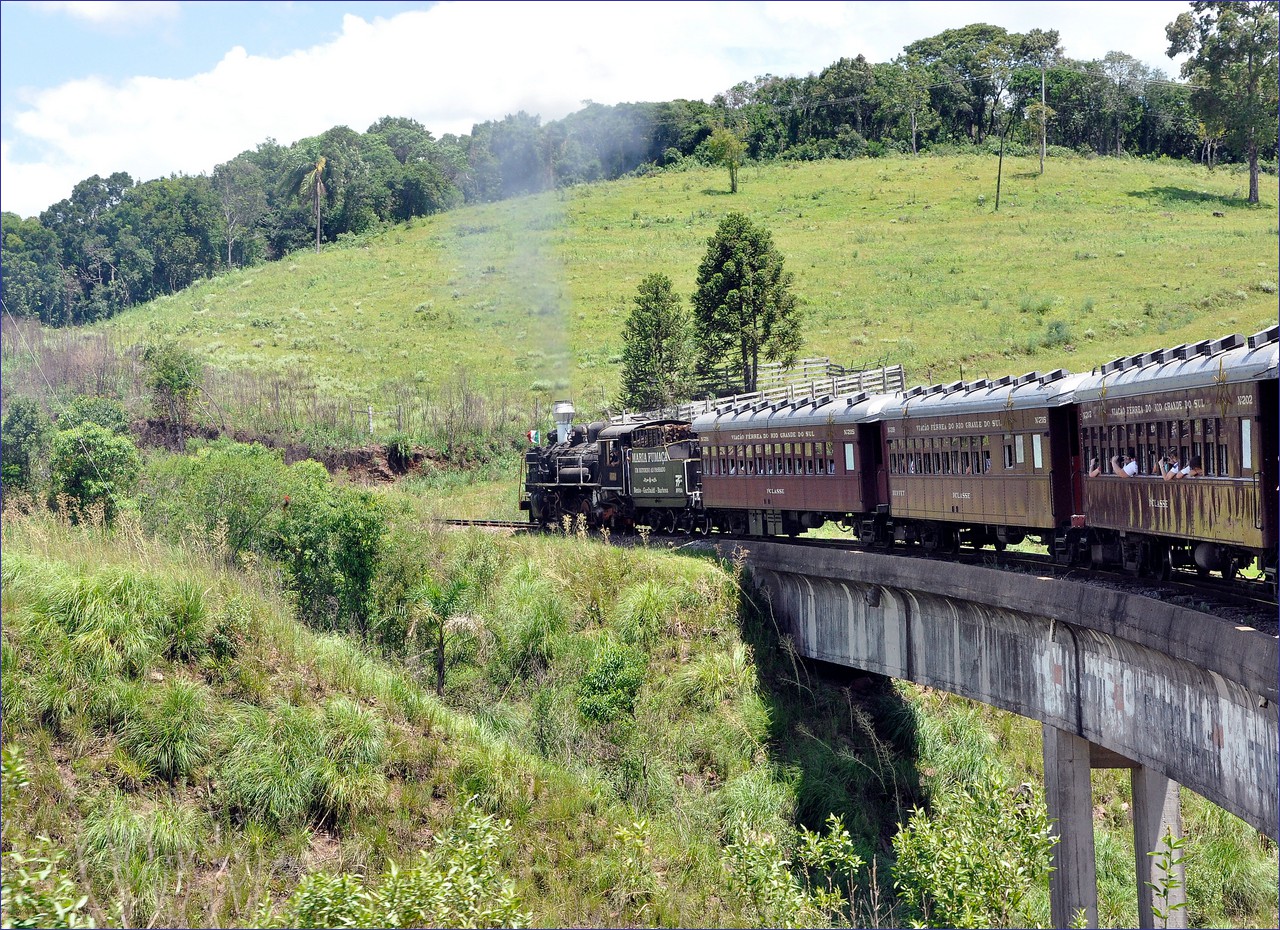
Trem do Vinho – a tourist heritage railway in Rio Grande do Sul, connecting Bento Gonçalves, Garibaldi and Carlos Barbosa. It is one of Brazil’s best-known steam-train excursions and combines railway history with the Italian heritage and wine culture of the Serra Gaúcha region. The service is operated by Giordani Turismo on the route: Bento Gonçalves – Garibaldi – Carlos Barbosa, with the return journey following the same railway. Distance is approximately 23 km each way and journey time approximately 1 hour 30 minutes for the train journey. The complete tourist experience takes longer because it also includes activities before and after the train ride. The excursion is normally associated with a steam locomotive and historic wooden passenger carriages, recreating the atmosphere of railway travel from the early 20th century. The train stops in Garibaldi, an important centre of wine and sparkling-wine production. The route passes through an area strongly associated with descendants of Italian immigrants, who settled in the Serra Gaúcha from the 19th century onwards. The excursion is marketed together with tastings of wine, sparkling wine and grape juice, reflecting the region’s famous wine industry. Passengers are traditionally accompanied by music, dancing and theatrical performances, presenting elements of Italian and southern Brazilian culture.
Trem dos Imigrantes – a short heritage railway excursion in Mooca, São Paulo, operated by the Associação Brasileira de Preservação Ferroviária (ABPF). It uses a surviving section of the former Ramal dos Imigrantes, close to the historic Immigrant Hostel, and commemorates the role of railways in bringing immigrants from the port of Santos to São Paulo and onward into the interior. The train starts near the former Hospedaria dos Imigrantes (Immigrant Hostel) and runs towards the Mooca/Brás railway area before returning. The preserved section of the former branch is approximately 1 km one way, or around 2 km including the return journey. ABPF also describes its overall preserved railway infrastructure here as approximately 3 km. The journey time is about 30 minutes. The current excursion is normally hauled by a historic steam locomotive, making it a genuine Maria Fumaça experience. ABPF identifies locomotive No. 5 as the locomotive used for the Trem dos Imigrantes.
Trem Rubi – a tourist train based in Tubarão, Santa Catarina. It uses the railway network of the former Estrada de Ferro Dona Tereza Cristina, today largely operated for freight by Ferrovia Tereza Cristina (FTC). Tourist passenger trains are operated on an occasional basis, with routes and dates depending on special events, charter bookings and railway permissions. Most of the excursions is organised from Tubarão to Laguna, Tubarão to Urussanga, and on other occasions towards Imbituba, Criciúma and Siderópolis. The first one trip follows a route of roughly 30 km, with excursions travelling through the countryside between Tubarão and the historic coastal city of Laguna. The longer excursion to Urussanga is roughly 58 km one way, although the exact route and distance depend on the particular excursion. Trem Rubi has been associated with historic steam locomotives, although the motive power can vary and some excursions have used diesel locomotives. It is therefore better not to describe every Trem Rubi departure as steam-hauled. The railway offers views of mountains, agricultural countryside, lagoons, coastal landscapes and towns, making the longer excursions substantially different from an ordinary railway museum visit. Historical excursions have included a bar/snack car and live musical entertainment, including a gaiteiro (accordion player).
Trem da Serra da Mantiqueira – a narrow-gauge railway operated by the ABPF (Associação Brasileira de Preservação Ferroviária) in Passa Quatro, Minas Gerais. It runs on a preserved section of the former Minas and Rio Railway / Cruzeiro–Juréia line, climbing into the Serra da Mantiqueira towards the historic Coronel Fulgêncio station. The complete tourist journey is approximately 20 km round trip.The train starts at the historic Passa Quatro station and travels approximately 10 km to Coronel Fulgêncio, returning over the same line. The three stations associated with the tourist railway are Passa Quatro, Manacá and Coronel Fulgêncio. The historic station Coronel Fulgêncio station is located close to the Túnel da Mantiqueira, approximately 998 metres long. The tourist train does not travel through the entire tunnel; the excursion includes a complimentary visit to the tunnel area. The train currently operates on weekends, public holidays and holiday weekends.
Trem da Serra do Mar – a heritage steam railway operated by the ABPF – Associação Brasileira de Preservação Ferroviária, Regional Sul, from its base at Rio Negrinho in Santa Catarina. The traditional excursion runs from Rio Negrinho through São Bento do Sul and the Serra do Mar to Rio Natal**, following a historic railway line through the Atlantic Forest. The tourist service began in 1995 and uses railway infrastructure that remains part of the national railway network. The traditional route is Rio Negrinho – São Bento do Sul – Rio Vermelho – Rio Natal, with Rio Natal located in the municipality of São Bento do Sul. The railway descends from the highlands towards the Serra do Mar. The operator describes the preserved tourist section between Rio Negrinho and Rio Natal as approximately 45 km. In addition to the traditional Rio Negrinho–Rio Natal journey, the train has operated longer excursions continuing to Corupá. These journeys cover about 60 km and use Rio Natal as an important intermediate stop. The most spectacular part of the journey is the descent through the Serra do Mar Catarinense. The train passes through dense vegetation, streams, waterfalls and steep mountain terrain. The railway includes numerous engineering structures built to overcome the difficult topography.
Trem das Termas – a tourist steam train operated by the Associação Brasileira de Preservação Ferroviária (ABPF) between Piratuba, Santa Catarina, and Marcelino Ramos, Rio Grande do Sul. The journey follows a preserved 25-km section of the historic railway through the countryside of the Rio do Peixe valley and culminates in the crossing of the spectacular railway bridge over the Rio Uruguai. The train starts at Piratuba station and travels approximately 25 km to Marcelino Ramos, crossing the state border between Santa Catarina and Rio Grande do Sul. The same railway is used for the return journey. The train is traditionally hauled by a historic Belgian-built steam locomotive from 1906. For much of the journey the railway follows the Rio do Peixe, passing through rural areas with small farms, fields, houses and forest. The highlight of the journey is the crossing of the large railway bridge over the Rio Uruguai (about 450 m length. The one-way railway journey takes approximately 1 hour 15 minutes. With the stop in Marcelino Ramos and the return trip, the complete excursion takes several hours; the Piratuba tourism portal currently describes the complete experience as approximately four hours.
Vale Tourist Train (Trem Turístico Vale) – a tourist railway connecting the historic cities of Mariana and Ouro Preto in Minas Gerais. The train runs over an 18-km section of railway originally built in the 19th century and was created as a tourist and cultural project preserving the railway heritage of the region. The 18-km section was extensively restored by Vale at the beginning of the 21st century. The project included rebuilding the railway infrastructure, restoring stations, repairing bridges and recovering locomotives and passenger coaches. The tourist train is operated by Vale, the large Brazilian mining and logistics company. The railway infrastructure is owned by DNIT (National Department of Transport Infrastructure); the federal government currently lists the Ouro Preto–Mariana tourist railway as an authorised tourist/historical-cultural passenger service. Vale’s current description gives the train a capacity of 292 passengers: 240 conventional seats and 52 panoramic seats. The panoramic coaches have large windows intended to provide better views of the landscape. The railway passes through the mountainous landscape of the Ouro Preto–Mariana region, with views of hills, valleys and the historic settlements of the former mining region.
5. Rack railways in Brazil
Trem do Corcovado – a mountain railway carrying visitors from Cosme Velho in Rio de Janeiro to the summit of Corcovado Mountain, where Christ the Redeemer stands. It runs through the Tijuca National Park and is one of Brazil’s best-known railway attractions. Railway length is about 3.8 km (3,824 m). The short line is nevertheless very steep and was considered a major engineering achievement when it opened. The railway was built to provide access to Corcovado Mountain and became an important means of reaching the spectacular viewpoint at the summit. The train passes through the Atlantic Forest of Tijuca National Park, providing a railway journey through heavily forested mountain scenery rather than an urban landscape. During the ascent, passengers can see dense tropical vegetation and, at suitable points, panoramic views over Rio de Janeiro and Guanabara Bay.
6. Funiculars in Brazil
Monte Serrat Funicular (Bondinho do Monte Serrat) is a funicular railway in Santos, São Paulo State, connecting the historic centre of the city with the summit of Monte Serrat hill. It is both a tourist attraction and an important access system for the local community living on the hillside. The present system dates from 1927 and remains in regular use. The funicular was inaugurated on 1 June 1927. The project had been conceived in 1910, but World War I delayed the import of equipment from Germany. The length of the route is approximately 242 metres and vertical rise approximately 147 metres. Journey lasts about four minutes. The system has two funicular cars, which operate in synchronisation. Each car can carry approximately 45 passengers. The two cars pass each other at a central passing loop, a characteristic feature of the funicular system. At the top is the Sanctuary of Nossa Senhora do Monte Serrat, associated with the patron saint of Santos. The sanctuary dates back to the early 17th century; the current complex has undergone restoration over the centuries. The summit provides a 360-degree panorama of Santos, the Port of Santos and the surrounding Baixada Santista, with views extending towards São Vicente, Cubatão and Guarujá.
There was also an interesting Funicular de Paranapiacaba built by the British-owned São Paulo Railway (SPR) to overcome the steep Serra do Mar escarpment between the São Paulo plateau and the port of Santos. It covered approximately 8 km of the mountain section and was divided into four inclined planes and four intermediate levels. The system overcame an altitude difference of roughly 760–800 metres. Unlike an ordinary locomotive railway, the trains on the steep sections were hauled by steel cables connected to stationary steam engines. The ascending and descending trains worked partly as counterweights. Special vehicles known as Serra-Breques were used to control and stop the trains if necessary.
The old funicular system eventually became obsolete. A rack-and-adhesion railway was introduced on the Serra do Mar route in the 1970s. The old funicular system was progressively abandoned and was finally deactivated in the early 1980s/. Tourist operation after closure: The funicular was not immediately forgotten after commercial operation ended. The ABPF operated limited heritage excursions between the fifth and fourth levels during the late 1980s and early 1990s. The last known operation of Locobreque No. 14 was a special demonstration in 1994.
Today, the surviving machinery and railway buildings form the Museu Tecnológico Ferroviário do Funicular, maintained by the Associação Brasileira de Preservação Ferroviária (ABPF).
7. Incline railways
In addition to the funicular, there are inclined railways/lifts in Brazil, sometimes listed as a funiculars.
Plano Inclinado do Outeiro da Glória – a short incline railway connecting the Glória district with the Nossa Senhora da Glória do Outeiro Church, one of Rio de Janeiro’s best-known historic churches. It is particularly interesting for railway enthusiasts because it is a functioning urban inclined railway dating from the 1940s. The lower station is on Rua do Russel, in the Glória district. It is only about 250 metres from Glória metro station, making the funicular relatively easy to reach by public transport. The upper station is beside the Igreja de Nossa Senhora da Glória do Outeiro, an historic church situated on the top of the Outeiro da Glória hill. The church dates from the colonial period and is an important landmark of Rio. The system has two stations, generally identified as Russel and Outeiro da Glória. The ride takes only about two minutes, making it a very short railway journey. There is no fare for passengers. The funicular is operated as a public service.
Plano Inclinado Gonçalves (PIG) – a historic funicular/inclined railway in the centre of Salvador, Bahia. It connects the Pelourinho/Cidade Alta with the Comércio/Cidade Baixa, using a steep railway alignment on the escarpment that separates the two levels of the city. Its modern system dates from 1889, although the site had already been used for transporting materials since the 17th century. The lower station is located on Rua Francisco Gonçalves in Comércio, while the upper station is at Praça Ramos de Queirós, close to Pelourinho. The railway provides a direct alternative to climbing the steep streets and stairways between Cidade Baixa and Cidade Alta. The inclined railway is approximately 150 metres long. The original system had a double track. The present Plano Inclinado Gonçalves was inaugurated on 25 December 1889. The modern system has two cabins, each roughly the size of a conventional tram and capable of carrying approximately 36 passengers or 2.7 tonnes. The system has experienced numerous periods of closure and renovation. A major modernisation in 2013–2014 included refurbishment of the two cars, motors and control equipment. Further work in 2016 improved the braking, electrical and safety systems and accessibility.
Plano Inclinado Liberdade–Calçada – a short urban incline railway in Salvador, Bahia, connecting the Liberdade district on the higher ground with Calçada in the Cidade Baixa. It is one of the city’s surviving inclined transport systems and an interesting example of a railway built in the late 20th century to solve Salvador’s difficult topography. The incline railway was inaugurated on 13 March 1981. It is considerably newer than Salvador’s other historic inclined railways, which mostly date from the 19th or early 20th centuries. The inclined track is approximately 136 metres long. The ride takes roughly 1 minute 40 seconds. The system has two cars, allowing the cars to operate as a counterbalanced pair on the inclined track. Historical transport documentation gives a capacity of approximately 36 passengers per car. The PILC was built primarily as a daily urban transport service, not as a tourist attraction. It provides a much easier connection between the two neighbourhoods than using the steep streets on foot.
8. Metropolitan railways in Brazil
Metropolitan railways in South America are called “metro”. The term “metro” is not associated with underground railway such as Europe (subway in North America) but with ground or elevated fast railway in the largest cities or between largest cities which lies close to each other. The metropolitan railways in Brazil are growing rapidly in recent years, so some of the information may be outdated.
Belo Horizonte Metro – the main urban railway system in Belo Horizonte and the neighbouring municipality of Contagem, in Minas Gerais, Brazil. The first section opened to passengers in 1986. The railway was developed from the existing suburban railway infrastructure of the former Brazilian Federal Railway system. Until the recent expansion, the system consisted of **Line 1, approximately 28 km long with 19 stations, running between Novo Eldorado in Contagem and Vilarinho in Belo Horizonte. The Line 1 crosses Belo Horizonte from west to north, passing through important areas including Cidade Industrial, Gameleira, Calafate, Carlos Prates, Lagoinha, Central, Santa Efigênia, Horto, Minas Shopping and São Gabriel. In March 2023, operation and maintenance were transferred to the private concessionaire Metrô BH, controlled by Comporte Participações, under a 30-year concession. Gauge: The railway uses 1,600 mm broad gauge.
Metrô do Distrito Federal (Metrô-DF) – the rapid-transit railway serving Brasília and several surrounding administrative regions of the Federal District. Despite being called a metro, much of the system runs on the surface, and its Y-shaped network combines underground, surface and trench sections. The railway serves the central Brasília area and the large satellite cities of Taguatinga, Águas Claras, Ceilândia and Samambaia. The first train arrived in Brasília in 1993. Commercial operation began on 24 September 2001. In 2026 the metro has 42.38 km of railway, 29 stations in the planned network, of which 27 are operational.
Metrô de Fortaleza – the metropolitan railway system serving Fortaleza and neighbouring municipalities in Ceará, Brazil. The system combines conventional metro lines with diesel-powered VLT (light-rail) services. It is operated by Metrofor (Companhia Cearense de Transportes Metropolitanos). The Metrofor project was developed from the modernization of existing railway corridors serving Fortaleza. Construction of the modern metro system began in the 1990s, and passenger services were introduced progressively rather than all at once. The main metro line is the “South Line” (24.1 km). It connects Central–Chico da Silva in central Fortaleza with Pacatuba, passing through important parts of Fortaleza, Maracanaú and Pacatuba. The Linha Oeste is particularly interesting to railway enthusiasts because it retains much more of the character of a conventional railway. It uses a single-track alignment and diesel VLT vehicles, while Linha Sul was rebuilt and modernised as an electrified metro railway.
Metrô de Porto Alegre – a metropolitan electric railway operated by Trensurb (Empresa de Trens Urbanos de Porto Alegre S.A.). It serves Porto Alegre and five neighbouring municipalities in Rio Grande do Sul. Despite commonly being called a metro, it has many characteristics of a suburban or regional railway. The first section of the system opened in 1985, connecting Porto Alegre with the northern metropolitan area. The railway was built largely along an existing railway corridor. The railway is fully electrified, using electric multiple-unit trains rather than locomotive-hauled passenger trains. One of the most distinctive features of the system is the Aeromóvel, an automated elevated people-mover connecting Trensurb’s Aeroporto station with Terminal 1 of Salgado Filho International Airport. The railway was severely affected by the May 2024 floods in Rio Grande do Sul. Floodwater damaged tracks, electrical equipment, stations, workshops and other infrastructure. Trensurb subsequently operated a reduced emergency service while reconstruction was carried out.
Metrô de Recife (Metrorec) – the metropolitan railway system serving Recife and neighbouring municipalities in Pernambuco, Brazil. It is operated by the federally owned Companhia Brasileira de Trens Urbanos (CBTU) and consists of two electrified metro lines plus diesel-powered VLT services. The wider Recife urban railway system has approximately 71 km of railway, serving Recife, Jaboatão dos Guararapes, Camaragibe and Cabo de Santo Agostinho. It consists of two electrified lines and a diesel-powered VLT system. The metro lines use 1,600 mm broad gauge, a characteristic shared with a number of important Brazilian railways. The present Recife metro station stands in an area with a much older railway history. The original railway station in this area dates from the 19th century, and the historic Museu do Trem was established in the former railway station complex.
MetrôRio – the main metro system of Rio de Janeiro and one of the most important urban railways in Brazil. It serves the city centre, Tijuca, Zona Sul, Copacabana, Ipanema and Barra da Tijuca, and connects with suburban trains, buses, BRT, VLT and ferries. The first section of the Rio metro opened in March 1979. Initially, the system was very small and carried around 60,000 passengers per day. The current network includes three lines in operation – Lines 1, 2 and 4 – and 41 stations. A substantial part of the network is underground, particularly beneath the densely developed central and southern parts of Rio. This allowed the metro to cross heavily built-up areas without requiring large surface railway corridors. Several stations connect directly or indirectly with SuperVia suburban railway services. Particularly important interchange stations include Central do Brasil/Centro, São Cristóvão, Maracanã, Triagem and Pavuna.
Metrô de Salvador – the main rapid-transit railway system serving Salvador and the neighbouring municipality of Lauro de Freitas in Bahia, Brazil. The first section of the metro opened to passengers in 2014. The system was subsequently expanded considerably, including the opening of the Airport extension in 2018. In 2026 the system has two lines, about 39 km of route, 21 stations. Line 2 provides a railway connection to Salvador–Deputado Luís Eduardo Magalhães International Airport. The metro station is connected with the airport by a free shuttle service. The metro uses 1,000 mm metre gauge and electric multiple-unit trains. The system is operated by CCR Metrô Bahia under a 30-year public-private concession signed in 2013. Metro stations are integrated with numerous bus terminals and urban and metropolitan bus services. Important interchange points include Acesso Norte, Retiro, Pirajá, Rodoviária, Pituaçu, Mussurunga and Aeroporto. Much of the metro runs through built-up parts of Salvador, including elevated and surface sections. Line 2 in particular follows the major Avenida Paralela corridor and provides an interesting view of the rapid development of this part of the city.
Metrô de São Paulo – the largest metro system in Brazil and one of the most important urban railway systems in Latin America. It forms part of a much larger metropolitan rail network that also includes CPTM commuter trains and several concession-operated metro lines. The São Paulo metro network currently consists of seven lines, 110.9 km of route and 98 stations. The official network figure includes lines operated by different companies. More than 4.2 million passengers per day** use the metro network. The lines are operated by the state-owned Companhia do Metropolitano de São Paulo, ViaQuatro and ViaMobilidade. The metro is closely integrated with CPTM, São Paulo’s metropolitan railway. Transfers are available at several important interchange stations, including Luz, Brás, Palmeiras-Barra Funda and Tamanduateí. Luz station is particularly useful for visitors because it connects the metro with CPTM services and is close to attractions in the historic centre. Brás, Barra Funda, Tatuapé and Pinheiros are also important interchange points within the metropolitan rail system.
9. Monorails in Brazil
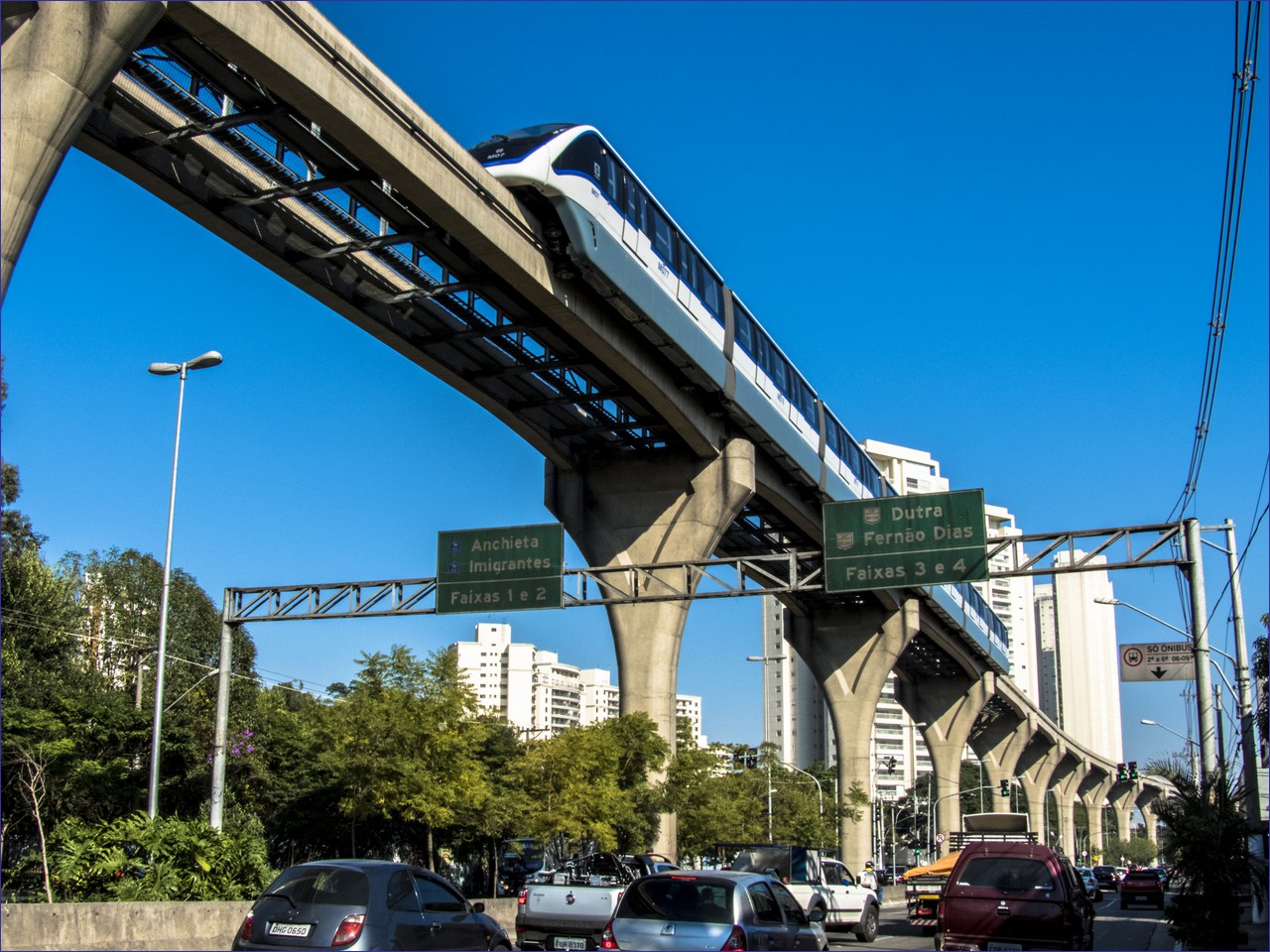
São Paulo has two monorail lines within its metro system: Line 15-Prata (Silver) and Line 17-Ouro (Gold). Both use elevated concrete guideways, rubber-tyred trains and driverless operation. They are part of the São Paulo Metrô network, although technically they differ considerably from the conventional steel-wheel metro lines. They run on a concrete beam approximately 69 cm wide, with additional tyres providing lateral guidance and stability. The guideway and stations are elevated, generally around 15–20 metres above street level.
Line 15-Prata is the first monorail built in São Paulo and began passenger operation in 2014. It was designed as a medium-capacity rapid-transit system for the densely populated eastern districts of the city. The currently operating section runs from Vila Prudente to Jardim Colonial, with 11 stations. Vila Prudente provides interchange with conventional Metrô Line 2-Verde, making the monorail part of the wider São Paulo rapid-transit network.
The complete project is planned to have approximately 26.6 km and 18 stations, extending eventually towards Cidade Tiradentes. However, the entire planned route is not yet operational.
Line 15 trains consist of seven cars, are approximately 86 metres long and can accommodate around 1,000 passengers under the operator’s design loading conditions. Their maximum speed is 80 km/h.
Line 17-Ouro is São Paulo’s second monorail line. Its main purpose is to connect the Morumbi area with Congonhas Airport and provide connections with the existing metropolitan railway network. As of September 2026, the line is in transitional operation, rather than normal full-day metro service. The currently operating section has eight stations: Morumbi, Chucri Zaidan, Vila Cordeiro, Campo Belo, Vereador José Diniz, Brooklin Paulista, Aeroporto de Congonhas and Washington Luís. The Aeroporto de Congonhas station opened on 31 March 2026 and is connected to the airport by a pedestrian tunnel.
The complete Line 17 project is planned to have 18 stations, connecting the Morumbi area with Jabaquara. Like Line 15, Line 17 uses driverless rubber-tyred trains running on elevated concrete guideways.
The two lines use similar general technology but serve different urban corridors: Line 15 serves the densely populated eastern districts, while Line 17 crosses the southern part of São Paulo.
10. Light rails and suburban railways in Brazil
There are some light rails in Brazil. The term “light rail” is inappropriate, because some of the systems look alike a suburban trains. Most better term is “tram-train”. In the nearest future light rails will be extended and modernised, so information on this site may be soon outdated.
CPTM Suburban Trains in São Paulo – the conventional suburban railway network of the São Paulo metropolitan area. Unlike the Metrô, CPTM trains use traditional railway infrastructure and serve longer-distance journeys between São Paulo and surrounding municipalities. CPTM was established in 1992, bringing together several existing suburban railway services. The network incorporates railway routes with origins in the 19th century, including lines historically operated by companies such as São Paulo Railway, Estrada de Ferro Central do Brasil and Estrada de Ferro Sorocabana. In September 2026, CPTM itself operates four lines, with 41 operational stations and 142 km of railway, serving 12 municipalities. It carries approximately 1.3 million passengers on an average weekday. CPTM operates the Expresso Aeroporto, connecting Luz and Guarulhos Airport. The airport station is on Line 13-Jade, with the airport terminal reached from the railway station by the airport’s connecting system. CPTM and Metrô form an integrated urban rail network. Important interchange stations include Luz, Brás, Palmeiras-Barra Funda, Tatuapé and Tamanduateí. This makes it possible to combine suburban trains with the metro for journeys across São Paulo. CPTM also operates the Expresso Turístico, introduced in 2009. It uses a 1952 ALCO RS-3 diesel locomotive and historic stainless-steel passenger coaches for special excursions from Luz to Jundiaí, Mogi das Cruzes and Paranapiacaba.
VLT da Baixada Santista – a modern light-rail system serving the metropolitan region around Santos and São Vicente, on the coast of São Paulo state. It replaced part of the former suburban railway infrastructure and is designed as a metropolitan tram/light-rail system integrated with buses. The first VLT services began in April 2015 between São Vicente and Santos. The first section was officially delivered in January 2017. The network consists of the original Barreiros–Porto section in São Vicente and Santos, plus the newer Conselheiro Nébias–Valongo section in Santos. Together they provide approximately 19 km of VLT infrastructure and 27 stations. The concession documentation describes the complete Barreiros–Valongo route as 19 km. A further 7.5 km extension from Barreiros to Samaritá, in the continental part of São Vicente, is planned.
VLT do Cariri – a small regional diesel light-rail system in the Cariri region of Ceará. It connects the cities of Crato and Juazeiro do Norte and is operated by Metrofor, the same state-owned company that operates the metro and VLT systems in Fortaleza and Sobral. The VLT do Cariri began passenger service in 2010, becoming one of Brazil’s first modern regional light-rail systems outside a major metropolitan area. The railway is approximately 13.6 km long. The line crosses an urban and semi-urban landscape between Crato and Juazeiro do Norte, with sections running alongside roads and through built-up areas. The VLT uses 1,000 mm metre gauge, a gauge historically common on Brazilian regional railways. The trains are two-car diesel multiple-unit VLTs, based on the Mobile 2 design. A two-car train can carry approximately 378 passengers.
VLT de Sobral – a diesel light-rail system serving the city of Sobral in Ceará, northeastern Brazil. It is operated by Metrofor (Companhia Cearense de Transportes Metropolitanos) and is one of two regional VLT systems operated by Metrofor outside the Fortaleza metropolitan area, the other being the VLT do Cariri. Metrofor officially classifies the Sobral system as a VLT rather than a metro. The passenger operation began in 2012. The length of the nework is 13.9 km. The system consists two lines: Linha Norte and Linha Sul with 12 stations. The system is primarily intended for local urban and commuter transport. The station Campo dos Velhos is the important interchange where the northern and southern branches meet. The VLT operates Monday to Saturday. The system uses electronic ticketing. Metrofor also offers a personalized Cartão Múltiplo for passengers paying the full fare, while students can use a dedicated student card for the reduced fare. Sobral was the first railway system in Ceará to introduce the possibility of taking bicycles on Metrofor trains, initially on a trial basis in 2020. The system continues to allow bicycles under specific conditions. Current rules allow bicycles on the VLT de Sobral during designated periods, with a limit of two bicycles per train journey on each branch.
Sistema de Trens Urbanos de João Pessoa – a diesel-powered suburban railway operated by CBTU (Companhia Brasileira de Trens Urbanos) in the metropolitan area of João Pessoa, Paraíba. It connects Santa Rita, Bayeux, João Pessoa and Cabedelo and is one of Brazil’s smaller surviving urban railway systems. The complete route is approximately 30 km long. The current system has 13 stations. The trains are diesel-powered, with diesel locomotives and conventional passenger coaches. This is an important difference from the electrified metro systems of São Paulo, Rio de Janeiro and Recife. Local transport documents sometimes refer to the João Pessoa railway as a light rail, but technically it is better described as a diesel suburban railway because it uses conventional railway locomotives and coaches rather than the typical articulated light-rail vehicles found on modern VLT systems. A recent BNDES metropolitan transport study explicitly describes the system as a single diesel railway line. The railway operates Monday to Saturday. There is no regular Sunday passenger service.
Sistema de Trens Urbanos de Maceió – a diesel-powered suburban railway operated by CBTU (Companhia Brasileira de Trens Urbanos) in the metropolitan area of Maceió, Alagoas. It connects Maceió with Satuba and Rio Largo and is commonly referred to locally as the VLT de Maceió. The railway runs from Maceió to Lourenço de Albuquerque, in Rio Largo, over approximately 34.7 km. The line uses 1,000 mm metre gauge. The scheduled journey between the ends of the line takes approximately 70 minutes. The service is considerably slower and less frequent than the large metro systems of Brazil. The network has been affected by the major ground-subsidence problems in Maceió, particularly in the area associated with the collapse of underground salt mines. CBTU’s published system description notes that the problem significantly reduced passenger numbers and affected the operation of the railway. Maceió also has a separate tourist Maria Fumaça service. In July 2026, CBTU launched the tourist train project using the historic locomotive Estrela Radiosa, including journeys between Jaraguá and the restored Maceió station. This should be treated separately from the everyday suburban railway.
Sistema de Trens Urbanos de Natal – a regional suburban railway operated by CBTU (Companhia Brasileira de Trens Urbanos) in the metropolitan area of Natal, Rio Grande do Norte. It is commonly described as a VLT system, although the network still has many characteristics of a conventional diesel railway. The length of the network is 80 km of railway and has 28 stations, divided between the Linha Norte and Linha Sul. The Linha Norte runs between Natal and Ceará-Mirim, covering approximately 38.5 km and serving 14 stations. The Linha Sul runs from Natal to Parnamirim, covering approximately 41.5 km and also serving 14 stations. The railway serves Natal, Ceará-Mirim, Extremoz, Parnamirim, São José de Mipibu and Nísia Floresta municipalities. However, not every municipality has a currently operating passenger service at all times. The system is not electrified. It uses diesel-powered trains, an important difference from the electrified metro systems of São Paulo, Rio de Janeiro and Recife. A separate project was developed towards São Gonçalo do Amarante and Extremoz, including approximately 4.1 km of railway and three planned stations.
Teresina Metro (Metrô de Teresina) – the urban railway system of Teresina, capital of Piauí in northeastern Brazil. It opened to passengers on 11 January 1991 and was originally developed using an existing metre-gauge railway corridor. Despite its name, it is more accurately described as a diesel-powered urban/light railway rather than a conventional electric metro. Since 2023, the system has been administered by the Companhia Ferroviária e de Logística do Piauí (CFLP), a company controlled by the government of Piauí. It uses 1,000 mm (metre gauge). The system was historically diesel-powered; modern VLT (light-rail) vehicles are now being introduced. Much of the railway is at ground level, with sections in a cutting and on an elevated structure.
TrensRJ trains in Rio de Janeiro – a network of suburban trains formerly known as SuperVia. The railway serves 12 municipalities in the Rio de Janeiro metropolitan area, including Rio de Janeiro, Duque de Caxias, Nova Iguaçu, Nilópolis, Mesquita, Queimados, Japeri, São João de Meriti, Belford Roxo, Paracambi, Magé and Guapimirim. The network has approximately 270 km of railway, with five main branches and three extensions, serving around 104 stations. The principal railway hub is Central do Brasil, in central Rio de Janeiro. It provides connections with several suburban branches as well as the Rio Metro and VLT. The network is a conventional suburban railway, rather than a metro. Trains operate over relatively long distances and connect the city centre with distant suburbs and neighbouring municipalities. Services include both “parador” trains, stopping at intermediate stations, and “expresso” services on selected routes.The railway uses electric multiple-unit trains, with power supplied through overhead railway infrastructure.
11. Most beautiful stations in Brazil
The most beautiful train stations in Brazil are located in Sao Paulo.
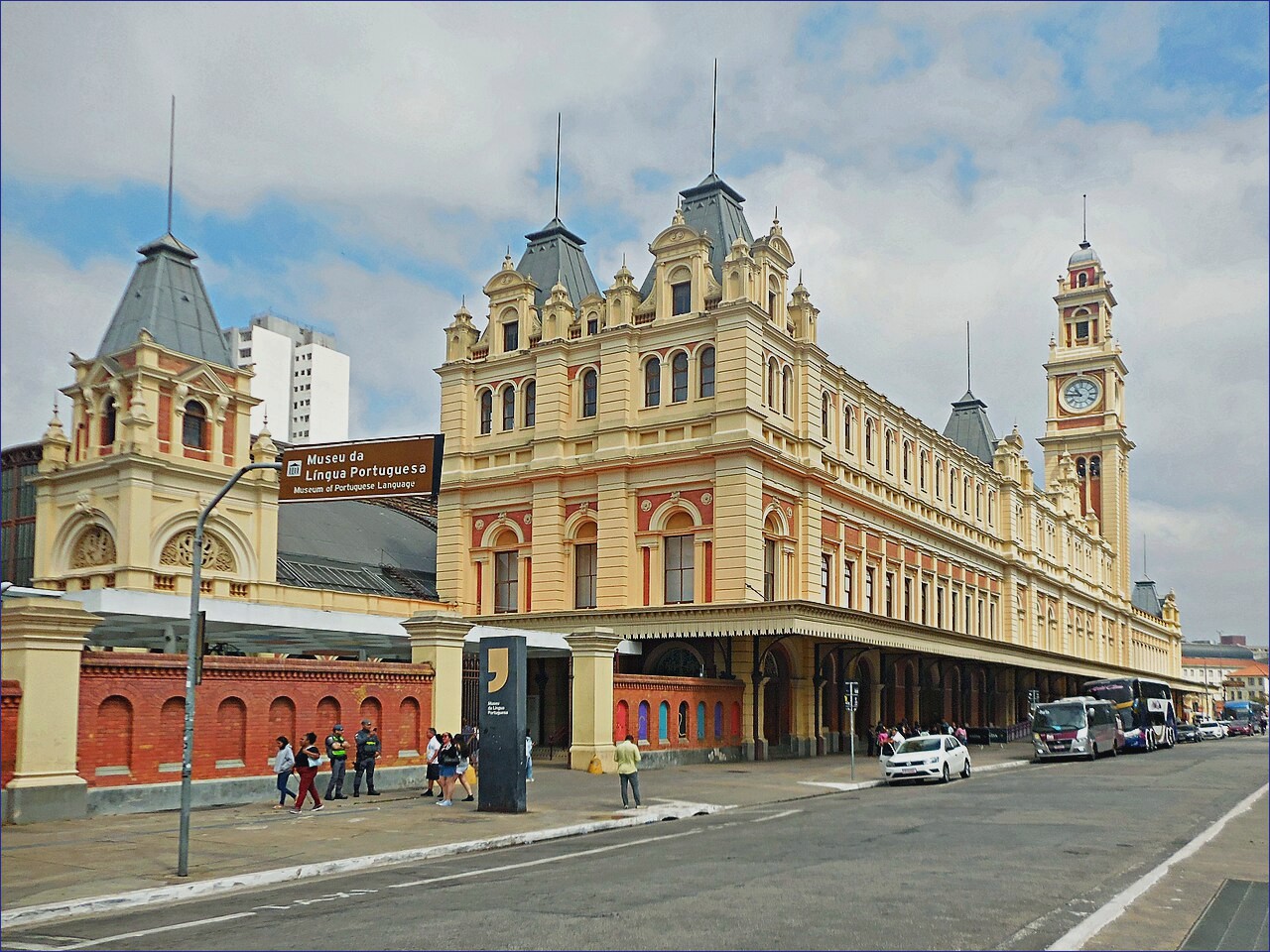
Estação da Luz – one of the most important historic railway stations in São Paulo and one of Brazil’s best-known railway landmarks. Located in the central Luz district, the present station building was inaugurated on 1 March 1901 for the São Paulo Railway, the British-controlled railway that connected São Paulo with the port of Santos. The station was closely associated with the expansion of the coffee economy and the arrival of immigrants and workers in São Paulo. The building was designed by British architect and engineer Charles Henry Driver. It is strongly influenced by Victorian railway architecture, with a large iron structure, brickwork, extensive use of glass and a prominent clock tower. Many structural materials were imported from Britain. The station became an important gateway for **immigrants, migrants, workers and travellers arriving in São Paulo, particularly during the period of rapid growth associated with coffee production. A major fire in 1946 damaged the station, while another devastating fire on 21 December 2015 destroyed much of the interior of the Museu da Língua Portuguesa and seriously affected the historic building. Following the 2015 fire, extensive restoration and reconstruction were carried out. The Museu da Língua Portuguesa was reopened in 2021. CPTM suburban trains use the station, including services on the modern metropolitan railway network.
Estação Júlio Prestes – one of the most impressive historic railway stations in São Paulo. Located in the Campos Elíseos district, close to Estação da Luz, the monumental building was constructed by the Estrada de Ferro Sorocabana and completed in 1938. Designed by architects Samuel and Christiano Stockler das Neves, it was inspired by large American railway terminals of the period and was intended to demonstrate the importance and prosperity of São Paulo’s railway system. Construction began in 1925 and was completed in 1938. The building designed by brothers Samuel and Christiano Stockler das Neves constitutes a monumental neoclassical architecture, influenced by contemporary American railway stations. The building has a particularly impressive entrance hall, monumental interior spaces and a prominent tower that remains one of the landmarks of the Campos Elíseos area. The station was originally much more closely associated with long-distance railway travel than with today’s suburban railway services. The name commemorates Júlio Prestes de Albuquerque, former governor of São Paulo and president-elect of Brazil in 1930. The building now forms part of the Complexo Cultural Júlio Preste. The former internal railway area contains Sala São Paulo, the principal concert hall of the Orquestra Sinfônica do Estado de São Paulo (OSESP). The station is associated with CPTM Line 8-Diamante, the metropolitan railway running westwards from the centre of São Paulo.
Related articles:
Trenopedia – main site
Railways in Americas by country