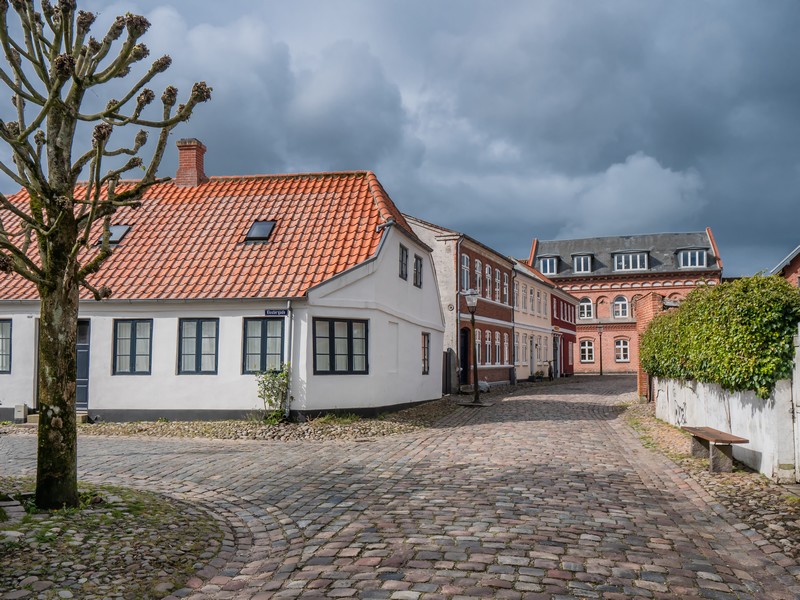
Denmark has a well-developed and well-maintained railway network. Passenger trains connect the largest cities and smaller towns. Not so long ago many connections were provided by train ferries and journey time was very long. In the 21st century, ferry crossings were replaced by long, modern and majestic bridges and tunnels. Train travel in Denmark is very expensive. Interrail is highly recommended for long-distance journeys.
Last updated: 14.01.2026
In 1847 the first railway line in Denmark from between Copenhagen and Roskilde (about 32 km) was opened.
The first railway line in the Danish Duchy of Schleswig opened between Flensburg and Tønning in 1854.
In the 1870s and 1880s Danish state took over many private railway companies and private operated lines.
On 1 April 1893 the national railway company De danske Statsbaner (the Danish State Railways) was founded.
On 31 May 2019 the Copenhagen–Ringsted high-speed line was inaugurated. Total length of the line is about 60 km.
Table of contents:
1. Domestic trains
2. Rejsepas
3. Main railway stations
4. Danish Railway Museum in Odense
5. Narrow-gauge railways in Denmark
6. Heritage railways in Denmark
7. Railways on Danish islands.
8. International trains
9. What to see
1. Train travel in Denmark – domestic trains
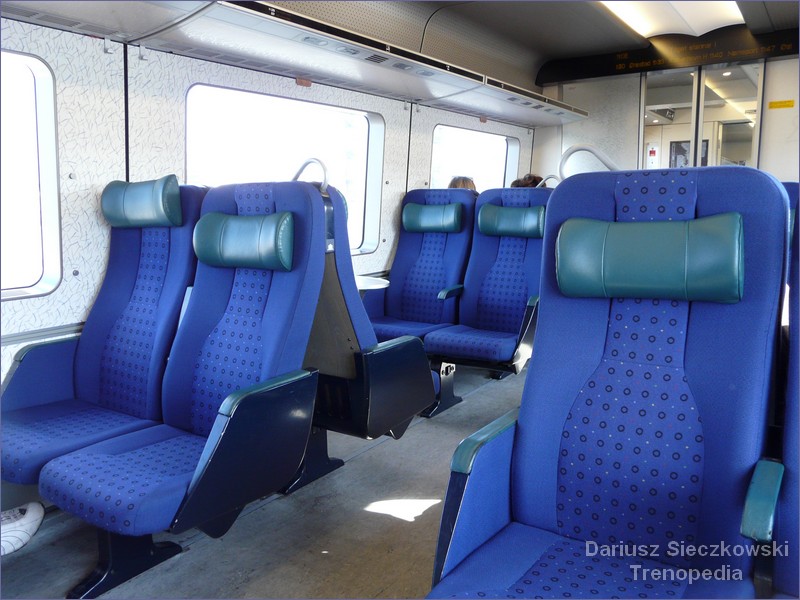
Long-distance trains in Denmark are mostly ugly, but very comfortable, fast and clean. Sometimes also packed with passengers.
Suburban trains around Copenhagen run very frequently and are crowded during rush hours. Most suburban trains do not have toilets on board.
Most trains are operated by state-owned Danske Statsbaner SV (DSB), but some regional railway lines are operated by other carriers: Arriva Danmark, Lokaltog, Midtjyske Jernbaner, Nordjyske Jernbaner.
Tickets are very expensive, but there are many discounts and discount cards available.
Useful websites:
Danske Statsbaner (DSB) – official website. Timetable, discounts, search engine, e-shop.
Reiseplanen – search engine for train, ferry and bus connections.
Arriva Danmark – regional trains in Jutland.
Lokaltog – a regional operator in Zeeland
Midtjyske Jernbaner – a regional operator in Jutland.
Nordjyske Jernbaner – a regional operator in the north of Jutland.
If you want to explore Copenhagen and surroundings area, the best offer is eight zones ticket.
Visit Copenhagen – more information
2. Rejsepas
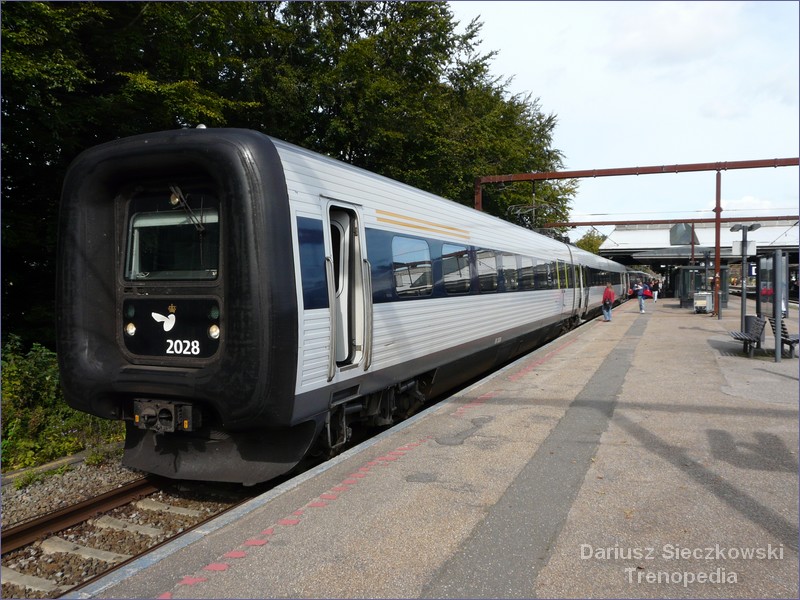
During summer holidays you can travel by train and other public transport throughout Denmark for a very low price. The Danish State Railways (DSB) is offers the Rejsepas – a network ticket (pass) which allows unlimited travel by bus and train throughout Denmark for 8 days. The Rejsepas costs less than one train journey between Copenhagen and Odense. and is valid for 8 consecutive days.
The ticket goes on sale in mid-June, ticket validity dates are set each year – as a rule, you can choose the period between the last week of June and the end of the first week of August. Only 75,000 of these tickets are on sale and they sell out very quickly.
Rejsepas is applied on trains, buses, trams and ferries operated by the following companies: Arriva, BAT (Bornholm), DOT, DSB, FynBus, Letbanen, Metro, Midttrafik, Movia, NT, Sydtrafik.
Passengers with Rejsepas must have a seat ticket when you travel with DSB’s trains (except S-trains). Seat reservation is free.
Rejsepas is not valid for travel across the Øresund.
During the summer holidays,the Danish State Railways offers also one-way tickets on sale at relatively low prices.
In 2025 the Rejsepas was scrapped and is not available.
3. Main railway stations
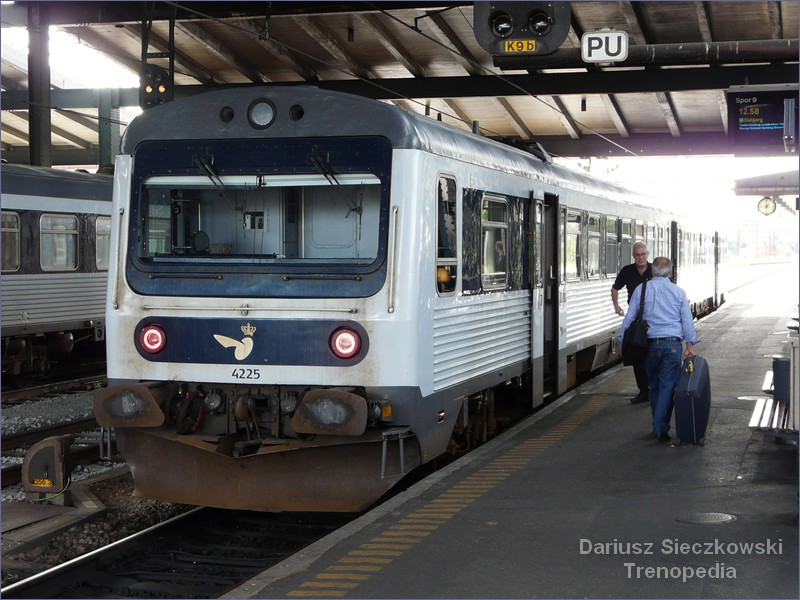
Train travel in Denmark is possible on many routes. Most important railway stations are located in Copenhagen, Aarhus, Aalborg, Odense and Esbjerg. Important railway junctions are also Struer (regional) and Kolding. Railway stations in Denmark are generally well-maintained and wheelchair accessible. Luggage lockers available at largest stations.
Copenhagen Central Station – main railway station in the capital of Denmark and the largest railway station in Denmark. Located in the city centre and very well connected with city public transport.
Copenhagen Central Station – additional information
Aarhus train station – the busiest station in Denmark outside the Copenhagen area. It was built as a through station. The station is connected with a three-storey shopping centre (Bruun’s Galleri) housing more than 90 stores.
Aarhus train station – additional information
Aalborg train station – the main railway station serving the city of Aalborg. It is an important rail junction and rail hub which serves passenger trains between North Jutland and the rest of Denmark.
Aalborg train station – additional information
Esbjerg train station – one of the most beautiful railway stations in Europe. An important rail junction. It serves regional trains to oldest town in Denmark – Ribe.
Esbjerg train station – additional information
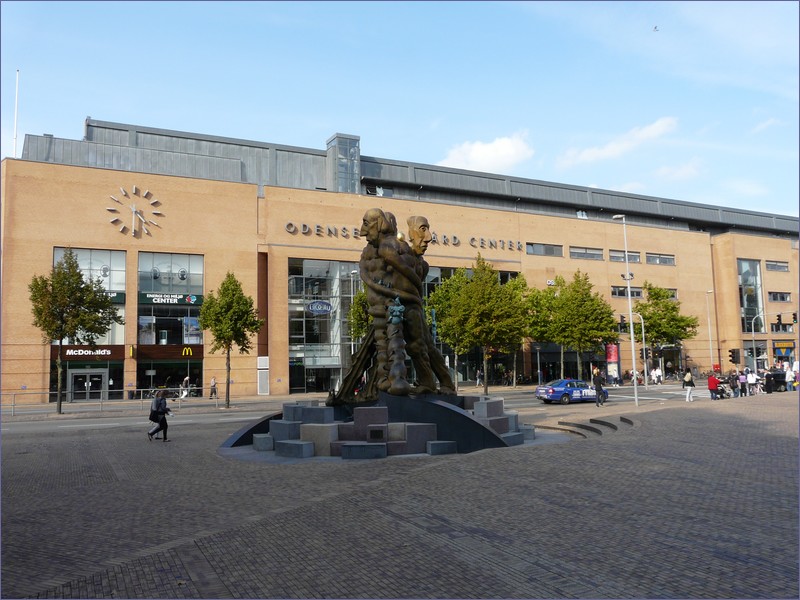
Odense – a modern train station opened in 1995. Odense lies on the Copenhagen – Fredericia routes and serve many long-distance and international trains and local trains to Svendborg. Next to the station is located Danish Railway Museum. Odense is a nice, charming medium-sized city.
Odense train station – additional information
4. Danish Railway Museum in Odense
Next to the railway station in Odense is located Danish Railway Museum (opposite to the city center). The museum is open daily from 10 AM to 4 PM, in summer to 5 PM (except on certain holidays). On an area of 10,000 square meters, you can admire exhibits documenting the history of railways in Denmark from the beginnings to the present day. The museum displays, among other things, a collection of old locomotives and carriages, and during the summer season, take a ride on a miniature garden railway. The museum also has a shop offering railway-themed publications. Interrail ticket holders are entitled to a discount on the ticket price.
On selected days throughout the year the museum runs vintage trains on the museum grounds.
Danish Railway Museum – official website
5. Narrow-gauge railways in Denmark
There are several narrow-gauge railways in Denmark. The country had plenty of narrow-gauge railways used for various purposes – industrial, brick, peat, field and passenger railways. Most of them have been closed and dismantled many years ago. Most popular operational narrow-gauge railways are located in the open-air museum in Vinderup and right next to Hedehusene station where stop suburban trains from Copenhagen.
Narrow-gauge railways in Denmark are short and operated usually only seasonally on weekends.
Narrow-gauge railways in Denmark – a comprehensive guide.
6. Heritage railways in Denmark
There are several associations of railway enthusiasts that run heritage railways in Denmark on selected routes. The trains are composed of historic steam or diesel locomotives, or old diesel multiple units. Traveling by such a train is a great opportunity to learn how the railway operated in Denmark a few decades ago.
Most important heritage railways:
Bjergbanen – a short scenic railway line from Lemvig to the port. 1,5 km long, journey time 15 minutes.
Gedser Jernbane – vintage train rides in the summer season on a short route from Gedser.
Museumsbanen Maribo – Bandholm – train rides on the oldest private railway line in Denmark
Heritage railways in Demark – a comprehensive guide
7. Train travel in Denmark – railways on Danish islands
Rømø – a horse-drawn tram operated on the island of Rømø from 1899 to 1940. After reunification in 1920, it was renamed Trolejbanen. The 3.8 km railway was built across the island with a 750 mm gauge. The starting station was in Kongsmark, and passengers were transported by tram from ships to holiday resorts. The journey took about 20 minutes. Due to the marshy terrain, a steam locomotive could not be used. According to online sources, remnants of the railway still exist. The island can be reached by ferry from the German island of Sylt.
Bornholm – currently, there are no railways on Bornholm, and former railway lines have been converted into walking and cycling paths. On December 12, 1900, the Rønne – Nexø line (37 km) was opened. The railway was profitable mainly due to freight transport, with new branches being opened to the port and trade cooperatives. In 1915, the Rønne – Sandvig line with a siding to the port in Allinge was opened, considered the most beautiful railway line in Denmark. In 1925, the Allinge – Gudhjem line was opened. After World War II, the railway could not compete with trucks and buses. The last train on Bornholm ran on September 28, 1968, on the Rønne – Nexø line. There is a small Railway Museum in Nexø.
Faroe Islands – apart from short tracks used for transporting goods from boats and ships, there are no railways in the Faroe Islands. In 1924, railway tracks were built in the port of Tværå on the island of Suðuroy, connecting the quay and pier with the port warehouses. The tracks were never used. The only existing railway in the Faroe Islands is a funicular railway from the port in Gjógv to the village center, intended for transporting goods. The track gauge is 600 mm.
I have no information about railways on other Danish islands.
8. Train travel in Denmark – international trains
Denmark has railway connections with neighboring countries. Regional, long-distance and night trains are available.
Germany
Eurocity trains run from Hamburg to Copenhagen and Aarhus several times a day. Since December 2019, trains to Copenhagen run via Kolding, previously they ran part of the route by ferry.
Promotional ticket prices start from €29.90 in second class. Please note that these are tickets for a specific connection and are not refundable or exchangeable.
Important note: Due to engineering works in Denmark there are disruptions in train traffic between Denmark and Germany in summer.
Deutsche Bahn – search engine for domestic and international trains.
Local trains run frequently between the Danish town of Tønder and the German town of Niebüll. The connection is operated by the local carrier Norddeutsche Eisenbahn Gesellschaft (neg). This operator does not accept Interrail tickets, but the price for travel between these cities is not expensive. Deutschland Ticket holders will only pay for the Danish section
In Tønder you can change to a train to Ribe or Esbjerg (served by Arriva Danmark), and in Niebüll you can change to a train towards Hamburg or Westerland (connections are served by NordOstseeBahn, Deutsche Bahn category IC trains also run).
Norddeutsche Eisenbahn Gesellschaft – official website
Arriva Danmark – official website
Trains between Germany and Denmark – a comprehensive guide
Sweden
Øresundståg/Öresundståg trains run between Copenhagen and Malmö every 20 minutes (from morning to evening). Trains most often start in Helsingør and end not only in Malmö, some of them even go on to Gothenburg. The most beautiful part of the route is the crossing over the Oresund Bridge over the Baltic Sea. Trains also stop at Copenhagen-Lufthaven station.
Oresundstag – official website, more information
There are also direct X2000 trains Copenhagen – Stockholm, but timetables and prices should be checked on the Swedish Railways website:
sj.se – timetable and prices of X2000 trains.
Night trains from Stockholm to Berlin also pass through Denmark. Trains are operated by two carriers – Swedish Railways (all year round) and Snalltaget (seasonal train). The train operated by SJ will run only to 31st August 2026.
Swedish Railways – official website
Snalltaget – official website
Related articles:
10. Train travel in Denmark – what to see
Denmark is a nice country with many lovely places. The list contains only most important places for those, who want to spend a few days in Denmark.
Copenhagen – the capital of Denmark, renowned for its historic charm, modern design, and vibrant cultural scene. Key attractions include the iconic Tivoli Gardens amusement park, the colorful Nyhavn harbor, and the historic Christiansborg Palace. Visitors can explore the Little Mermaid statue, Rosenborg Castle with the Danish crown jewels, and the lively Stroget shopping street. The city is also famous for its bicycle-friendly streets, canals, and innovative cuisine. Copenhagen is also a perfect starting point for short and long-distance train trips.
Roskilde – a historic city in Denmark, located west of Copenhagen, known for its rich Viking heritage and cultural significance. The city’s main attraction is the Roskilde Cathedral, a UNESCO World Heritage Site and the burial place of Danish monarchs. Other highlights include the Viking Ship Museum, which displays well-preserved medieval ships, and the Roskilde Festival, one of Europe’s largest music festivals. There are direct regional trains from Copenhagen to Roskilde.
Odense – a historic city in Denmark, best known as the birthplace of the famous fairy-tale writer Hans Christian Andersen. The city’s main attractions include the Hans Christian Andersen Museum, Odense Cathedral (St. Canute’s Cathedral), and the charming old town with cobblestone streets and half-timbered houses. Visitors can also explore Funen’s Open-Air Museum, showcasing traditional Danish rural life, and enjoy Odense Zoo and city parks. One of the top attractions in Odense is the National Railway Museum.
Helsingør – a historic coastal city in eastern Denmark, located on the northeastern tip of Zealand, overlooking the Øresund Strait. The city is best known for Kronborg Castle, a UNESCO World Heritage Site famously associated with Shakespeare’s Hamlet. Other attractions include Helsingør’s charming old town with cobblestone streets, the Maritime Museum of Denmark, and the Helsingør Cathedral.
Ribe – the oldest town in Denmark, located in the southwestern part of the country, known for its well-preserved medieval architecture and charming cobblestone streets. Key attractions include Ribe Cathedral, with its impressive spire and historic interior, the Ribe Viking Center, which offers interactive experiences of Viking life, and the town’s quaint old town with half-timbered houses. Ribe also hosts museums, art galleries, and cultural festivals, making it a fascinating destination for history enthusiasts and visitors seeking an authentic Danish medieval atmosphere. There are direct trains from Esbjerg and Niebull, Germany to Ribe.
Tønder – a historic town in southern Denmark, near the German border, known for its well-preserved old town and rich cultural heritage. The town features charming streets lined with half-timbered houses and historic buildings, reflecting its centuries-old trading history. Key attractions include Tønder Museum, showcasing local history and art, the Tønder Windmill, and beautiful nearby natural areas such as the Wadden Sea National Park, a UNESCO World Heritage Site ideal for birdwatching and coastal walks.
Aarhus (optional) – the Denmark’s second-largest city, located on the east coast of the Jutland peninsula, known for its vibrant cultural scene and historic charm. Key attractions include Den Gamle By, an open-air museum showcasing Danish life through the centuries, ARoS Aarhus Art Museum with its iconic rainbow panorama, and Aarhus Cathedral, the longest and tallest church in Denmark. Visitors can also explore the lively Latin Quarter, Moesgaard Museum with its archaeological exhibits, and the scenic Aarhus harbor.
Aalborg (optional) – a large city in northern Denmark, known for its mix of historic charm and modern culture. The city’s attractions include Aalborg Castle, the historic Budolfi Cathedral, and the striking Utzon Center, celebrating contemporary architecture and design. Visitors can also enjoy the Aalborg Historical Museum, the waterfront area with lively cafés and shops, and the lively Jomfru Ane Gade street, famous for its nightlife.