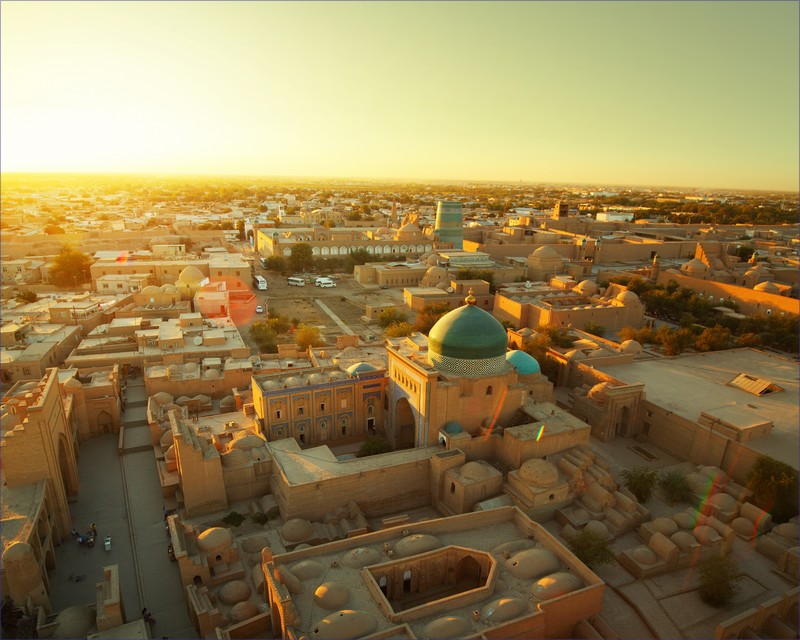
The first railway line from Turkmenabat (present day Turkmenistan) reached Samarkand in present day Uzbekistan in 1888. Today Uzbekistan has an extensive railway network and numerous international connections with adjacent countries. Travelling by train in Uzbekistan is the best way to explore most important places in this country.
Last update: 18.09.2026
In September 2011 was opened Tashkent–Samarkand high-speed rail line.
In 2017 the railway line from Navoi to Miskin near the border with Turkmenistan (355 km) was inaugurated.
A popular children’s railway in Tashkent was closed in 2017. Rolling stock fleet was moved to Bekabad and installed as train-monument.
In September 2026 a new railway link from Urgench Airport to the city (11 km) was inaugurated. The trains from the airport run to the Khiva and Bukhara-1 stations. The connection is served by Chinese-made trainsets.
Train travel in Uzbekistan – timetable and prices
Both passenger and freight trains in Uzbekistan are operated by Uzbekistan Railways (O’zbekiston temir yo’llari), stated-owned company, which was established on 7 November 1994. It is recommended to buy train tickets well in advance through local travel agencies, because trains are often sell out. You can buy ticket at the station if someone cancelled the ticket. Basic information about train connections and timetables can be found on the following websites:
Uzbekistan Railways website
Train schedule
Online shop of Uzbekistan Railways
Site of Uzbekistan Railways may or may not work and timetable may be not reliable.
Timetables for the most important railway stations in Uzbekistan:
Bukhara (poezdato.net)
Khiva (poezdato.net)
Nukus (poezdato.net)
Samarkand (poezdato.net)
Tashkent (poezdato.net)
Train travel in Uzbekistan – basic information
There are convenvenient train connections between major cities in Uzbekistan. Long-distance trains in Uzbekistan varied – there are old Soviet-era trains and modern Talgo multiple units. In addition, suburban trains run in Tashkent.
Types of the long-distance trains in Uzbekistan
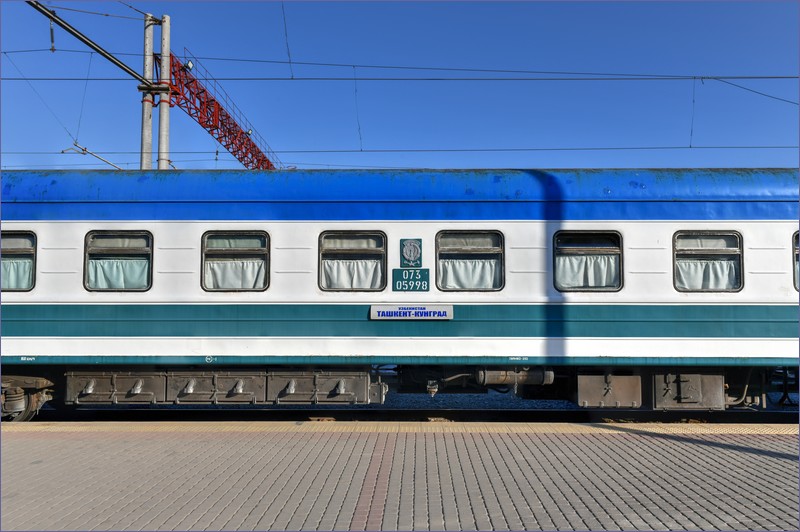
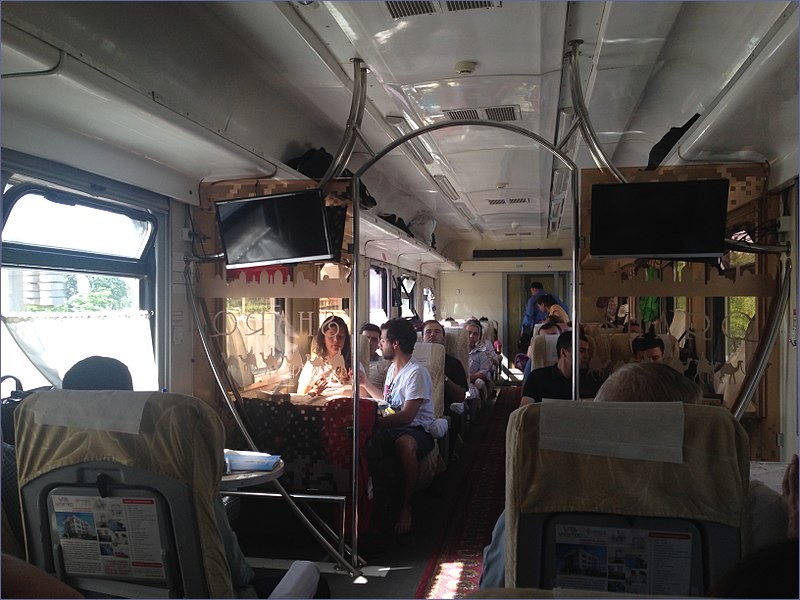
Sharq – daytime trains with mainly Soviet-era carriages. It runs between Tashkent and Bukhara, Samarkand and Bukhara and from Navoi to Tashkent and Bukhara. Journey takes from 1h 30m to almost 7 hours. In these trains you can choose following classes of carriages:
SV – 2-bed compartment (yes, for daytime train)
1st class – compartment for 3 to 6 people with table and TV
2nd class – open coaches with row of seats and aisle
In each train you can find a restaurant car.
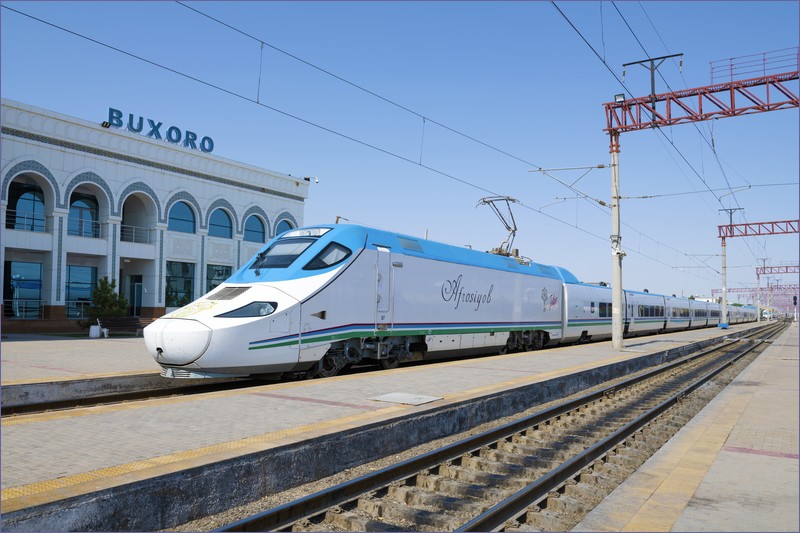
Afrosiyob – brand name fastest and most comfortable train in Uzbekistan (Talgo 250). Each trainset consists VIP-class carriages, Business-class carriages, Economy class carriages and bistro car. Talgo supplied first two trainsets for the 344 km Tashkent – Samarkand route in 2011, another trainsets were delivered in 2017 and 2019. Afrosiyob trains runs daily from Tashkent to Bukhara and Khasi and stops at Samarkand railway station. All carriages are equipped with air-conditioning and vacuum toilets. Next to the seats are power and USB sockets. Smoking is prohibited. The maximum speed is 250 kilometers per hour.
Tickets for the Afrosiyob trains are expensive.
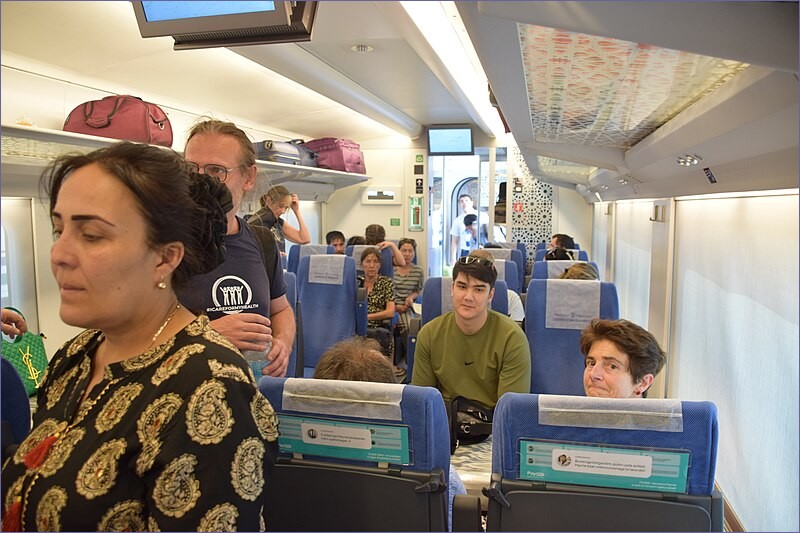
Ozbekiston – modern trains from Tashkent to Fergana Valley. Trains run from Tashkent to Andijan with Pap, Kokand, and Margilan through mountain pass and long tunnels. The trains are comprised of modern carriages with air-conditioning. There are three classes: Economy, Business and VIP.
Note: These trains are gradually replaced by new Chinese-made trainsets.
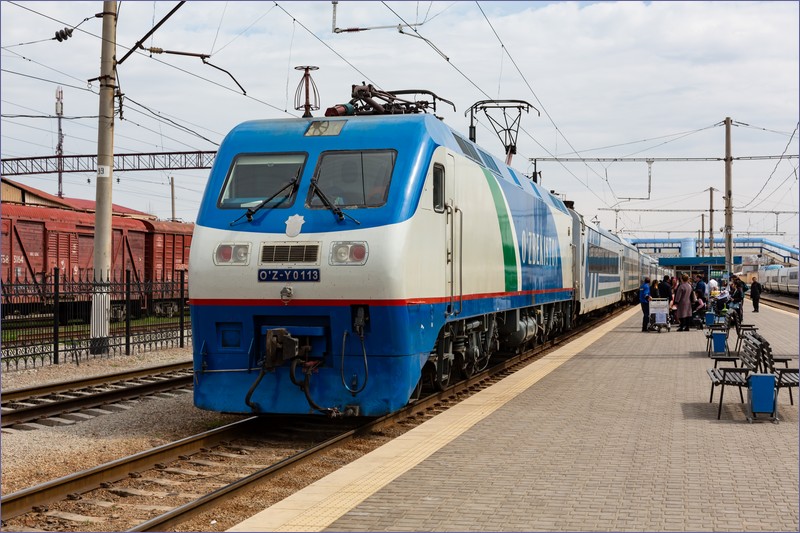
Night trains in Uzbekistan
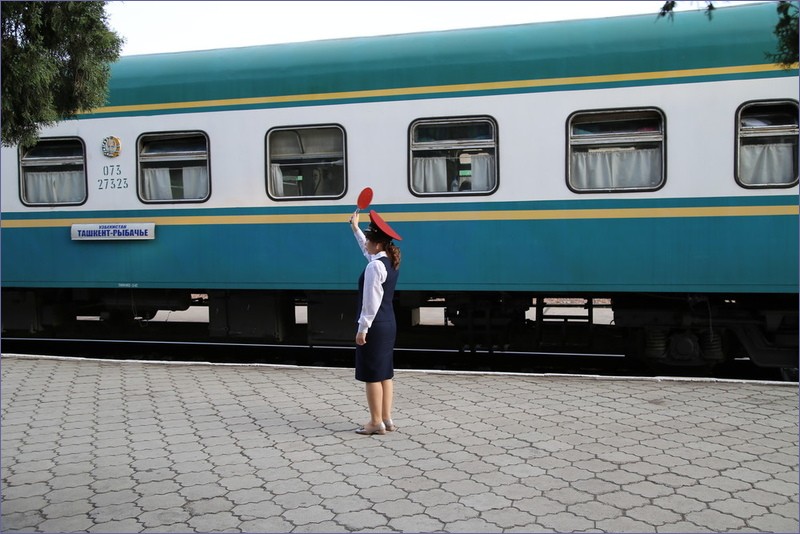
Overnight passenger trains in Uzbekistan are typical for countries of the former Soviet Union. Some of them are very old and dirty, some are decent. They are slower than daytime trains, but you can sleep comfortably. No matter whether you will travel in platzkart class or kupe. Night trains in Uzbekistan are relatively cheap. They connects Tashkent with remote cities and have more stops. Each carriage is equipped with samovar but has no air-conditioning.
You can choose between three class:
platzkart – open wagon with bunks (54 beds)
kupe – 4-berth compartment
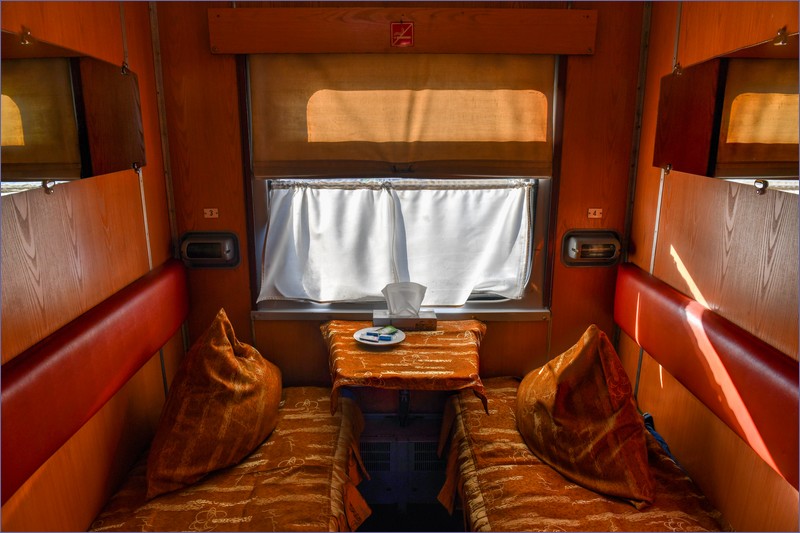
SV/Lux – 2-berth first class compartment
Some of the “Kupe” and platskart carriages have been refurbished in recent years. Refurbished carriages are equipped with air-conditioning and vacuum toilets.
LUX/SV (1st class) – double compartments with comfortable, fold-out beds. The standard varies depending on the train – you may find compartments with televisions. The carriages are usually air-conditioned and additionally soundproofed. One carriage usually has 8 compartments and 16 seats.
Kupe «K» – sleeping car “Kupe” or “Kupiejy”. Most common sleeping car with 4-bed compartments. Two upper beds and two lower beds. Each carriage has nine separate compartments with four bunks.
Platskart car “PL” – couchette car popular in Ex-USRR countries. Cheap and comfortable option with unique atmosphere but no privacy. The open-class carriage consists of 54 bunks, arranged in bays of 4 on one side and bays of 2 on another. There is an aisle between the two sides. In practice, it is an ordinary carriage without compartments, with places to sleep. Reviews of travelers vary – some are bothered by the lack of privacy, others love these carriages for the opportunity to get to interaction with fellow passengers. There is a storage compartment under the lower bunk where you can store your luggage, so you don’t have to worry about someone stealing it at night.
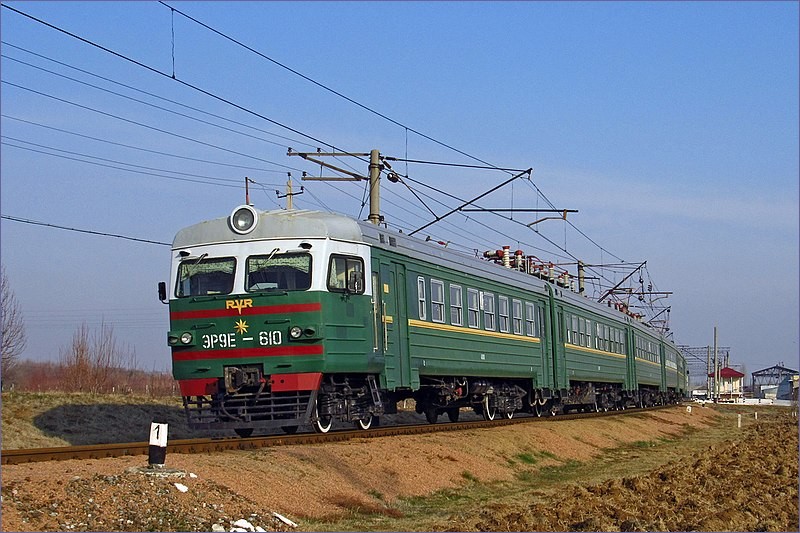
Apart from long-distance trains there are suburban trains in Tashkent. These trains are old Soviet-era electric multiple units or old carriages with locomitive. Suburban trains ar slower than long-distance trains, uncomfortable, sometimes overcrowded but very cheap. In 2022 Uzbekistan railways introduced high-speed suburban service Tashkent – Chirchik – Khojikent.
Suburban trains run on the following routes:
Tashkent – Chirchik – Khojikent
Taskhent – Yangiyo – Sirdaryo
Tashkent – Guliston – Bekobod
Suburban train starts from Southern Station in Tashkent.
Andijon – Qoʻngʻirot train
In February 2026, an interesting overnight train linking Andijan and Qoʻngʻirot was introduced. It is the longest direct domestic passenger train in Uzbekistan, crossing the country from east to west. The route begins and ends relatively close to the borders with Kyrgyzstan and Kazakhstan, considering the vast size of the country.
The train consists mainly of older platskart coaches (open-plan sleeping cars) and kupe coaches (sleeping cars with four-berth compartments). One or two coaches have reportedly been modernized. The train covers a distance of 1,667 km in approximately 26 hours and 30 minutes, including several longer scheduled stops along the way.
The service calls at most of Uzbekistan’s major railway stations, including Kokand, Tashkent, Samarkand, Bukhara, Urgench, and Nukus.
I regret, that passenger train services between Andijan and Osh, Kyrgyzstan’s second-largest city, have not yet been introduced and are unlikely to run trains between the cities in the future. Osh is connected to the rest of Kyrgyzstan’s railway network only via the territory of Uzbekistan, making a direct cross-border passenger service particularly desirable.
Jaloliddin Manguberdi train
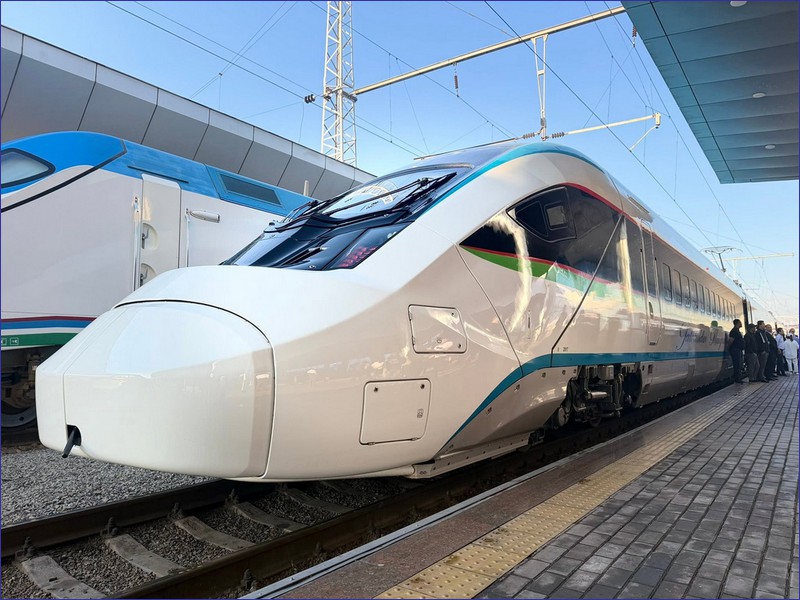
In May 2026, a new high-speed daytime train between Tashkent and Khiva entered service. The route is operated by Hyundai Rotem trainsets. Covering a distance of 1,022 km, the trains complete the journey in seven and a half hours, reducing travel time by approximately half compared to previous services operating between the two cities. Along the way, the train stops at major destinations including Samarkand, Bukhara, and Urgench. The train was named “Jaloliddin Manguberdi”.
The modern Hyundai Rotem trains purchased by Uzbekistan Railways are capable of speeds of up to 250 km/h (155 mph). Each seven-car trainset is 175 meters long and can accommodate up to 389 passengers.
The trains have been specifically adapted to Uzbekistan’s challenging climate. They can operate in temperatures as high as 50°C (122°F) and as low as -40°C (-40°F). The trainsets are equipped with systems designed to withstand extreme heat, severe cold, and sandstorms.
Passenger comfort has also been a priority. The trains feature rotating seats, allowing passengers to adjust their direction of travel according to their preference. The coaches are additionally equipped with CCTV cameras and information screens displaying route maps and real-time speed information.
Zarafshan – Muruntau train for workers
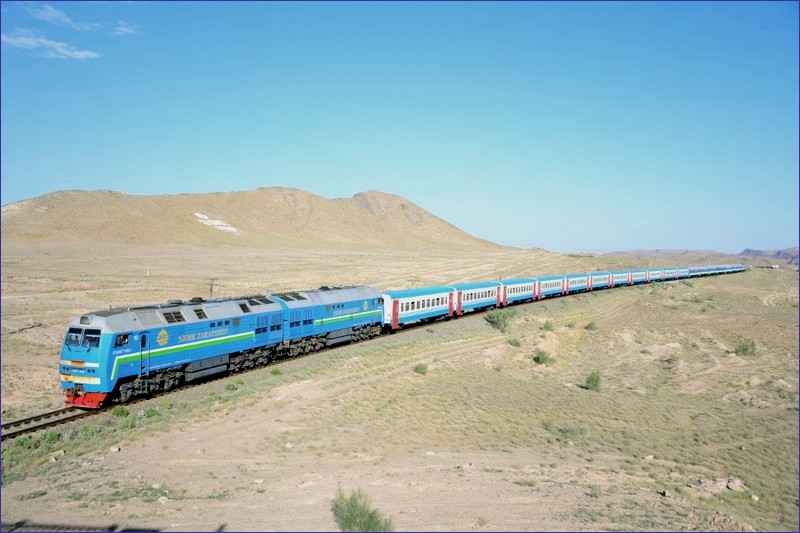
The Navoi Mining and Metallurgical Combine operates a daily morning train transporting workers from the city of Zarafshan to Muruntau station, located near the industrial facilities. In the afternoon, a return train runs back to Zarafshan. The distance between the stations is approximately 40 kilometers.
The train consists of passenger cars manufactured by JSC Tashkent Plant. Each car has 110 seats (wooden benches) and 50 standing places. The cars are equipped with air conditioning, heating, and televisions. The plant owns a total of 15 such cars.
International trains
There are international passenger trains from Uzbekistan to most of adjacent countries and to Russia.
Kazakhstan
There are a fast and convenient passenger trains from Tashkent to Almaty and Atyrau and probably lower quality train from Nukus to Beineu.
Kyrgyzstan
It’s unclear if runs summer train from Tashkent to Bishkek and Balykchy. Southern Line of Kyrgyzstan railway network from Osh (second largest city in Kyrgyzstan) to Jalal-Abad or Kok-Yangak is divided by Uzbekistan territory but is non-operational.
Russia
There are numerous trains from Uzbekistan to Russia, for example:
Tashkent – Moscow
Tashkent – Kazan
Tashkent – Chelyabinsk
Tajikistan
According to Tajik Railways website, passenger train from Dushanbe to Kulob runs once a week through Uzbekistan. I don’t know whether it stops in Uzbekistan. Trains from Kulob and Khodent in Tajikistan to Russia runs throught Uzbekistan.
Train from Dushanbe to Taskhent probably runs once a week, but I can’t verify it.
Turkmenistan
There are no passenger trains between Turkmenistan and Uzbekistan.
Ukraina
Train Tashkent – Kyiv was cancelled due to Covid-19 pandemic.
Keruen Express
The Keruen Express is a tourist train designed for travelers wishing to explore Kazakhstan and Uzbekistan. Currently, 6-day/5-night tours are available on the route Almaty – Turkestan – Samarkand – Bukhara – Tashkent – Almaty, combined with guided sightseeing of the most important monuments and attractions along the way. The train is composed of sleeping cars operated by Kazakhstan Railways, with 4-berth compartments. Prices are affordable. Train runs only a couple times a year.
More information: skyway.travel
Train travel in Uzbekistan – what to see
Trains in Uzbekistan connect the capital with largest cities. There are most important places reachable by train.
Tashkent – the capital and largest city of Uzbekistan, known for its unique blend of modern architecture, Soviet-era buildings, and rich Islamic heritage. Key attractions include the Khast Imam Complex, home to ancient Qur’ans and historic mosques, Chorsu Bazaar, a bustling traditional market, and the Amir Timur Museum celebrating the legendary conqueror. Visitors can also explore Independence Square, Tashkent Metro with its ornate stations, and Alisher Navoi National Park. Railway fans may visit Railway Museum.
Samarkand – one of the most historic and culturally rich cities in Uzbekistan, located on the Silk Road, and renowned for its stunning Islamic architecture and ancient heritage. The city’s main attractions include Registan Square, a magnificent complex of madrassahs adorned with intricate tilework, the Gur-e-Amir Mausoleum, the final resting place of Timur (Tamerlane), and Bibi-Khanym Mosque, once one of the largest mosques in the Islamic world. Visitors can also explore Shah-i-Zinda, a striking necropolis with elaborately decorated tombs, and the bustling Siab Bazaar. Samarkand is a must-visit destination in Central Asia.
Khiva – a historic city in western Uzbekistan, renowned for its exceptionally well-preserved walled old town, Itchan Kala, which is a UNESCO World Heritage Site. The city’s main attractions include the Kunya-Ark Citadel, the Kalta Minor Minaret, and the Islam Khodja Minaret and Mosque. Visitors can also explore the Juma Mosque with its ancient wooden columns, the Tosh-Hovli Palace, and the narrow cobbled streets lined with traditional madrasahs and merchant houses.
Bukhara – a historic city in central Uzbekistan, renowned as a major cultural and trading center along the Silk Road, with a history spanning over two millennia. The city’s main attractions include the Ark Fortress, a massive citadel and former royal residence, the Kalyan Minaret and Mosque, and the Poi Kalyan complex with its impressive madrassahs. Visitors can also explore Lyabi-Hauz Square, surrounded by historic buildings and teahouses, the Samanid Mausoleum, and numerous caravanserais reflecting the city’s trading heritage.
Andijan (optional) – a city in eastern Uzbekistan, located in the fertile Fergana Valley, known for its historical significance, cultural heritage, and role as a regional economic center. Key attractions include Babur Park, dedicated to the founder of the Mughal Empire; the Andijan Regional Museum, showcasing local history and ethnography; and historic mosques such as the Jami Mosque. Visitors can also explore traditional bazaars, where local crafts, textiles, and produce are sold, and nearby natural areas of the Fergana Valley.
Related articles: