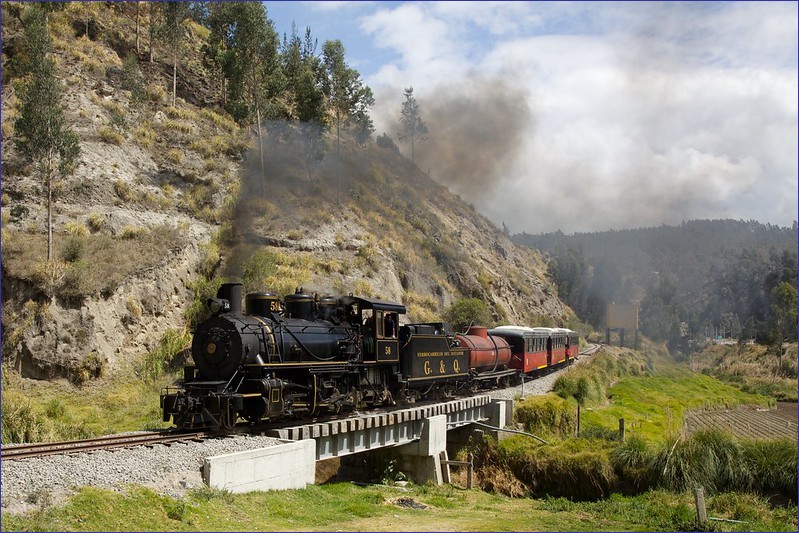
Train travel in Ecuador is currently possible only on two short routes. Ecuador has a railway network totaling 965 kilometers in length. For a long time, the railway system functioned quite well, but like in many other South American countries, it gradually declined, with natural disasters caused by the El Niño phenomenon completing the destruction. By the second decade of the 21st century, only a few tourist trains remained in operation, including the very popular Tren Crucero. Authorities had announced plans to restore the railway lines and revive passenger services. However, in 2020 the pandemic hit, and all train services were suspended. In 2025 two tourist trains were resumed.
Last updated: 16.09.2026
Train travel in Ecuador – useful websites:
Trenecuador.org – an independent website with up-to-date information
Railway map of Ecuador (Wikimedia Commons)
Tourist trains in 2026
In 2026 train travel in Ecuador is possible only on two tourist trains reactivated in 2025.
Tren Nariz del Diablo (Devil’s Nose) – a famous tourist railway in the Chimborazo Province of Ecuador, running between Alausí and Sibambe through the spectacular Andes mountain landscape. The route is part of Ecuador’s historic Trans-Andean Railway. The railway is famous for its extraordinary zigzag section cut into the mountainside. Because the slope is extremely steep, the railway uses reversing movements to gain or lose altitude rather than following a conventional continuous gradient. The train descends approximately 500 metres on the dramatic section.
The Nariz del Diablo (“Devil’s Nose”) is world-famous as one of the most terrifying railway routes. For several years, riding on the roof was banned after excited Japanese tourists, busy taking photos, failed to notice the train entering a tunnel. A ride on this train was a must-do for any railway enthusiast visiting Ecuador.
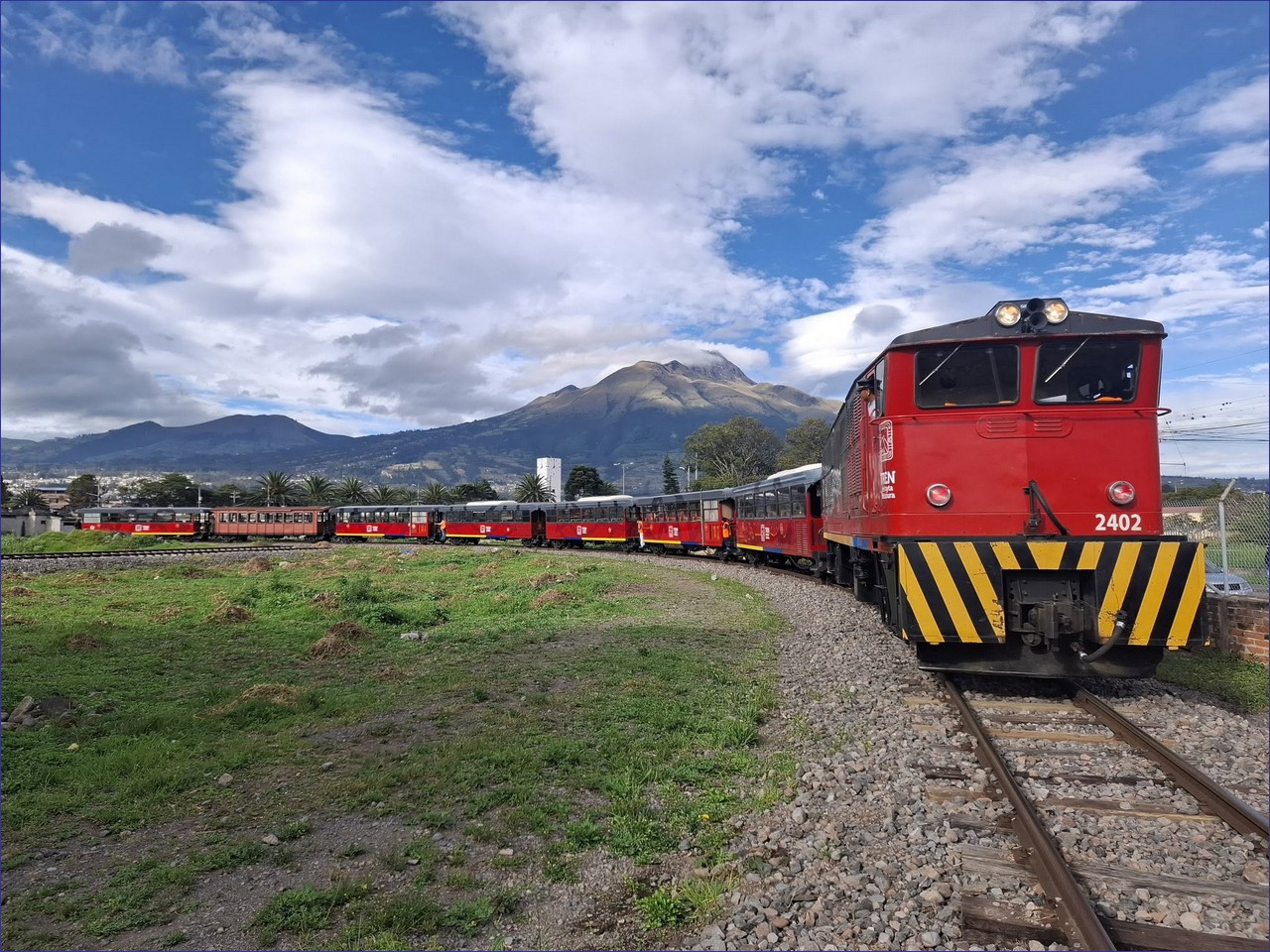
Tren del Tayta Imbabura – a tourist and heritage railway service in Imbabura Province in northern Ecuador. It connects Ibarra, San Antonio and Andrade Marín on a 13-kilometre section of the historic railway. The service was officially reactivated on 28 April 2025, after being suspended following an accident in October 2024. The railway is operated as a public tourism project by INNOVA EP, in cooperation with the municipalities of Ibarra and Antonio Ante. Its aim is not simply transportation but the preservation of railway, cultural and industrial heritage. The route takes approximately 2 hours 30 minutes, including two stops of about 30 minutes each. The three stations are Ibarra, San Antonio and Andrade Marín. The present service is a short surviving section of the former Ibarra–Salinas railway route, historically known as part of the Tren de la Libertad. The complete Ibarra–Salinas tourist route is not currently operating; the Tayta Imbabura covers only the Ibarra–Andrade Marín section. The railway experience is deliberately connected with local communities and small businesses. The operator says that numerous local enterprises participate at the stations, providing food, handicrafts and other services.
Suspended trains
Tren Crucero – a luxury tourist train operating along nearly all active segments of Ecuador’s rail network. A ride on the train was one of the country’s major tourist attractions. The trip offered a comfortable journey along the Quito – Guayaquil (Durán) route, lasting four days and nights and covering around 450 kilometers. The tour included an extensive program and hotel accommodations.
The train was composed of four modern, air-conditioned first-class coaches. On certain segments, it was pulled by a restored steam locomotive; on others, by a diesel locomotive. In addition to the first-class coaches, the train had a dining car, a lounge car, and an observation car—perfect for photographers eager to capture the majestic Andes rising along the route. The train had a capacity of 54 passengers. Prices were very high.
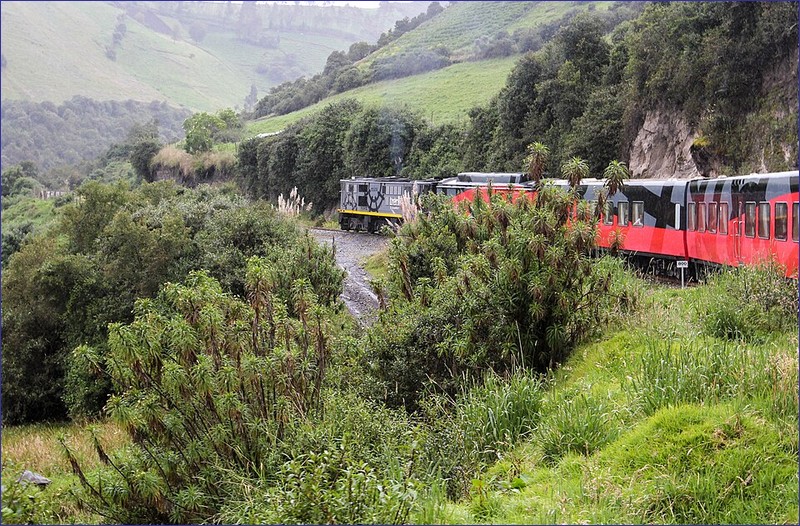
Machachi Festivo – this train ran Thursday through Sunday and on holidays on the Quito – Machachi – Quito route. Departure from Quito was at 8:15 a.m., return at 4:15 p.m. The route length was 40 kilometers. The Standard class included a bilingual guide’s lecture and a $1 coffee voucher redeemable at a café in Machachi. The Standard Plus class offered air conditioning and more comfortable seating.
Camino al Boliche – the train also operated Thursday through Sunday and on holidays, this train followed the Quito – Boliche – Quito route. Departure at 8:15 a.m., return at 4:15 p.m. The route covered 59 kilometers. It was likely the same trainset as Machachi Festivo, though marketed under a different name.
Paramo Infinito – tourist trains which ran on Saturdays, Sundays, and holidays on the Machachi – Boliche – Machachi route. Departure from Machachi at 10:30 a.m., return at 2:30 p.m. Only Standard class was available. Distance: 19 kilometers.
Avenida de los Volcanes – tourist train from Quito – Latacunga – Quito. Departure at 8:00 a.m., return at 6:00 p.m., covering a distance of 98 kilometers. The train was a modernized railcar operating on the same railway line as the previously mentioned services.
Tren de la Libertad – tourist train between Ibarra – Salinas – Ibarra. Departure from Ibarra at 10:30 a.m., return at 3:00 p.m. Additionally, on Fridays through Sundays and holidays, a railcar departed at 8:00 a.m. and returned at 12:30 p.m. Route length: 30 kilometers.
Sendero de Arrozales – tourist train ran on the route Durán – Yaguachi – Durán. Departures were at 9:00 a.m. and 1:15 p.m.; returns at 12:45 p.m. and 5:00 p.m. The train ran from Thursday through Sunday and on holidays, The schedule listed two trains at 9:00 a.m.—one with coaches, the other a railcar. Distance: 22 kilometers.
Los Baños del Inca – tourist train ran on the El Tambo – Coyoctor – El Tambo route. Departures from El Tambo were at 9:30 a.m. and 11:00 a.m. on Wednesdays, Thursdays, and Fridays, and at 12:30, 2:30, and 4:30 p.m. on weekends and holidays. The route was only 3.5 kilometers long, and the round trip (with time for sightseeing) lasted about 1.5 hours. Service was provided by a railcar.
Sendero los Ancestros – a heritage railcar on the Riobamba – Colta – Riobamba route, this train covered 25 kilometers. The journey, including sightseeing, lasted 4 hours and 14 minutes.
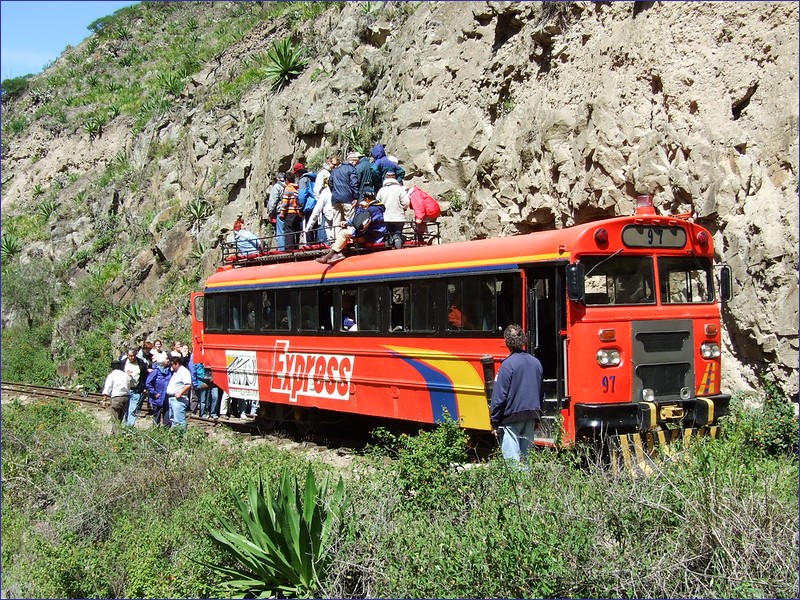
Tren de la Dulzura – a vintage train operated on the Guayaquil (Durán) – Bucay route. The train ride was relatively short, but the full tour, which included performances and plantation visits, took 10 hours round trip. Distance: 30 kilometers. A bus transfer to tourist attractions was included in the ticket.
Related articles:
Railways in Americas by country