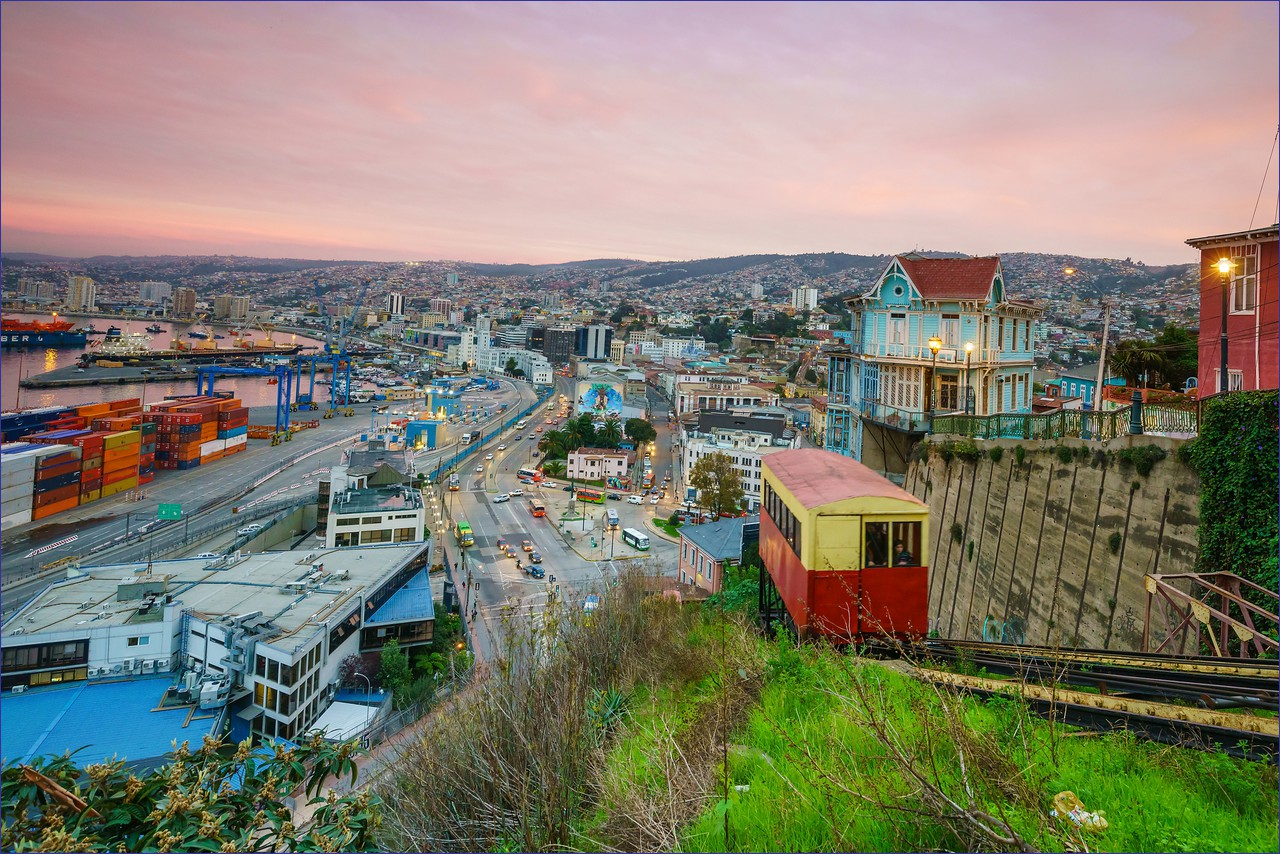
Train travel in Chile is possible mainly on suburban and regional routes. Long-distance trains are limitet to Santiago – Chillan train. There are also tourist trains which run occasionally on a few routes. Currently Chile has almost 7,000 km of railway lines, most of them are used for freight transport.
In recent years, Chilean railways have purchased new trains and invested in the renovation of some railway lines. There were reinstated regional trains in Temuco area and was introduced passenger service from Chillan to Parral. Unfortunately, the new trains mostly look like trams.
The Chilean government is investing huge amount of money in largest rail investment programme in the history of the country that includes 27 projects through 2027, for example new suburban passenger services from Santiago to Batuco and Melipilla.
In July and August 2023 railway infrastructure suffered serious damage caused by floods.
Last updated: 27.09.2026
The history of railways in Chile began in 1851, when the first train made his journey from Caldera to Copiapó (80 km). The line was constructed for transport from silver mines to seaport. The majority of railway lines in Chile was constructed for freight transport. The rail networks in the North and South Chile were essentially separate and used different gauge.
You can support this project by one-time small donation
Train travel in Chile – useful websites
Almost all regular passenger trains in Chile are operated by state-owned Empresa de los Ferrocarriles del Estado (EFE). EFE also runs tourist trains several times a year. Most of trains depart from Estación Central in Santiago. You can check timetable and prices on their website:
EFE Trenes de Chile – official website. Timetable, prices, additional information
There are no trains between Santiago and Valparaiso. Passenger service was ceased in 1987. There are plans to rehabilitate existing line and reintroduce passenger trains in the future. The line opened in 1863 is 187 km long and single-track.
Train travel in Chile – Santiago-Chillan
There is only long-distance train in Chile. Train from Santiago to Chillan covers a distance of 397 kilometers. It stops at 12 stations. At Talca station you can change to the train to Constitución.
The passenger service between the cities was reinstated in June 2024. Currently, there are three pairs of train in each direction daily: two express trains and one regular train.
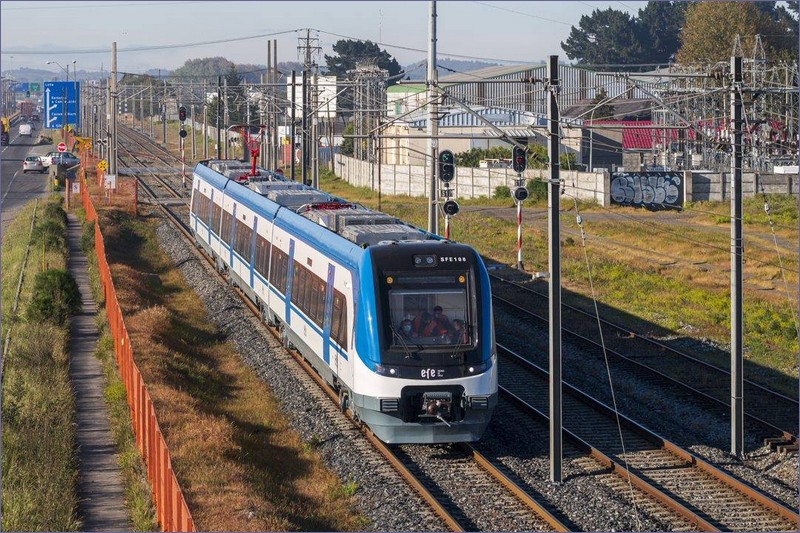
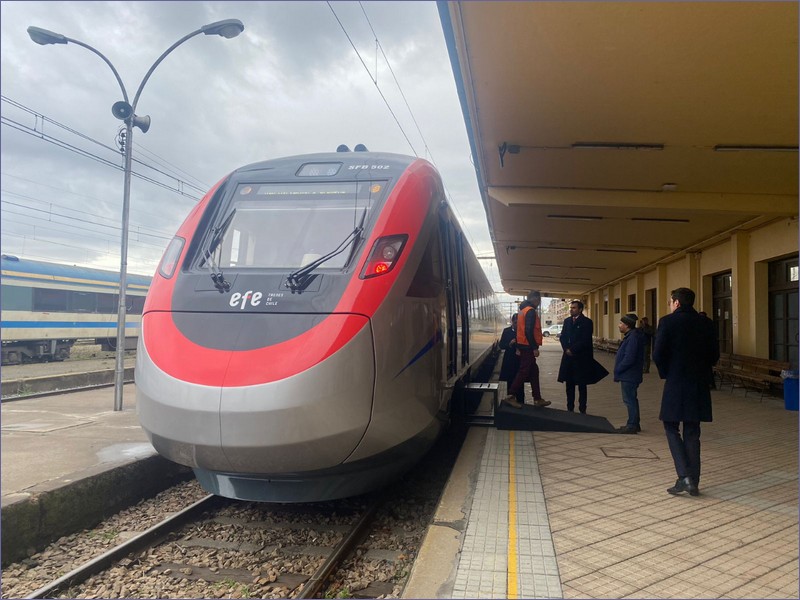
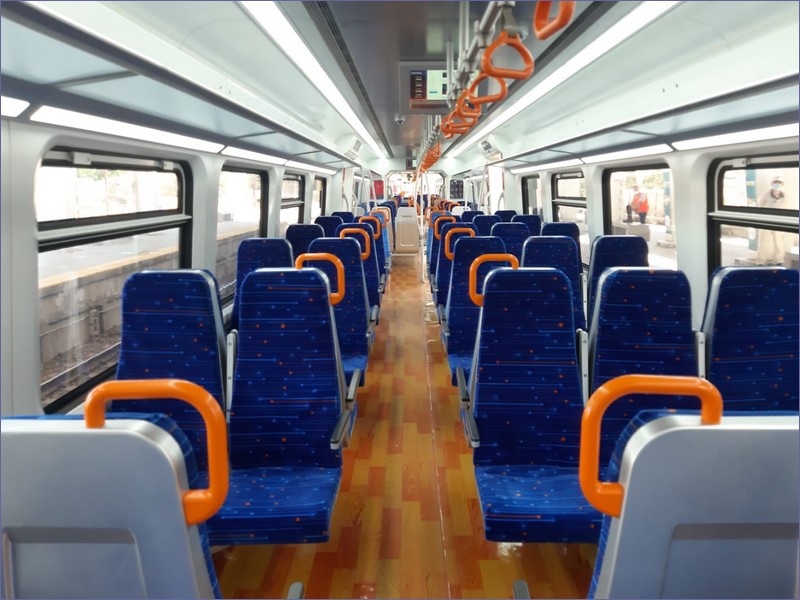
Express trains are comprised of a new Chinese multiple units. Seats are arranged 2+2 in both class Standard and Standard Plus
Regular train is comprised of Spanish multiple unit. The train consists two classes: Salon (seats 2+2) and Preferente (seats arranged 2+1)
All trains are comfortable and air-conditioned.
Santiago – Chillan train – online shop
Train travel in Chile – regional trains
In Chile, there are several regional trains running in different parts of the country. Most popular is train from Santiago to Rancagua (80). The connection from Santiago to Rancagua was inaugurated in 2017. Trains run every 15 minutes during peak hours at stop at 10 stations. Some trains are extended to San Fernando (134 km).
Among railway enthusiasts from all over the world, the most famous railway line in Chile is Talca – Constitucion. The non-electrified narrow gauge railway (1000 mm is 88 km long and was opened in 1912. It’s famous for picturesque scenery and old railbus Ferrostaal SB-56 produced in Germany in 1960s, which served this line. Old train was well worn but in good condition. This area is sparsely populated and not well served by roads and the train is the only means of transport that can take you to the doctor or to the market from small village to Constitución. Old railbus in 2023 was replaced by modern diesel multiple units (rather tram like train) with capacity of 80 passengers. The line has been under renovation for several years, but badly suffered during during floods in 2023.
Regional trains in Chile run also on following routes:
Laja – Talcahuano (scenic railway)
Talcahuano – Hualqui (Biotren)
Coronel – Concepción (Biotren)
Temuco – Victoria (65 km)
Temuco – Picturefque (29 km)
Llanquihue – Puerto Montt (27,4 km)
It may change in the nearest future.
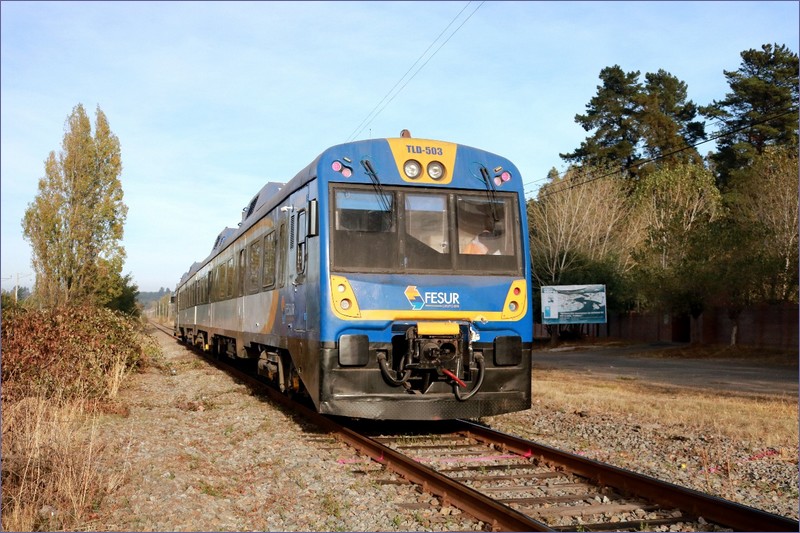
Biotren trains are operated by Ferrocarriles Suburbanos de Concepción (EFESUR). Many of suburban trains have no toilet on board.
In Temuco is located Railway Museum in historic engine shed, but I don’t know whether is open to public.
Metro Valparaiso
Metro Valparaiso
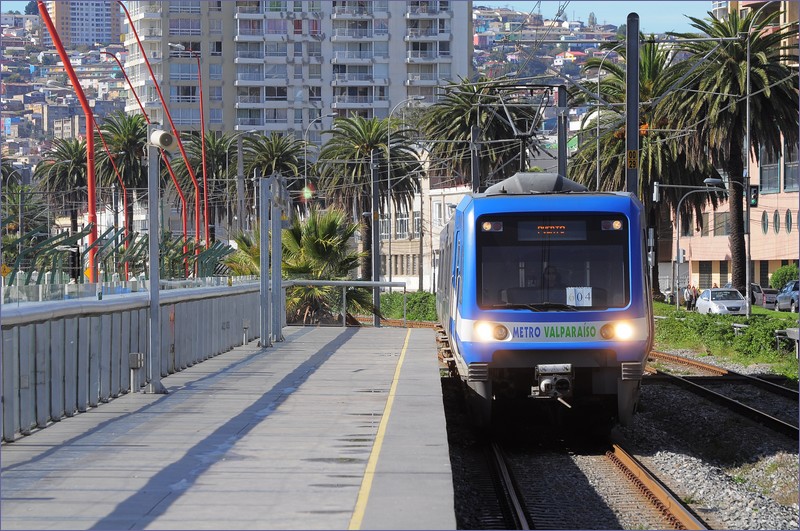
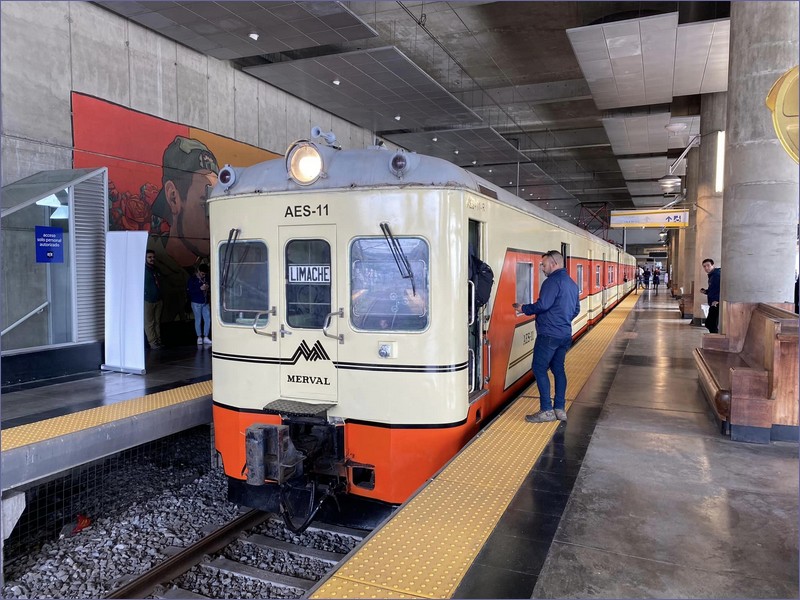
Metro Valparaiso, also known as the Tren Limache–Puerto, is a suburban railway service serving the Greater Valparaíso metropolitan area in Chile. It is also commonly known by its former name Metro Valparaíso or the nickname Merval. The service is operated by EFE Valparaíso, a subsidiary of Chile’s state railway company Empresa de los Ferrocarriles del Estado (EFE).
The line connects Valparaíso, Viña del Mar, Quilpué, Villa Alemana and Limache, linking the Pacific coast with inland towns of the Valparaíso Region. The modern service was officially inaugurated on 23 November 2005 after a major modernisation project that included new trains and the construction of a railway tunnel under central Viña del Mar. The railway has one line, approximately 43 km long, with 20 stations.
Although it is called a metro, it is technically closer to a commuter railway system because much of the route runs on the surface and it includes longer distances between stations. In Viña del Mar, the railway enters a tunnel section. The underground stations include Miramar, Viña del Mar, Hospital and Chorrillos. Limache station is the eastern terminus and an important interchange point for buses towards Quillota, La Cruz, La Calera and Olmué.
The modern Tren Limache–Puerto developed from the historic Valparaíso–Santiago railway, one of Chile’s most important railway lines in the 19th century. After long-distance passenger services between Santiago and Valparaíso ended, the remaining urban railway between Puerto and Limache was modernised into today’s metropolitan service.
The fleet consists mainly of modern Alstom X’Trapolis electric multiple units, introduced as part of the 2005 modernisation. The trains are designed for frequent urban and suburban service, with wide doors and capacity suitable for commuters. The system is one of the most important examples of modern electric suburban railway in Chile outside Santiago.
Tren Limache–Puerto is one of the easiest ways to travel between Valparaíso and Viña del Mar.
Metro Valparaiso – official website
Train travel in Chile – international trains
Chile has international railway connections with all adjacent countries. Railway lines to Bolivia are used only by freight trains. Transandine Railway – mountain scenic railway line to Argentina was abandoned in 1984. There were plans to rehabilitate and re-open line for freight and passenger traffic. Salta-Antofagasta railway line is used only for freight traffic.
There are passenger trains between border towns Arica (Chile) and Tacna (Peru). Trains are sometimes suspended, later reinstated and nobody knows where to find the timetable.
See also:
Railways in Americas by country
Tourist trains in Chile
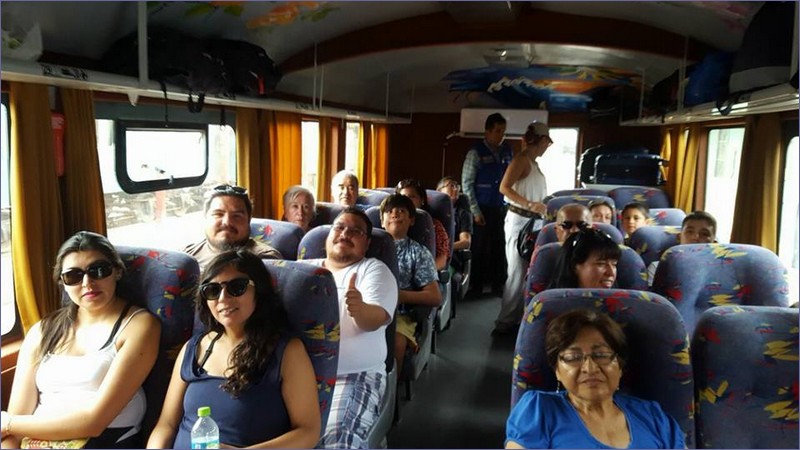
There are several tourist trains operating in Chile. Almost all are run by the state railway company EFE. The exception is the Tren Turístico de la Araucanía, which is operated by the municipality of Temuco, while EFE provides the infrastructure.
Tren de Santiago a Temuco
The most famous tourist train in Chile. This overnight train runs a few times a year between Santiago and Temuco, covering a distance of 690 kilometers. Currently, it offers three classes of passenger cars and includes a dining car. In the future, the train is planned to become one of the top tourist attractions in the country, with more frequent departures in winter and summer.
Tren de Santiago a Temuco – official website
Tren del Recuerdo Santiago – Limache
A tourist train that operates once or several times a year from Santiago Central Station to Limache, commemorating the era when trains used to reach the town. The train is composed of vintage cars owned by EFE and a diesel locomotive. The excursion lasts the entire day.
Tren del Recuerdo Santiago – Limache – information on EFE’s website
Tren Sabores del Cachapoal
A tourist train running from Santiago Central Station to Rengo (124.4 km). Upon arrival, passengers are taken by bus to nearby vineyards, where they can learn about the wine-making process and enjoy a tasting at the end of the tour.
Tren Sabores del Cachapoal – official website
Tren Sabores del Maule
Another tourist train from Santiago Central Station, this time to Talca. Passengers are then taken by bus to the most famous wineries in the Maule region (269 km from Santiago). The full-day trip includes meals, wine tastings, and an entertainment program onboard the train.
Tren Sabores del Maule – official website
Tren Turístico de la Araucanía
A heritage steam train that runs a few times a year between Temuco and Victoria in the Araucanía region. The train is steam-hauled by a 1930 steam locomotive, the largest operational steam locomotive in South America. The passenger cars and dining car were built in the 1930s, 1955, and 1975.
Tren Turistico de la Araucania – official website
Tren Arica – Central
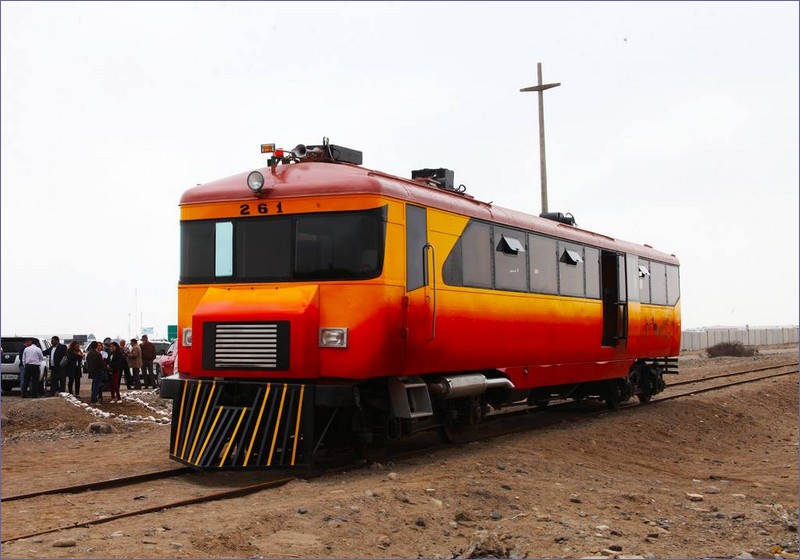
A tourist train operating a few times a year east of Arica, along the Arica – La Paz line, to the historic Central Station located in the desert. Other short tourist trips also run on this line:
– Tren de las Estrellas (once a year)
– Arica – Hacienda Eco Truly (twice a year)
Tren Arica – Central – official website
Tren Arica – Hacienda Eco Truly – official website
Tren de las Estrellas – official website
Tren Turístico Arica – Poconchile
A seven-hour tour from Arica to Poconchile. The actual train ride is relatively short; more time is spent enjoying cultural performances at a station, a local market near Poconchile, and a visit to an archaeological site in the Lluta Valley. The train is now made up of a diesel locomotive and passenger cars, and operates several times a year.
Tren Turistico Arica – Poconchile
“El Valdiviano” (currently suspended)
A popular tourist train, which used to operate a few times a year (mainly in autumn) on the Valdivia – Antilhue route (28 km) along the Calle Calle River. The train consisted of a steam locomotive, vintage passenger cars, and a bar car. It departed from Valdivia Station at 11:00 AM, with stops at Pishuinco and Huellelhue, where local artisans sold their goods. At Antilhue, passengers had two hours of free time to shop at a local market. The return journey began after 4:00 PM with no stops.
The train was suspended due to the COVID-19 pandemic, and has not resumed operation due to a lack of funding.
Railways on Chilean Islands
Currently, there are no railways on islands belonging to Chile. In the past, however, a narrow-gauge railway operated on Chiloé Island, running between the towns of Castro and Ancud. Passenger trains covered the 96-kilometer route in about 6 hours.
A powerful earthquake in 1960 destroyed a large part of the railway line. Reconstruction was unprofitable and at the same time car transport was cheaper, so the railway was permanently closed.
There are the remnants of the former railway: The former train station building in Ancud still exists. In Castro, one of the steam locomotives that served the line is now displayed as a monument.
Funicular railways in Chile
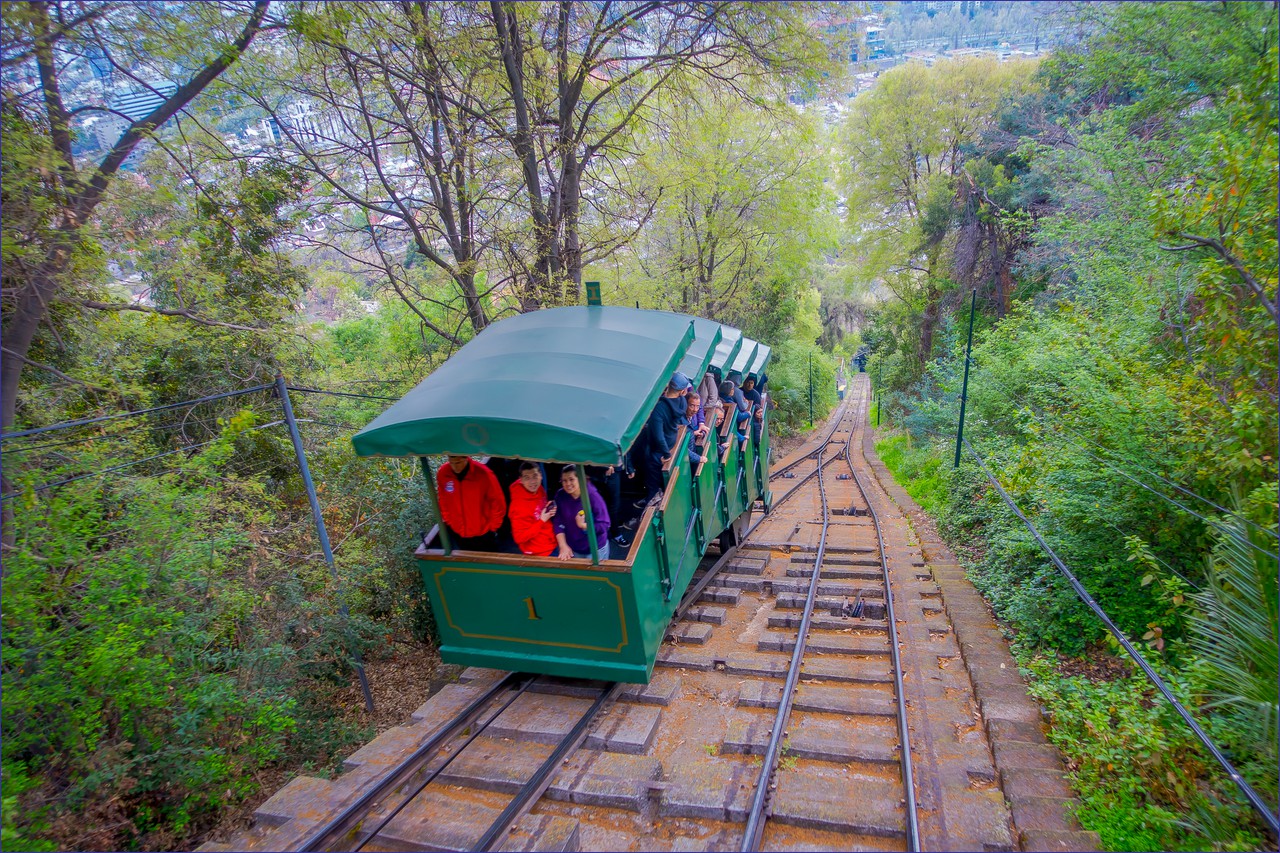
Funicular de Santiago – a historic funicular railway climbing Cerro San Cristóbal in the Parque Metropolitano de Santiago. The funicular began operation in 1925, making it one of the oldest surviving transport systems of its type in South America. The lower station is at Pío Nono, in the Bellavista area. It is relatively close to Baquedano Metro station.
The line climbs the steep southern side of Cerro San Cristóbal and has intermediate access to the National Zoo of Chile. The principal upper destination is Cumbre, near the summit of Cerro San Cristóbal. From here visitors can continue towards the famous Statue of the Virgin Mary and viewpoints overlooking Santiago.
The railway has a relatively short route, but the difference in elevation makes the journey particularly interesting for railway enthusiasts. The funicular is operated as part of Parque Metropolitano de Santiago (Parquemet). Official Parquemet documents continue to list conservation and accessibility work for the funicular infrastructure. At the upper part of Cerro San Cristóbal, passengers can combine the funicular with the Teleférico de Santiago, creating an interesting combination of two different types of mountain transport.
The funicular is 485 metres long and uses two counterbalanced cars, which operate on the steep single-track railway with a central passing section.
There are also a funiculars, incline railways and lifts in Valparaiso.
Railway museum in Temuco
Museo Nacional Ferroviario Pablo Neruda is Chile’s principal railway museum, located in Temuco, in the Araucanía Region. The museum occupies the historic Casa de Máquinas de Temuco, together with other surviving railway buildings. Its collection focuses on the railway history of southern Chile and the Araucanía, particularly the steam era and the role of railways in the economic and social development of the region. One of the highlights is a collection of 14 steam locomotives, built between 1908 and 1953. The collection also includes passenger coaches, railway maintenance vehicles, a water tank wagon, railcars and other railway equipment. Among the most interesting exhibits is the Presidential Railway Car, used for journeys by Chilean presidents. It has been carefully restored using original materials. Another unusual vehicle is the autocarril, a small railcar associated with President Carlos Ibáñez del Campo. The National Monuments Council describes it as unique of its type in the collection. The museum also preserves buscarriles, lightweight rail vehicles that were introduced as an alternative to conventional steam locomotives and later became important for tourist railway operations in southern Chile.
The historic roundhouse is one of the most impressive parts of the complex. The museum’s railway yard includes a 27-metre turntable, used to position locomotives inside the roundhouse.
The museum’s other historic buildings include the coal bunker, administration building and workshops, providing a good impression of how a major railway depot once functioned. A section of the museum is devoted to Pablo Neruda, who spent part of his childhood in Temuco. A permanent exhibition explores his early life and his connection with the landscapes and railways of southern Chile.
The museum is at Avenida Barros Arana 0565, in the Pueblo Nuevo area of Temuco.
Train travel in Chile – what to see
There are only two must-see cities if you travel by train around Chile.
Santiago de Chile – the capital and largest city of Chile, located in the central part of the country in a valley surrounded by the Andes and the Coastal Range. Its historic centre contains some of the oldest buildings and public spaces in Chile. Santiago is the country’s main railway hub. Estación Central is the principal long-distance railway station, with passenger services operated by EFE towards cities in central and southern Chile. The historic heart of Santiago is Plaza de Armas, surrounded by important buildings and monuments. The square is a good starting point for exploring the old city centre. Metropolitan Cathedral of Santiago is one of the most important religious buildings in Chile, standing on the western side of Plaza de Armas. Museo Histórico Nacional presenting the history of Chile from the pre-Hispanic period through independence and the modern era. La Moneda Palace – the seat of the Chilean government and one of Santiago’s best-known landmarks. The changing of the guard is a popular ceremony. Popular is also the Centro Cultural La Moneda – an underground cultural centre beneath the palace, known for exhibitions, especially on Chilean and Latin American art and culture. You can spend leisure time on Parque Metropolitano de Santiago – one of the world’s largest urban parks, covering Cerro San Cristóbal and several surrounding hills. It also contains the Santiago Zoo and other recreational facilities. There are many museums and monuments, some people visit Barrio Lastarria – a lively central neighbourhood with cafés, restaurants, galleries, bookshops and cultural institutions.
Valparaíso – a major port city on the Pacific coast of Chile, about 120 km northwest of Santiago. The city is built between the coast and a series of steep hills, giving Valparaíso its distinctive landscape of colourful houses, narrow streets, stairways and viewpoints. The historic quarter of the city was declared a UNESCO World Heritage Site in 2003 because of its distinctive architecture and its importance as a historic port. The city is famous for its street art and murals. Many walls, stairways and entire buildings are covered with colourful works, making walking through the hills one of the city’s main attractions. The city is traditionally divided into the El Plan area near the coast and numerous hills (cerros) rising above it. Cerro Alegre and Cerro Concepción are particularly popular with visitors. Valparaíso is also famous for its historic ascensores—funicular railways built to connect the lower city with the steep hills. Several historic funiculars have survived, although their operating status can change because of maintenance and restoration. The Ascensor Concepción, Ascensor Reina Plaza Sotomayor is the principal square of the port area and is surrounded by important historic buildings and monuments, including the headquarters of the Chilean Navy. Cerro Alegre is known for colourful houses, murals, cafés, small hotels and viewpoints over the Pacific. Cerro Concepción contains historic streets, colourful architecture, churches, cafés and several viewpoints. The area can be reached using the historic Ascensor Concepción. Catedral de Valparaíso and the surrounding streets provide a glimpse of the city’s historic architecture away from the main tourist viewpoints.
Largest cities with train stations
Most of the largest cities in Chile has railway connection. Rancagua, Talca and Chillan are located along railway line Santiago – Chillan served by long-distance trains. Vina del Mar are reachable by Metro Valparaiso from Valparaiso, and Constitución is a terminus for regional trains from Talca. The cities are not particularly interesting for tourists, but if you like to visit places off the beaten path, you can consider a short stop in some of them.
Arica – the northernmost major city of Chile, located in the Arica y Parinacota Region near the border with Peru. Arica is served by cross-border Arica-Tacna train and tourist trains run by EFE. Its mild climate has earned it the nickname “City of Eternal Spring”. The symbol of the city and its most famous viewpoint is the Morro de Arica. This steep coastal hill rises above Arica and offers panoramic views of the city, beaches and Pacific Ocean. On Morro de Arica is located Museo Histórico y de Armas de Arica dedicated to the military history of the hill and the Battle of Arica during the War of the Pacific. The central square, Plaza Colón is surrounded by historic buildings and monuments. The Catedral de San Marcos de Arica is a unique metal church designed in the workshop of French engineer Gustave Eiffel and built in the 19th century. Another Eiffel-designed building is the Casa de la Cultura de Arica (former Customs House) – another Eiffel-designed building, originally constructed as a customs facility and now used as a cultural centre. In Arica is located one of Chile’s most important archaeological museums, famous for its collections related to the Chinchorro culture.
Chillán – the capital of the Ñuble Region in central Chile, about 400 km from Santiago. The city has been destroyed and rebuilt several times because of major earthquakes. The present city is largely the result of reconstruction following the devastating 1939 Chillán earthquake. Chillán has an interesting collection of modernist and early-20th-century architecture, unusual compared with many Chilean colonial cities. Plaza de Armas is the main public square and the centre of the city’s civic area. It contains mature trees and is surrounded by important public buildings. Catedral de Chillán built after the 1939 earthquake is one of the city’s most distinctive landmarks. Mercado de Chillán is known for agricultural products, traditional food, handicrafts and regional specialities. Chillán has a strong artistic tradition and is associated with several important Chilean artists and musicians. There are museums
of pianist Claudio Arrau, sculptor Marta Colvin, International Museum of Graphic and Museum of Nature Sciences.
Constitución – a coastal city in the Maule Region of Chile, located at the mouth of the Maule River on the Pacific Ocean. The city is known as the “Perla del Maule” and is one of the main seaside destinations of the Maule coast. The city is known for its beaches, coastal landscapes, fishing traditions, forestry industry and the nearby natural attractions of the Maule coast.
The city was severely affected by the 2010 Chile earthquake and tsunami, which caused major damage, especially in coastal areas. The city’s most famous attraction is Rocas de Constitución (Constitución Rocks) – impressive rock formations on the coast are protected as a Nature Sanctuary and include the iconic Piedra de la Iglesia, a large sea stack with a natural arch, considered the symbol of Constitución. The city has two popular beaches with beautiful views of the Pacific coastline. North of Constitución are located Dunes and wetlands of Putú, largest dune fields and is important for ecotourism, birdwatching and nature walks. In the city centre worth visit is Mercado Municipal, a place, where you can experience local products, seafood and regional traditions.
Rancagua – the capital of Chile’s O’Higgins Region, located about 85 km south of Santiago in the Cachapoal Valley. Its historic centre still follows the regular colonial grid plan from 1743 when it was founded. Rancagua is particularly important in Chilean history because of the Battle of Rancagua, fought on 1–2 October 1814 during the Chilean struggle for independence. The city’s principal square, Plaza de los Héroes, is unusual because two streets cross through its centre, forming a cross. It was both the founding point of the colonial town and the scene of the Battle of Rancagua. The cathedra is located on Plaza de los Héroes. A pedestrian area Paseo Estado leading south from the main square is filled with traditional buildings and shops. You can visit Museo Regional de Rancagua and zoological garden.
Talca – the capital of the Maule Region in central Chile, located about 250 km south of Santiago in the fertile Central Valley. The city played an important role in Chilean independence history. The Act of Independence of Chile was signed in Talca on 12 February 1818 by Bernardo O’Higgins. There is a museum partly dedicated to the events – Museo O’Higginiano y de Bellas Artes de Talca. The city has suffered several destructive earthquakes, especially the 1928 Talca earthquake and the 2010 Chile earthquake, which damaged many historic buildings. Monuments are located close to the Plaza de Armas, the central square. In Talca you can find botanical garden or stroll Alameda Bernardo O’Higgins – a long urban avenue and green area named after the Chilean independence leader. Local food and agricultural products are available on Mercado Central de Talca.
Viña del Mar – a coastal city in central Chile, located immediately northeast of Valparaíso on the Pacific coast. Together with Valparaíso, it forms the core of the Greater Valparaíso metropolitan area. The city is one of Chile’s most popular seaside resorts and is known as the “Ciudad Jardín” (Garden City) because of its parks, gardens and tree-lined avenues. Viña del Mar developed in the late 19th and early 20th centuries as a seaside resort for residents of Santiago and Valparaíso. The most recognisable symbol of Viña del Mar is the Reloj de Flores (Flower Clock). This large clock decorated with flowers is located near Caleta Abarca Beach and is one of the city’s most photographed landmarks. Worth visit is Cerro Castillo – an elevated historic neighbourhood with old mansions, viewpoints and the Presidential Palace of Cerro Castillo, the Chilean president’s official summer residence. Historic buildings include Castillo Wulff – a small castle-like mansion built on rocks above the Pacific Ocean and Palacio Rioja which currently houses museum. Quinta Vergara Park and Muelle Vergara – a restored pier and waterfront promenade are popular places for slow stroll. The resort has beautiful beaches. The most famous is the Reñaca Beach, known for restaurants, nightlife and a younger atmosphere.
Related articles:
Trenopedia – main site
Railways in Chiloe – a brief history
Railways in Americas by country