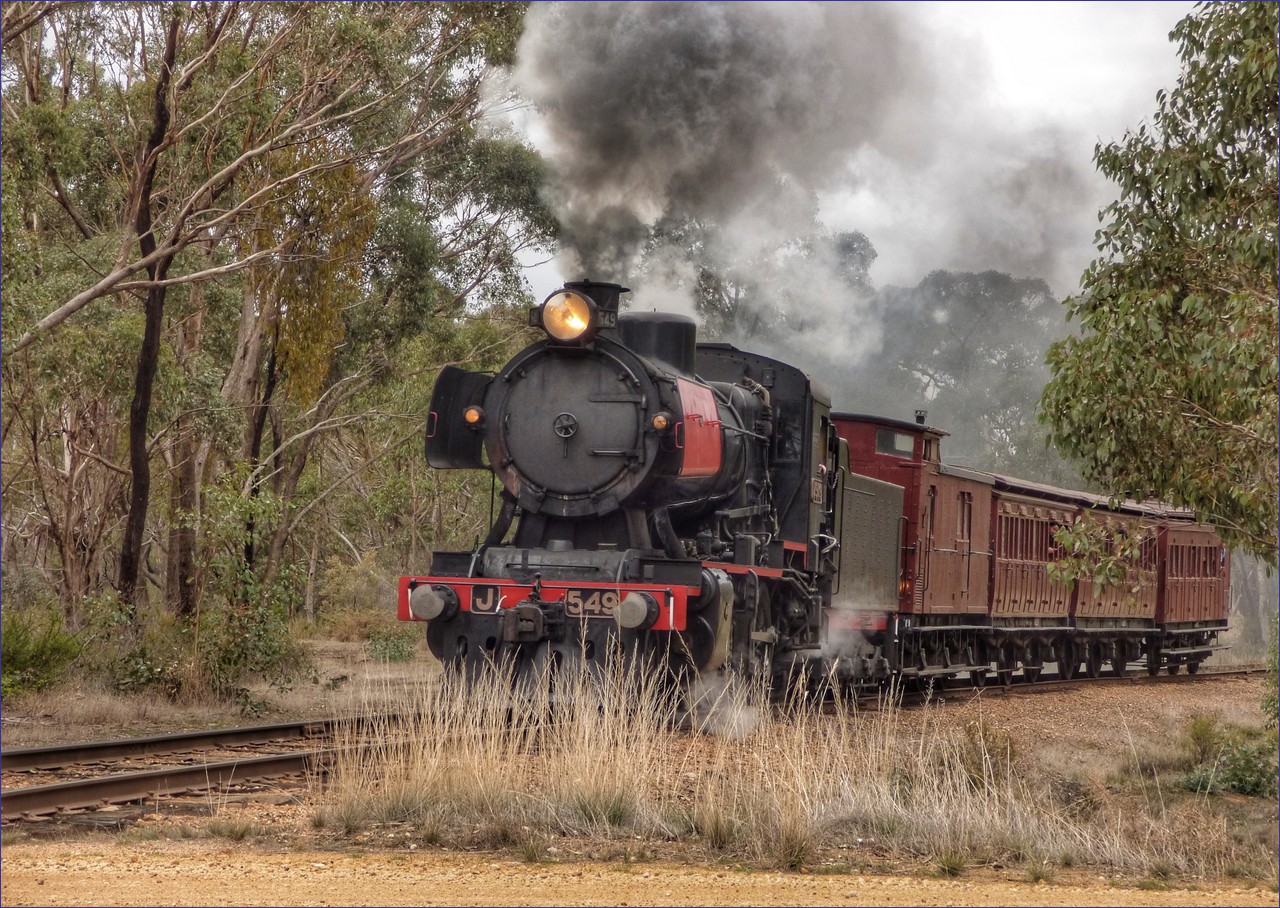
Australia is a vast country with a few very large cities and huge distance between them. A large part of the country is wild, uninhabited by people and often features unfriendly environment such as desert or swamps full of poisonous snakes.
Railway network covers only main routes between largest cities and trains are primarily used for freight transport. There are long-distance trains for tourist, regional trains between large cities (regional train sometimes means 600 or more kilometers) suburban trains around Sydney, Melbourne, Brisbane, Adelaide and Perth and dozens of tourist trains which run irregularly, mainly on weekends for several months of the year.
Train travel in Australia is easy between for example Sydney and Brisbane but on the some long-distance routes trains run only once or twice a week. There are also isolated regional routes.
I wrote an article about train travel in Australia with basic information about operators, most important scheduled trains and most popular tourist services.
Table of contents:
- Journey Beyond Rail Expeditions
- NSW Trainlink
- Queensland Rail
- Transwa
- V/Line
- Inclined railways
- Tourist trains
- Heritage railways
1. Journey Beyond Rail Expeditions
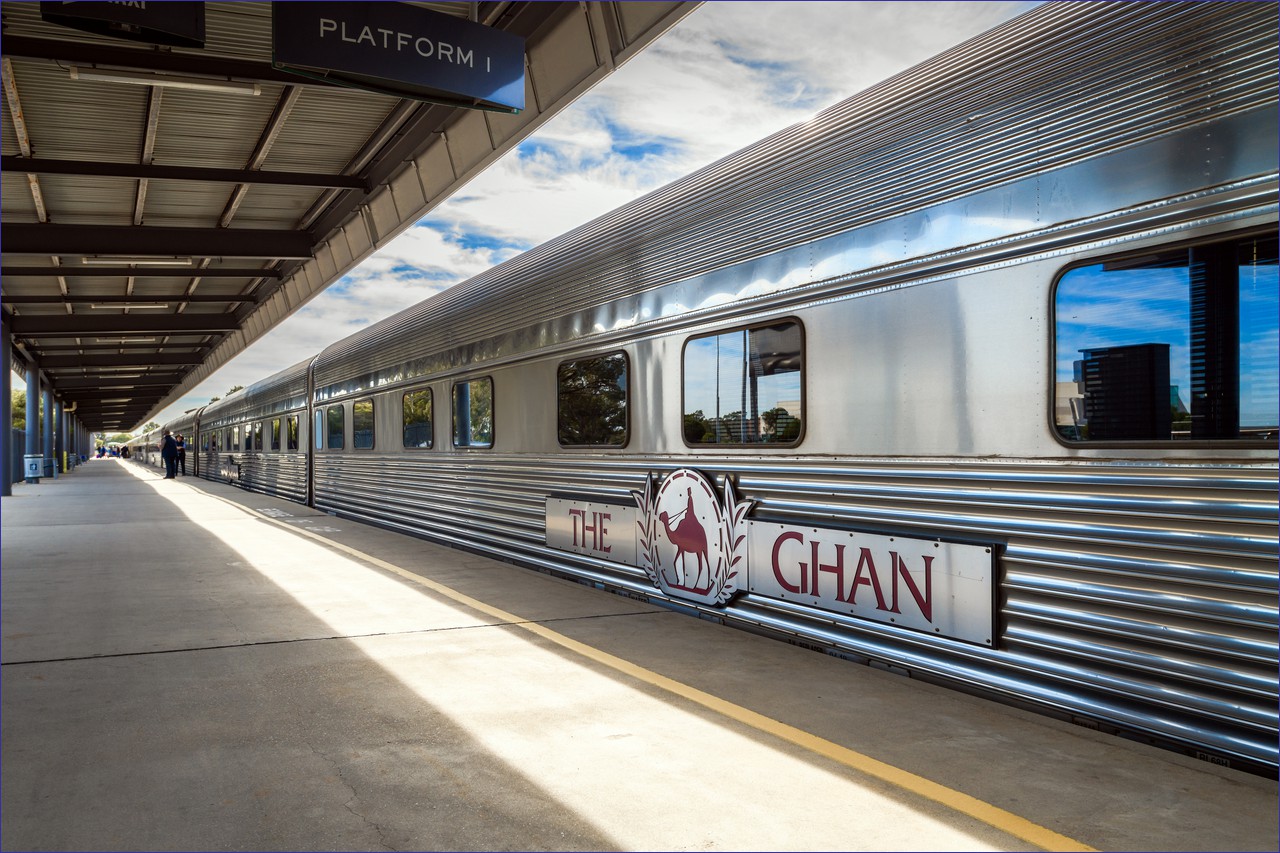
Journey Beyond Rail Expeditions runs a couple of famous long-distance trains across Australia intended mainly for rich tourists. Apart from train ride, passengers can visit designated tourists attractions with guide along the route – packages train travel + sightseeing are available on their site. Trains consist usually private sleeping cabins, restaurant cars with
restaurant-quality meals, and carriages with lounges and social areas offering panoramic views of the Australian landscape. The operator was formerly known as a Great Southern Rail.
The Ghan – one of the world’s most famous long-distance passenger trains, crossing Australia from Adelaide in South Australia to Darwin in the Northern Territory through the heart of the continent. It is a symbol of Australian rail tourism, combining a scenic railway journey with luxury accommodation, fine dining and guided excursions. The route Adelaide – Alice Springs – Katherine – Darwin has 2,979 km, making it one of the longest passenger train journeys in the Southern Hemisphere. The trip lasts around 3 days and 2 nights for the standard journey; the extended Ghan Expedition takes 4 days and 3 nights with additional excursions. The Adelade-Darwin railway was completed in 2004.
Indian Pacific – a luxury transcontinental train crossing Australia from the Pacific Ocean coast at Sydney to the Indian Ocean coast at Perth. It is considered one of Australia’s most iconic rail experiences. The length of the route Sydney – Broken Hill – Adelaide – Kalgoorlie – Perth is approximately 4,352 km. Journey time is about about 70–75 hours (around three nights and four days, depending on timetable). It generally operates as a weekly luxury tourist train service. The name “Indian Pacific” refers to the two oceans connected by the railway journey: the Indian Ocean at Perth and the Pacific Ocean at Sydney.
The Overland – a famous interstate passenger train. It is one of Australia’s oldest passenger train services and the country’s first inter-capital railway connection, linking Melbourne (Victoria) and Adelaide (South Australia). It is operated today by Journey Beyond Rail Expeditions and is valued as a scenic regional railway journey rather than a high-speed connection. It’s a daytime long-distance passenger train. It runs normally twice weekly in each direction. The distance between Melbourne and Adelaide is about 828 km. Estimated journey time is about 10.5 hours.
The Great Southern – a premium long-distance tourist train. It is a seasonal summer railway adventure connecting Adelaide and Brisbane, designed as a slow-travel experience combining luxury accommodation, regional food, sightseeing excursions and spectacular Australian landscapes. The train covers distance of approximately 2.885 km. Usually the trip from Adelaide to Brisbane lasts about 3 days and 2 nights on opposite direction is one day longer (depending on itinerary and excursions). The train was inaugurated in 2019. The train runs mainly during the Australian summer months, usually December to February.
Journey Beyond Rail Expeditions – official website
2. NSW Trainlink
NSW Trainlink is a regional operator providing train and bus services throughout New South Wales and into the Australian Capital Territory, Victoria, Queensland and South Australia. Its primary services are spread across five major rail lines, operating out of Sydney. The operator runs suburban trains from Sydney, Intercity trains and regional trains. Unlike in Europe, Intercity trains in Australia have shortest routes than regional trains.
Most important regional and Intercity trains:
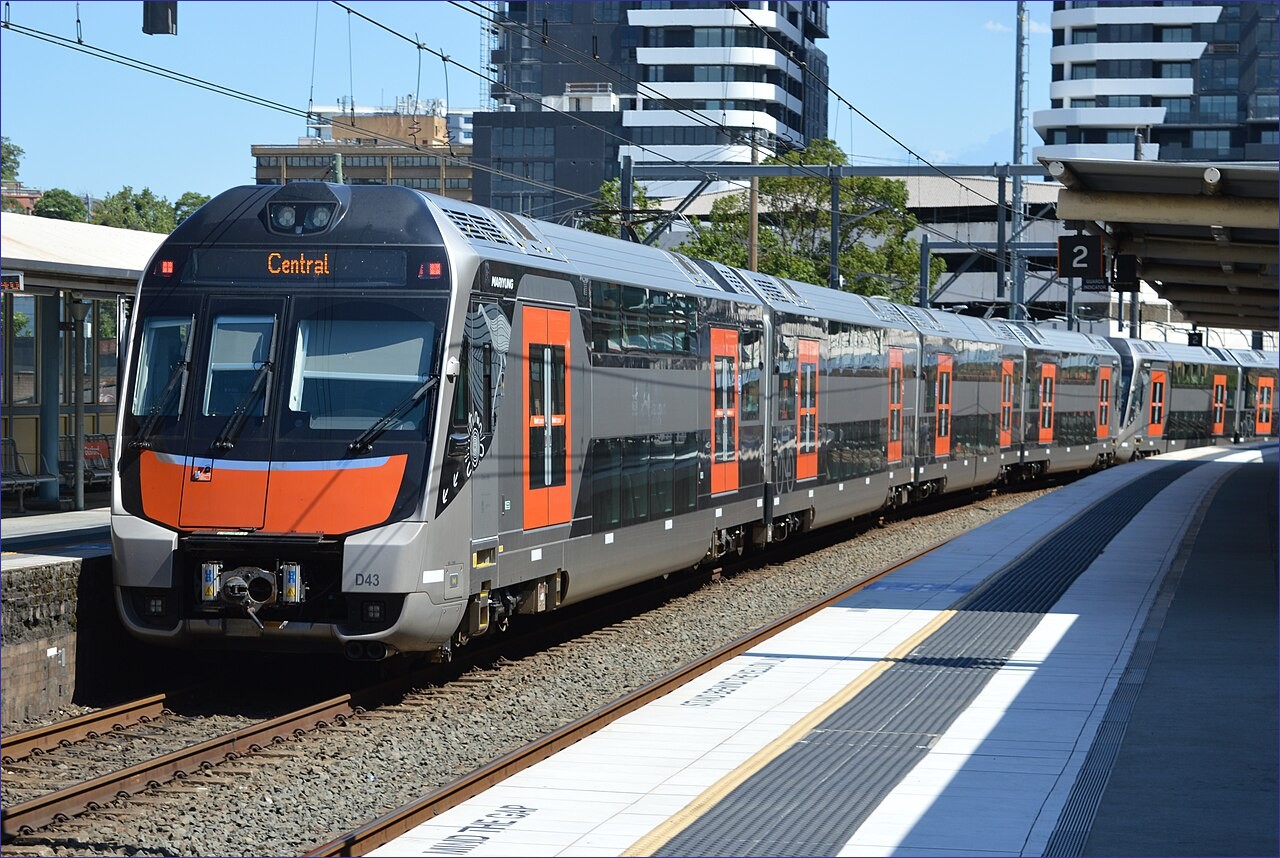
Blue Mountains Line (BMT) – one of Australia’s most scenic intercity railway routes, operated within the NSW Intercity Trains network (historically branded NSW TrainLink Intercity). It connects Sydney with the spectacular Blue Mountains and continues west to Lithgow, with selected services extending to Bathurst. The distance between Sydney and Lithgow is about 228 km and the trains covert the distance within about three hours. The route follows the historic Main Western railway, which was progressively built west from Sydney during the 19th century. The line to Ligthgow is electrified. The route to Lithgow is served by Mariyung D trainsets.
Central Coast & Newcastle Line (Intercity) – one of the main intercity railway services in New South Wales, connecting Sydney, the Central Coast, Lake Macquarie and Newcastle. It is part of the NSW Intercity Trains network and is operated by Sydney Trains on behalf of Transport for NSW. The sections crossing the Hawkesbury River and the coastal landscapes north of Sydney are considered as scenic. The distance between Sydney Central and Newcastle Interchange is about 165 km. Travel time is 2,5-3 hours. The line is served by Mariyung (D set) intercity trains.
Hunter Line (HUN) – a regional Intercity railway service connecting Newcastle with towns across the Hunter Region, including Maitland, Singleton, Muswellbrook, Scone and Dungog. It is part of the NSW Intercity Trains network and is operated by Sydney Trains on behalf of Transport for NSW. The line is especially interesting for railway travellers because it combines suburban rail around Newcastle, historic towns of the Hunter Valley, vineyards, coal-mining landscapes and rural scenery. The line remains important for connecting smaller Hunter Valley communities with Newcastle. Rolling stock consists mainly Hunter railcars and Endeavour diesel railcars.
South Coast Line – one of the most scenic routes in the NSW Intercity Trains network, connecting Sydney with the Illawarra and South Coast regions of New South Wales. The line runs through coastal towns, the dramatic Illawarra escarpment, beaches and rainforest landscapes before reaching Kiama and continuing by diesel railcar to Bomaderry (Nowra). It’s a regional connection for commuters but its scenery makes it popular with railway enthusiasts and tourists. The distance between Sydney and Bomaderry is about 166 km. The section Kiama–Bomaderry is not electrified. The journey between Waterfall and Wollongong is especially popular among railway photographers because of its ocean views and engineering structures.
Southern Highlands Line – a regional intercity railway service connecting Sydney’s southwestern suburbs with the scenic Southern Highlands and Southern Tablelands regions. The trains run from Sydney to Goulburn with intermediate stops in Campbelltown, Macarthur, Picton, Mittagong, Bowral, Moss Vale and Bundanoon. The distance is 169-215 km depending on the train. The route is notable because it is one of the few NSW intercity lines operated entirely by diesel trains, as much of the railway lies beyond Sydney’s electrified network. It offers a quieter rural railway experience through historic towns, farmland, forests and mountain landscapes. The Southern Highlands Line is operated mainly by Endeavour DMUs introduced in 1994. The route is popular with day-trippers visiting historic towns, gardens, national parks and countryside attractions.
Sydney – Canberra train – a regional passenger train operated by NSW TrainLink, connecting Sydney Central Station with Canberra, the capital city of Australia. It is one of the most popular regional rail services in New South Wales and provides a scenic journey through the Southern Highlands, Southern Tablelands and the Australian countryside. The service is operated by diesel-powered Xplorer trains and is designed as a comfortable regional connection rather than a commuter service. All seats are reserved and passengers must book tickets in advance. The distance between cities is 330 km, the journey lasts at least 4 hours and 10 minutes. Xplorer trains were introduced in the early 1990s, replacing older locomotive-hauled services on many regional route
Sydney Central – Brisbane train – one of Australia’s longest and most important regional passenger railway services. Operated by NSW TrainLink, the Brisbane XPT connects Sydney Central Station in New South Wales with Brisbane Roma Street Station in Queensland, travelling along the scenic North Coast railway line. The service provides a unique alternative to flying, allowing passengers to travel through the coastal landscapes of New South Wales, including the Mid North Coast, Northern Rivers and the Queensland border region. The route crosses two Australian states and connects two state capitals. The length of the route is approximately 987 km and journey time is 14-16 hours. Usually there is a one train in each direction daily. All seats are reserved; passengers book a specific seat before travel.
Sydney Central – Melbourne – the regional service connects Sydney Central Station in New South Wales with Melbourne Southern Cross Station in Victoria, crossing the border at Albury–Wodonga and travelling through the inland landscapes of southeastern Australia. The route is operated by XPT (Express Passenger Train) sets and is one of the flagship NSW TrainLink regional services, together with Sydney–Brisbane, Sydney–Canberra and Sydney–Dubbo trains. The distance is approximately 946 km and travel time almost 11 hours. Usually there are two daily services in each direction (one daytime and one overnight service). All seats are reserved; passengers must book before travelling.
Outback Explorer – a regional train between the Sydney Central and Broken Hill. It connects Sydney with the famous mining city in the far west of New South Wales, crossing the state’s inland landscapes via the Main Western railway line and the Broken Hill railway line. The journey is one of Australia’s most unusual railway experiences, taking passengers from the densely populated Sydney basin to the remote landscapes of the NSW Outback, including the plains around Orange, Parkes, Condobolin, Ivanhoe and Menindee. The length of the route is about 1,125 km and trains covert the distance within 13 hours. The train runs once a week in each direction. Advance booking is required; seats are allocated. Broken Hill is also served by the famous Indian Pacific transcontinental train between Sydney, Adelaide and Perth, but the Outback Xplorer provides the direct NSW TrainLink connection from Sydney.
Sydney Central – Armidale train – a long-distance regional passenger service operated by NSW TrainLink, connecting Sydney Central Station with Armidale in the New England region of northern New South Wales. Known as the Armidale Xplorer, the service travels along the historic Main North railway line, passing through the Hunter Valley, New England slopes and the high country of the Great Dividing Range. The route is one of Australia’s most scenic inland railway journeys, changing from the urban landscape of Sydney to farmland, river valleys, mountain scenery and the cooler climate of the Northern Tablelands. The train covers 579 km in 8 hours. The connection is served by Xplorer diesel multiple units. All seats must be booked in advance; seats are allocated. The trains run daily, usually one train in each direction.
Sydney Central – Dubbo train – a long-distance regional passenger service operated known as the Central West XPT. The route follows the historic Main Western railway line, crossing the Blue Mountains and travelling through the Cenral Tablelands and western plains. It combines mountain scenery, historic railway towns, agricultural landscapes and access to major inland attractions. The train stops at the stations: Parramatta, Penrith, Katoomba, Lithgow, Bathurst, Blayney, Orange and Wellington. The length of the route is 462 km. Advance booking is required; passengers travel in allocated seats. The connection is served by XPT diesel trains.
NSW Trainlink – official website
3. Queensland Rail
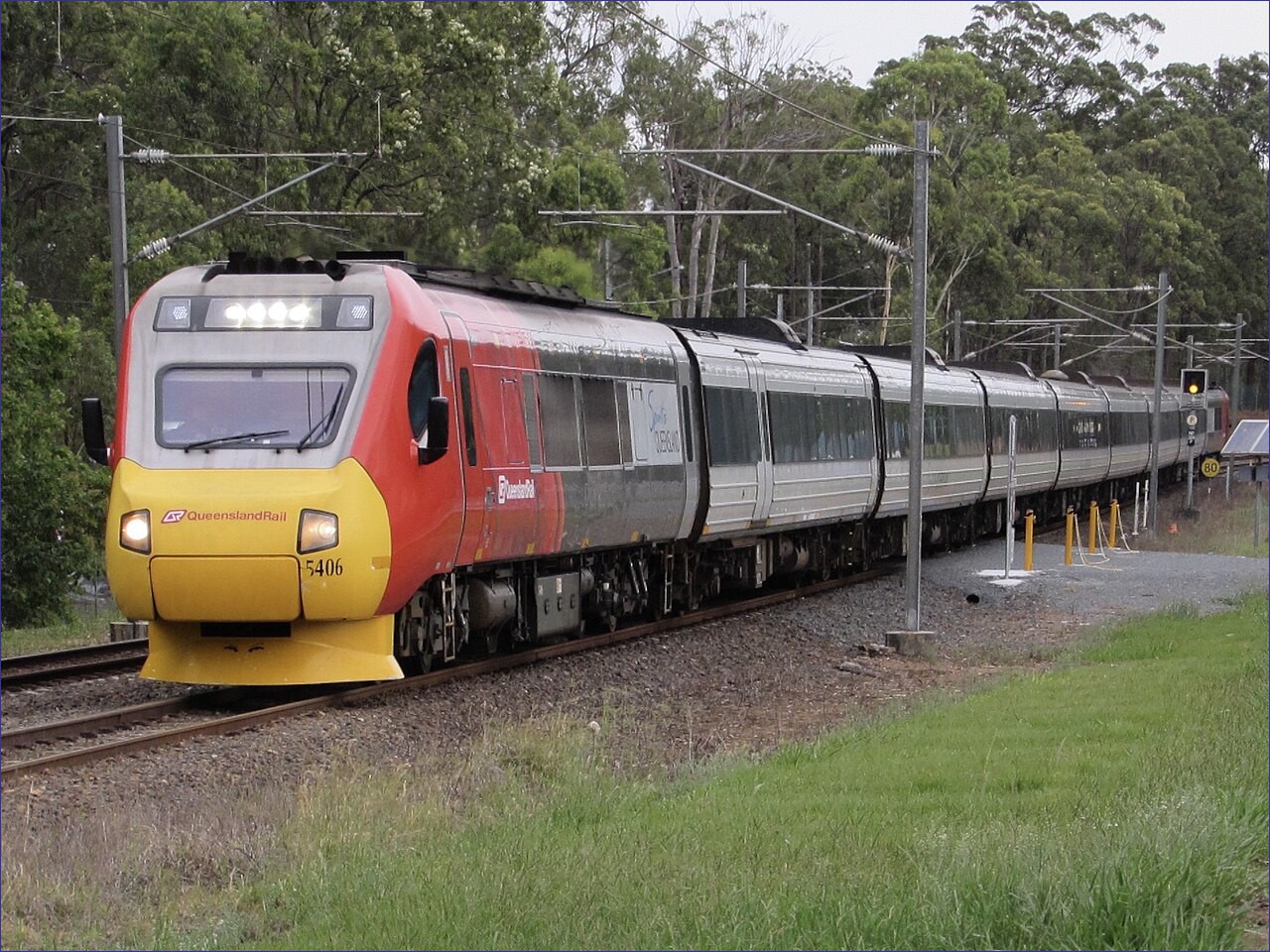
Queensland Rail is a railway operator in Queensland owned by the Queensland Government, and operates both suburban and interurban rail services in South East Queensland, as well as long-distance passenger train services connecting Brisbane to regional Queensland. The operator adapt narrow-gauge lines for long-distance trains and main train connections. It operates under brand Queensland Rail Travel. There are most popular trains operated by Queensland Rail.
Spirit of Queensland – a long-distance train between Brisbane a Cairns train (1681 km). It is one of Australia’s great coastal railway journeys, travelling through tropical landscapes, sugar-cane regions, coastal towns and gateways to the Great Barrier Reef. The train replaced the famous Sunlander service in 2013 and introduced a modern concept of overnight rail travel in Australia with the unique RailBed seating system, where a daytime reclining seat converts into a lie-flat bed at night. It runs several times per week in each direction and is served by diesel-powered tilting train. Journey time is about 25 hours. Main stations: Brisbane, Maryborough West, Bundaberg, Gladstone, Rockhampton, Mackay, Proserpine, Townsville and Cairns. The train has Economy class and RailBed class with spaciousreclining seats.
Spirit of the Outback – a long-distance passenger train connecting Brisbane Roma Street Station with Longreach in the heart of Queensland’s Outback. It is one of Australia’s classic inland railway journeys, offering passengers a chance to experience the vast landscapes, history and culture of western Queensland. The train travels from the Queensland capital through the coastal and central regions before turning inland towards the Outback, passing through historic towns, cattle country, mining areas and remote landscapes. The distance between stations is 1325 km and travel lasts about 26 hours. It runs usually twice weekly in each direction. It’s a locomotive-hauled train. The service began operation in November 1993, replacing earlier trains including the Capricornian and Midlander.
Tilt Train – a popular long-distance train which runs from Brisbane on two routes: to Bundaberg (351 km) and Rockhampton (639 km). It’s considered as a high-speed train and electric tilt train speeds up to 160 km/h making it one of Australia’s fastest passenger trains. It is one of Australia’s most technologically advanced regional trains and was the first passenger train in the country to use tilting technology, allowing higher speeds through curves. The first Electric Tilt Train entered service between Brisbane and Rockhampton in 1998. Travel time to Rockhampton is about 8 hours. The Tilt Train continues the tradition of coastal passenger services that previously included famous trains such as the Sunlander and Capricornian.
Westlander – a long-distance train from Brisbane to Charleville train (777 km). It is one of Australia’s classic Outback railway journeys, travelling from the Queensland capital through the Darling Downs, across the Great Dividing Range, and into the wide-open landscapes of the Queensland Outback. The train provides an important transport link for regional communities and is also a popular tourism experience for travellers wanting to explore inland Queensland without a car. It runs usually twice a week in each direction; journey time is about 17 hours. The train consists carriages hauled by a locomotive. The modern Westlander service began in 1954, replacing older steam-era and mixed passenger services. Today it is one of Queensland Rail Travel’s iconic long-distance trains, together with the Spirit of Queensland, Spirit of the Outback and Inlander.
Inlander – an interesting long-distance train between Townsville a Mount Isa. It connects the tropical coastal city of Townsville with the mining city of Mount Isa in north-western Queensland. It is one of Australia’s classic inland railway journeys, crossing the vast landscapes of the Great Northern railway line, from the Coral Sea coast to the rugged Queensland Outback. An overnigth journey lasts 21 hours. There are two trains in each direction per week. It’s a classic locomotive-hauled train with carriages. It has an economy class equipped with reclining seats and lounge car. The journey passes through some of Australia’s best fossil areas, including Hughenden and Richmond.
Queensland Rail Travel operates also a tourist train Gulflander.
Queensland Rail Travel – official website
4. Transwa
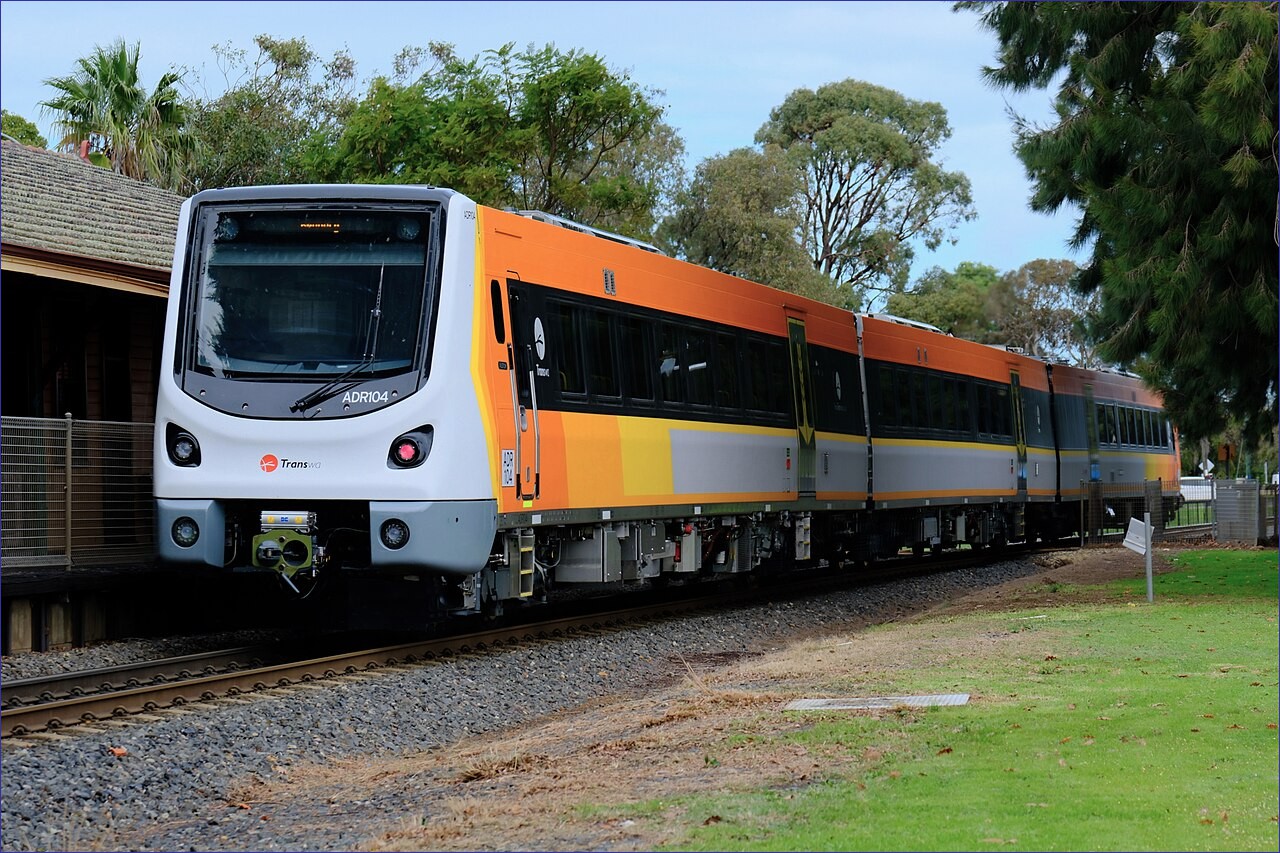
Transwa is Western Australia’s regional public transport provider which serves transport between Perth and the major regional towns of Bunbury, Kalgoorlie, Northam, Geraldton and Albany. The operator runs coach regional connections and four popular regional train services.
Australind – a regional passenger train operated by Transwa, connecting Perth with Bunbury in Western Australia’s South West region. It is one of Western Australia’s best-known regional railway services, providing a comfortable link between the state capital and the largest city in the South West. The service follows the South Western Railway, travelling through the rural landscapes south of Perth, including the Darling Range foothills, farming districts and the forests and coastal landscapes of the South West. The length of the route is 167 km and journey lasts around 2 hours 30 minutes. A new generation of Australind trains was introduced in 2026, replacing the older fleet with modern three-car railcars.
Prospector – a high-speed regional train East Perth to Kalgoorlie train in Western Australia’s Goldfields–Esperance region. It is one of Australia’s fastest regional trains and provides the main passenger rail link between Perth and the historic gold-mining city of Kalgoorlie-Boulder. The train’s name comes from the history of Western Australia’s Goldfields, where thousands of prospectors travelled after gold discoveries in the 1890s. The journey crosses the vast landscapes of the Eastern Goldfields, travelling through agricultural areas, wheat-growing districts and the semi-arid interior of Western Australia. The train covers the distance of 653 km within 6 hours and 45 minutes. Before the Prospector, the Perth–Kalgoorlie journey took around 14 hours; the new service reduced the travel time dramatically. The connection is served by WDA/WDB/WDC class diesel multiple units.
AvonLink – a regional passenger train from East Perth to Northam train. It is a short regional railway service designed mainly for commuters, residents and visitors travelling between Perth and the historic towns east of the metropolitan area. The route follows the Eastern Railway, passing through the picturesque Avon Valley, with stops including Midland and Toodyay. The journey is popular with travellers interested in railway heritage, small-town tourism and the landscapes of inland Western Australia. The distance is 111 km and the journey will take 1 hour and 40 minutes. It’s a standard-gauge line. The service began on 24 September 1995. It was the first new country passenger rail service introduced in Western Australia in almost 50 years.
MerredinLink – a regional passenger train connecting East Perth Terminal with Merredin in Western Australia’s Wheatbelt region (261 km). It provides a railway link between Perth and communities east of the Avon Valley, serving historic towns, agricultural districts and regional centres along the Eastern Railway. The service is particularly valuable for travellers wanting to explore the inland landscapes of Western Australia by train, including the heritage towns of Toodyay, Northam and the wheatbelt communities beyond. The journey between East Perth Terminal and Merreding lasts 3 hours and 15 minutes. There are three return services per week (generally Monday, Wednesday and Friday). The connections is served WDA/WDB/WDC diesel railcars equipped with air-conditioning and wheelchair-accessible toilet.
Transwa – official website
5. V/Line
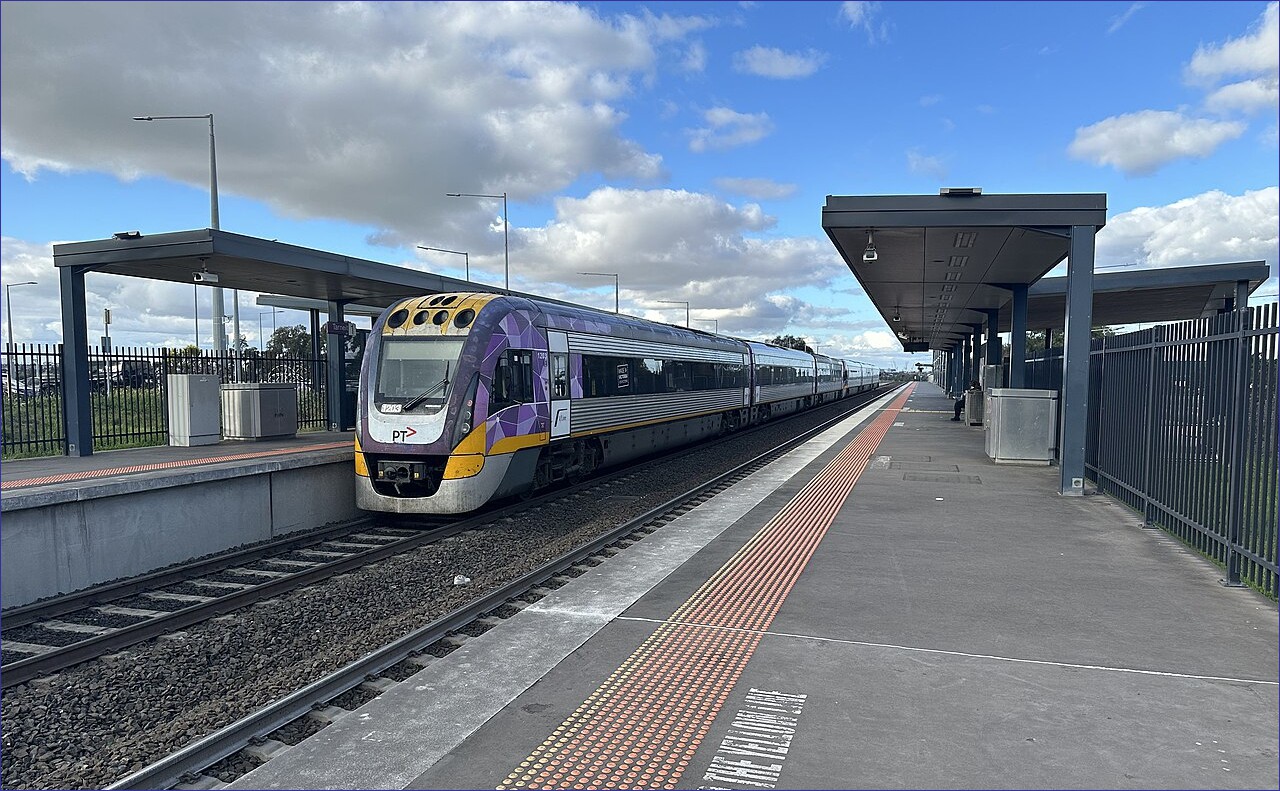
V/Line operates regional passenger rail and coach services in the Australian state of Victoria. It provides passenger train services on five commuter routes and eight long-distance services from its major hub at Southern Cross railway station in Melbourne. The connections provide fast and easy access to many interesting places in the state. Some of them are considered as a scenic railways and are popular among tourists. V/Line uses mainly 1600 mm gauge (Victorian broad gauge)
Melbourne – Bairnsdale train – a regional passenger train connecting Melbourne with Bairnsdale in East Gippsland, Victoria. It is one of Victoria’s longest regional rail journeys, travelling east through the Gippsland region, the Latrobe Valley, farming districts and the scenic landscapes around the Gippsland Lakes. The railway was historically important for transporting timber, agricultural products and passengers between East Gippsland and Melbourne. The distance is 275 km, journey time about 4 hours. The connection is served mainly VLocity diesel multiple units.
Melbourne – Albury train – a long-distance regional train to the Albury on the New South Wales border (330 km). The service provides an important rail link between Victoria’s capital city, the towns of north-eastern Victoria, and the twin cities of Albury–Wodonga. The route follows the historic North East railway line, travelling through the Goulburn Valley and North East Victoria landscapes, including farmland, wine regions, forests and the foothills of the Australian Alps. It uses standard-gauge trains. Albury Station is historically significant because it was once the location where passengers changed trains between Victorian and New South Wales railway systems.
Melbourne – Warrnambool train – a regional passenger train connecting Melbourne Southern Cross Station with Warrnambool on the Great Ocean Road and Shipwreck Coast region of south-western Victoria. It is one of Victoria’s most scenic long-distance rail journeys, travelling through the Western District’s farming landscapes, volcanic plains and coastal countryside. service operates on the Warrnambool railway line, travelling via Geelong, Colac and Terang before reaching Warrnambool. The distance between stations is about 267 km. Warrnambool is located near the end of the spectacular Great Ocean Road, making the train a popular starting point for exploring the region.
Melbourne – Echuca – a regional passenger train operated connecting Melbourne Southern Cross Station with Echuca in northern Victoria, on the banks of the Murray River. The service links Victoria’s capital with one of the state’s most important historic river towns and tourist destinations. The train travels along the Bendigo railway corridor, continuing north from Bendigo through the agricultural landscapes of the Loddon and Campaspe regions to Echuca. The train covers the distance of 250 km within more than 3 hours. The service can be combined with a visit to Moama in New South Wales, located just across the Murray River.
Melbourne – Ararat train – a regional passenger train from Melbourne Southern Cross Station with Ararat in western Victoria. The service travels through Ballarat, one of Victoria’s most important historic cities, before continuing across the Western District plains to Ararat. The route is part of the Ballarat and Ararat railway corridor, providing rail access to communities west of Melbourne and serving both commuters and tourists exploring the goldfields, Grampians region and western Victoria. Passenger services to Ararat were withdrawn in 1994 after changes to the interstate railway network. V/Line passenger trains returned to Ararat in July 2004 after track upgrades and government investment. Today, the service is an important connection between Melbourne and western Victoria. The length of the route is approximately 200 km. The railway uses 1600 mm broad gaige. The trains are served by VLocity diesel multiple units.
Melbourne – Traralgon – a regional passenger train from Melbourne Southern Cross Station to Traralgon in the Latrobe Valley, Gippsland region of Victoria. It is one of Victoria’s busiest regional rail services, serving commuters, students, workers and tourists travelling between Melbourne and eastern Gippsland. The service runs along the historic Gippsland railway line, travelling through Melbourne’s south-eastern suburbs, the foothills of the Dandenong Ranges, Gippsland farming areas and the Latrobe Valley. The distance is about 160 km. Main stops: Southern Cross, Flinders Street, Caulfield, Dandenong, Pakenham, Warragul, Moe, Morwell and Traralgon (stopping patterns vary). Traralgon is the terminus of dedicated Traralgon Line services, while some trains continue further east as Bairnsdale Line services
https://www.vline.com.au/ – official website
6. Inclined funicular railways
Katoomba Scenic Railway – one of Australia’s most famous tourist railways and a major attraction in the Blue Mountains of New South Wales. Located at Scenic World in Katoomba, it descends from the Blue Mountains escarpment into the Jamison Valley through rainforest and sandstone cliffs. It is famous as the steepest passenger railway in the world, with a maximum gradient of 52 degrees. Unlike a conventional railway, it is an inclined funicular railway where the passenger carriage is moved by a cable system. The journey combines railway engineering history, dramatic scenery and access to walking trails in the valley. It uses 1275 mm gauge. The length of the incline is 415 metres.
7. Tourist trains
Gulflander – a heritage train operated by Queensland Rail Travel, running between Normanton and Croydon in the remote Gulf Savannah region of north-western Queensland. Known affectionately as the “Tin Hare”, it is one of Australia’s most unusual railway journeys, travelling across an isolated heritage railway line through wetlands, grasslands and semi-arid Outback landscapes on the railway was built during Queensland’s late 19th-century gold rush era. The railway was never connected to the rest of Queensland’s railway network, making it one of Australia’s most isolated railway lines. The line retains many historic features, including its unusual steel sleepers, designed for the harsh Gulf environment.The distance between cities is about 152 km and the journey lasts about 5 hours. The train is served by heritage diesel rail motor RM93. It runs seasonally with Normanton–Croydon departures generally on Wednesdays and Croydon–Normanton returns on Thursdays.
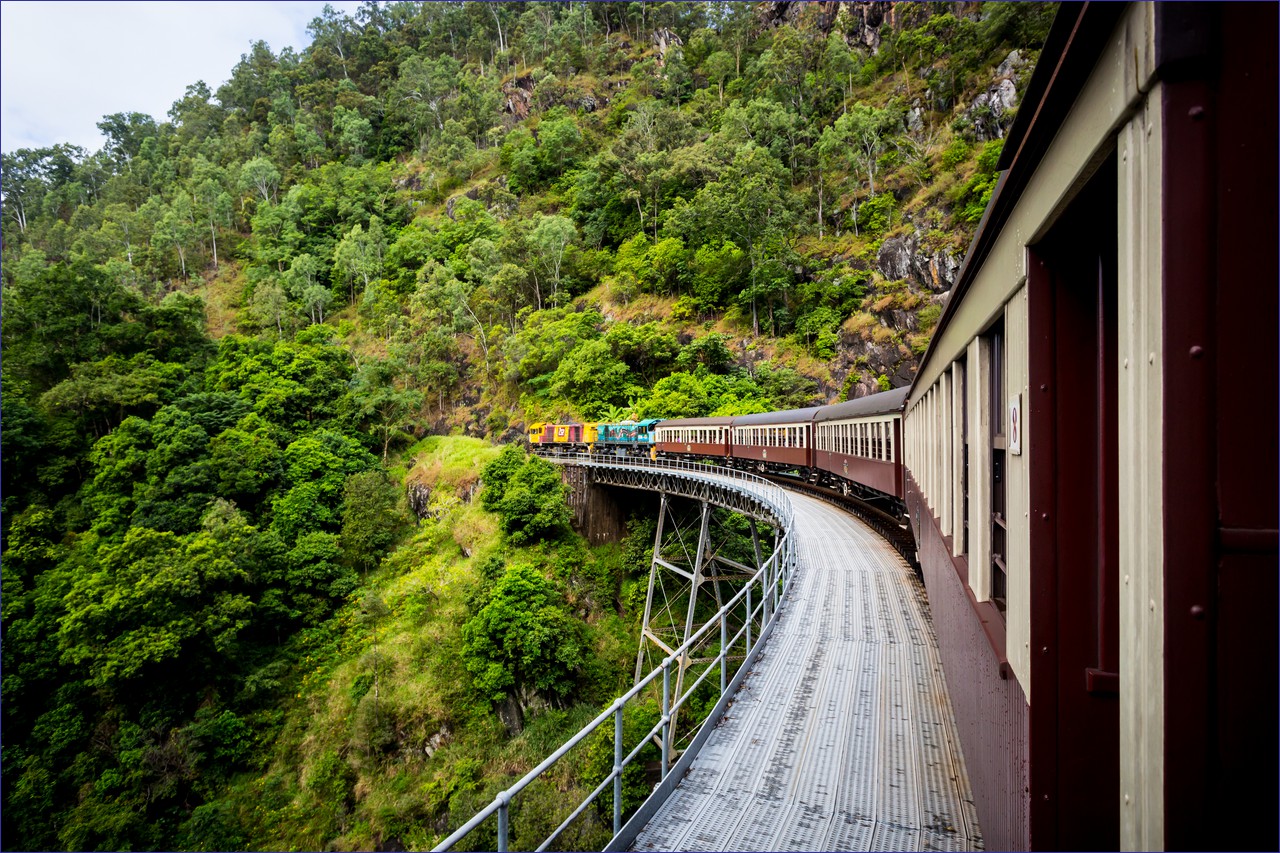
Kuranda Scenic Railway – one of Australia’s most famous tourist trains, operating between Cairns and the rainforest village of Kuranda in Far North Queensland. The journey climbs from the tropical coastal plain into the Atherton Tablelands, passing through ancient rainforest, deep gorges, waterfalls and spectacular mountain scenery. The railway is famous not only for its scenery but also for its remarkable engineering. The line was built in the late 19th century through extremely difficult terrain and is considered one of Queensland’s greatest railway achievements. The distance between stations is about 34 km but the journey lasts almost two hours with photostops. The railway originally served agricultural and mining communities, especially the inland tin-mining areas. Today, the line is primarily famous as a heritage tourist railway. The route is part of the Wet Tropics World Heritage Area, one of the oldest rainforest regions on Earth.
Savannahlander – a silver-bullet railcar operating in Far North Queensland between Cairns and Forsayth in the Gulf Savannah region. It is a slow-paced tourist train journey through tropical rainforest, mountains, cattle country and remote outback landscapes. Unlike conventional long-distance trains, the Savannahlander is designed as a rail adventure, with overnight stops, sightseeing opportunities and a strong focus on the history, landscapes and communities along the route. The length of the route is 425 km one way but are available trips with overnight stops – for example 4 days with accomodation. It runs seasonally weekly (generally March–November/December period). Rolling stock consists heritage Queensland Rail 2000-class railmotors from the 1960s era. The train runs a relaxed pace, typically around 25–60 km/h depending on track conditions. The Savannahlander was introduced in 1995 by Queensland Rail to replace the famous Forsayth Mixed freight and passenger service, which had been known as the “Last Great Train Ride”. In 2004, operation was transferred to Cairns Kuranda Steam, which continues to run the tourist service.
Steamrail Victoria heritage trains – a heritage trains on various routes in Victioria. Steamrail Victoria allows passengers to experience travel in the style of the former Victorian Railways era, using restored locomotives and classic wooden-panelled carriages. It is based at the historic Newport Railway Workshops in Melbourne, the organisation operates heritage excursions under the name The Vintage Train throughout Victoria. The organisation’s collection includes locomotives dating from the 1880s to the 1960s.
8. Heritage railways
There are dozens of tourist trains in Australia. The list includes only most famous and most popular. It’s impossible to keep up-to-date information about these trains, so check the official websites before your trip. Famous the Old Ghan train probably doesn’t run.
Bellarine Railway – a heritage railway (often mistakenly written as “Bellanne Railway”) on the Bellarine Peninsula in Victoria, Australia. It operates historic steam and diesel trains between Queenscliff and Drysdale, near Geelong, on a preserved section of the former Victorian Railways Queenscliff branch line. The railway is one of Australia’s most important heritage railways because of its large collection of locomotives and carriages from different Australian railway systems, including Victoria, Tasmania, South Australia, Western Australia and Queensland. The length of the route is 16 km. The former railway corridor between Drysdale and South Geelong is now partly used as the Bellarine Rail Trail for cyclists and walkers.
Bennett Brook Railway (BBR) – a heritage narrow-gauge railway located in Whiteman Park, near Perth, Western Australia. It is operated by the Western Australian Light Railway Preservation Association (WALRPA) and preserves the history of Western Australia’s industrial, mining and agricultural light railways. The railway offers scenic train rides through banksia woodland and Australian bushland, combining railway preservation with a family attraction. The trains cover the distance of 6 km between stations Whiteman Village Junction and Mussel Pool.
Hotham Valley Railway – is a heritage railway in Western Australia, operating scenic steam and diesel trains through the forests of the Darling Range near Dwellingup, south of Perth. It preserves the railway heritage of the former Western Australian Government Railways (WAGR) lines that served the timber industry, agriculture and rural communities. The railway is especially famous for its W-class steam locomotives, steep mountain gradients, jarrah forests and the atmospheric Steam Ranger and Forest Train journeys. Heritage operations began in 1976, nowadays trains run on the routes Dwellingup–Etmilyn Forest Railway (8 km) and Dwellingup–Isandra Siding Steam Ranger (14 km). Heritage trains ride through jarrah forests and former timber-industry landscapes.
Queensland Pioneer Steam Railway – a heritage railway based at Swanbank, near Ipswich, Queensland, dedicated to preserving the railway history of Queensland, especially the era of steam locomotives, timber passenger carriages and regional branch-line trains. It operates heritage excursions through the former West Moreton coal-mining railway area. The railway is often described as “The Railway of Industry” because its route follows lines originally built to serve coal mines, industrial sites and the Swanbank power generation area. The trains run on the route Swanbank – Bundamba Racecourse – Swanbank Loop. The dinner trains are also available.
Pichi Richi Railway – one of Australia’s most famous heritage railways, operating historic steam and diesel trains through the spectacular Pichi Richi Pass in the Flinders Ranges of South Australia. The railway preserves the oldest remaining section of the original Ghan railway route, which once connected Port Augusta with Alice Springs. It is known for its authentic outback atmosphere, historic locomotives, antique wooden carriages and dramatic scenery of mountains, rocky gorges and desert landscapes. The trains run on the route Quorn – Woolshed Flat – Port Augusta (selected services). Rolling stock consists steam locomotives, heritage carriages and The Coffee Pot steam railcar – one of the world’s rarest operating steam railcars.
Puffing Billy Railway – an Australia’s most famous heritage steam railway and one of the world’s best-known preserved narrow-gauge steam railways. It operates through the beautiful Dandenong Ranges, about 40 km east of Melbourne, Victoria, carrying passengers through fern gullies, eucalyptus forests and mountain scenery between Belgrave and Gembrook. The railway preserves the atmosphere of early 20th-century Victorian Railways, with original locomotives, historic stations, timber trestle bridges and traditional open-side carriages. Steam-hauled trains run on the route Belgrave – Menzies Creek – Lakeside – Gembrook (25 km).The railway was one of several 2 ft 6 in (762 mm) narrow-gauge experimental lines built by the Victorian Railways around 1900 to open remote rural areas. The railway has preserved many original features from the early 1900s, including narrow-gauge infrastructure, bridges and rolling stock.
Victorian Goldfields Railway – a heritage railway in central Victoria, Australia, operating historic steam and diesel trains between the gold-rush towns of Castlemaine and Maldon. The railway recreates the atmosphere of Victorian-era branch line travel through the landscapes of the Central Victorian Goldfields. It is one of Australia’s longest operating broad-gauge heritage railways, preserving a former Victorian Railways branch line that was originally built to serve the gold-mining communities around Maldon. It’s operated by Castlemaine and Maldon Railway Preservation Society (volunteer organisation). The length of the route is 18 km.
Walhalla Golfields Railway – a heritage narrow-gauge tourist railway in Gippsland, Victoria, Australia, operating through the spectacular Thomson River and Stringers Creek valleys between the historic gold-mining town of Walhalla and Thomson. The railway was built to connect the isolated gold-mining town of Walhalla with the main Gippsland railway network at Moe. It is famous for its steep mountain scenery, historic bridges, tunnels, forests and the dramatic approach into Walhalla. The railway recreates part of the original Walhalla railway line, one of the four narrow-gauge lines built by Victorian Railways to serve remote mountainous areas. Currently, the trains run only on the short 4 km section of the route. The railway carries more passengers today as a tourist attraction than it did during its final years as a working railway.
Zig Zag Railway – a short but one of Australia’s most famous heritage railways, located near Lithgow, New South Wales, on the western side of the Blue Mountains. It recreates the experience of travelling on the historic Great Lithgow Zig Zag, a remarkable 19th-century railway engineering achievement built to overcome the steep descent from the Blue Mountains into the Lithgow Valley. The railway is operated by the Zig Zag Railway Co-operative, a not-for-profit heritage organisation, and is known for its historic locomotives, mountain scenery, sandstone cuttings, tunnels, viaducts and dramatic zig-zag track layout. The original Lithgow Zig Zag was built as part of the Main Western railway line connecting Sydney with western New South Wales. The challenge for engineers was the steep western descent of the Blue Mountains. Instead of constructing an expensive long tunnel, railway engineer John Whitton designed a zig-zag system where trains changed direction at reversing points to descend the escarpment. For many decades, the Zig Zag Railway became one of New South Wales’ most popular tourist railways.