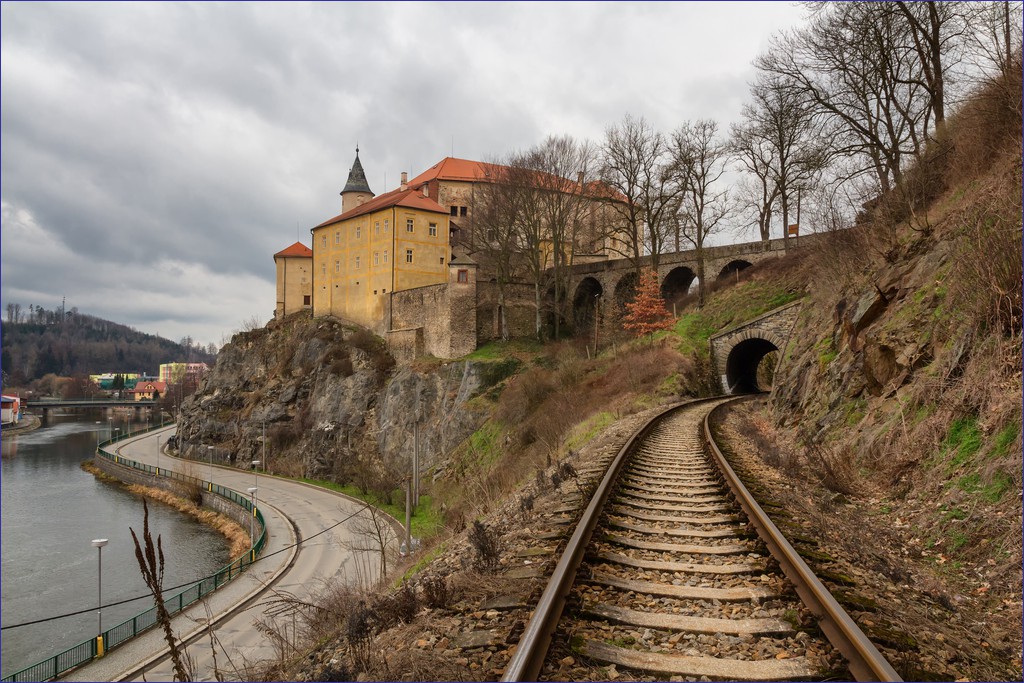
Posázavský Pacifik is a common name from the scenic railway line from Prague to Světlá nad Sázavou via Čerčany along the Sázava river. The trains pass diverse landscape – rolling hills, rocks, fields, small towns and villages.
Note: There are trains from Prague to Světlá nad Sázavou via Kolin which continue their journey to Brno. It’s not the same route and it’s not scenic.
The railway line is popular among tourists from all over the world and is perfect for one-day train trip from Prague. There are small, abandoned stations along the route and charming atmosphere.
The trains usually run on the part of the routes, for example from Prague to Čerčany and you need to change trains and continue journey toward Zruč nad Sázavou, then from Zruč nad Sázavou to Světlá nad Sázavou.
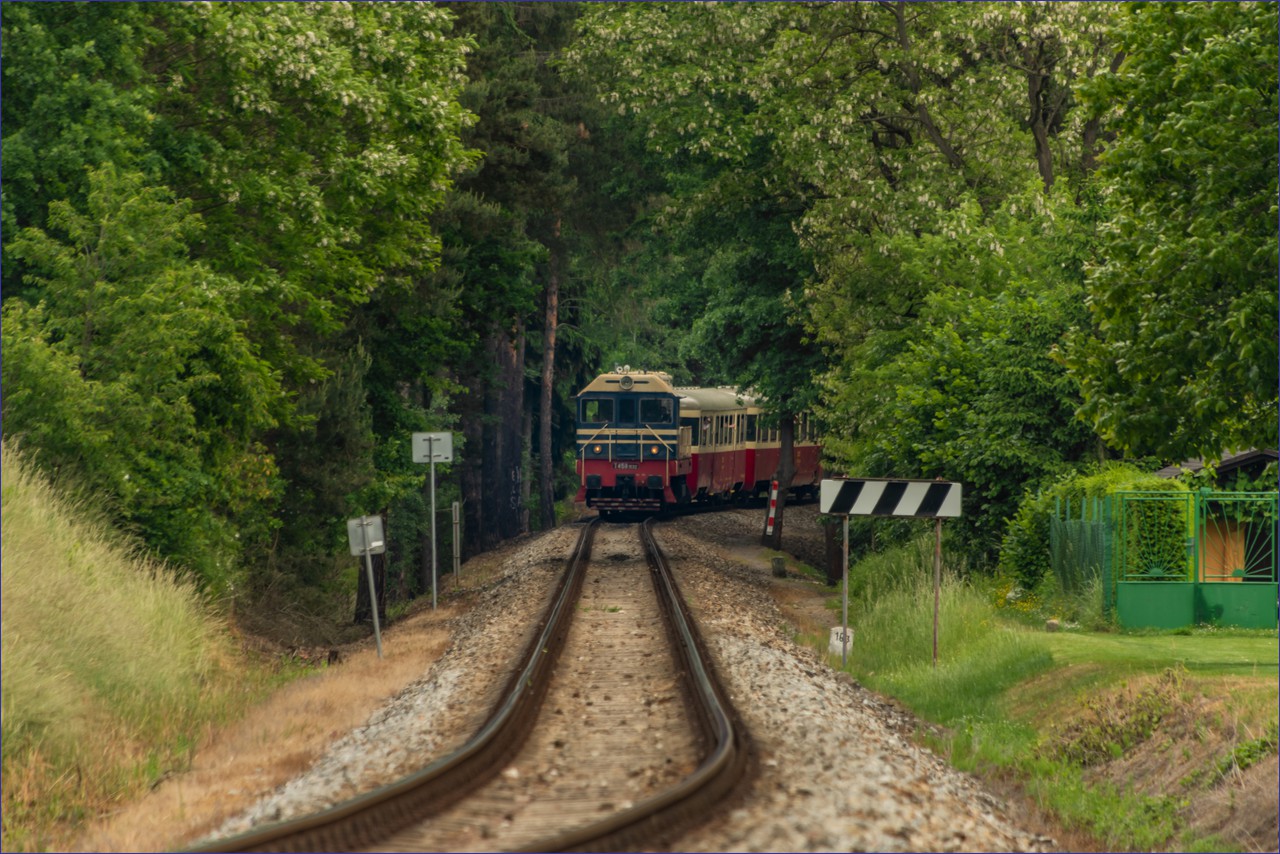
Rolling stock vary – there are diesel multiple units, trains with carriages and heritage trains during summer season.
Useful websites:
České dráhy – online shop
Travelling by train with bike
Train travel in the Czech Republic – a general overview
Most important towns:
Týnec nad Sázavou – a small town on the Sázava River, southeast of Prague. The town’s main landmark is a medieval castle complex consisting of a Romanesque rotunda and a Gothic tower. Týnec was historically known for its pottery production. The town became an important centre of motorcycle manufacturing in the 20th century, particularly through the Jawa factory. The river is popular for canoeing, hiking and cycling.
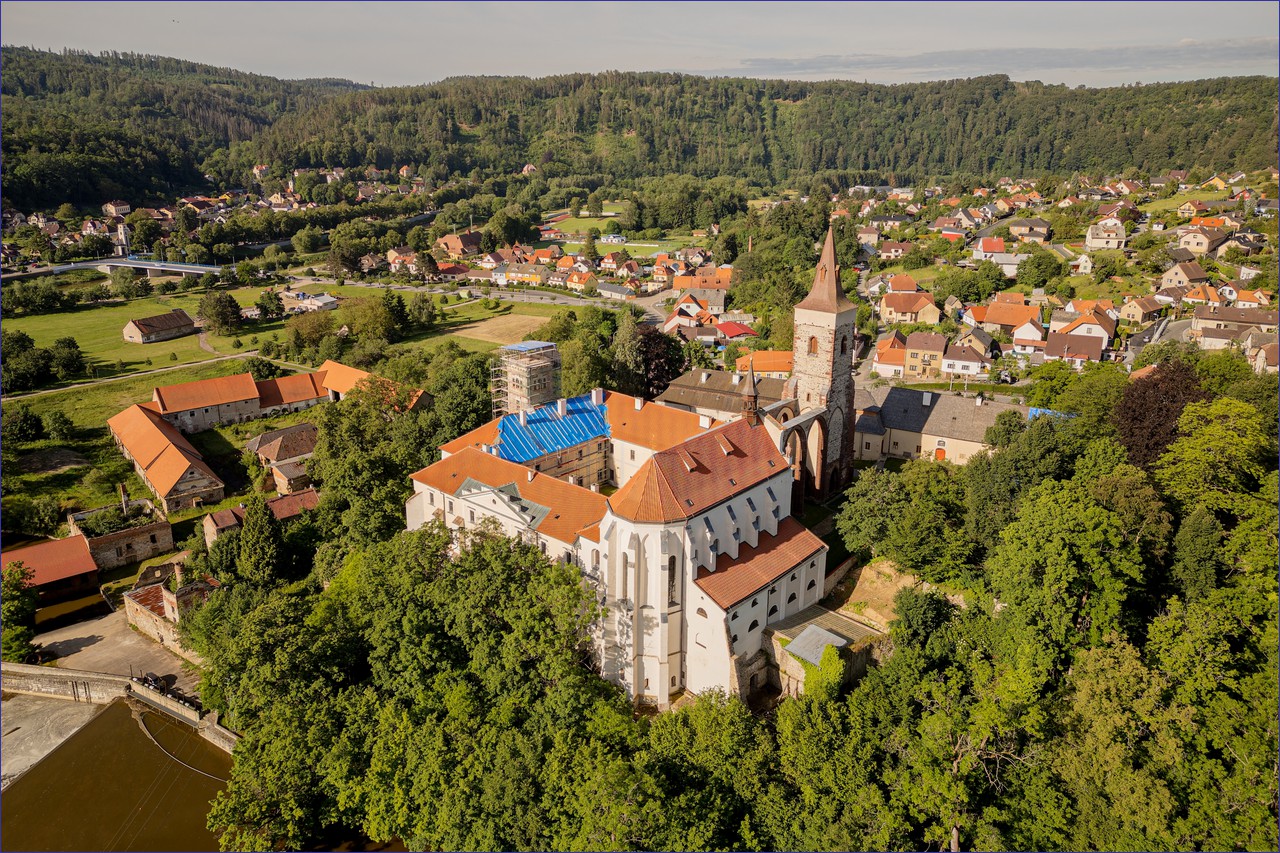
Sázava – small town on the Sázava River, famous for its historic monastery. The town’s most important monument is the former Benedictine monastery, founded in the 11th century. Saint Procopius: The monastery is closely associated with St. Procopius, one of the most important early Czech saints. Sázava became an important centre of the Old Church Slavonic tradition, associated with the cultural legacy of Saints Cyril and Methodius. The unfinished Gothic Church of St. Procopius forms the architectural centre of the monastery complex. The surrounding valley is popular with canoeists, hikers and cyclists.
Ledečko – a small village at the confluence of the Sázava and Ledečský streams, particularly important as a railway junction. It has only a few hundred inhabitants. The village is surrounded by wooded hills and the characteristic landscape of the Posázaví region. Ledečko is where the railway from Čerčany to Světlá nad Sázavou meets the branch towards Kolín. The branch is also scenic railway.
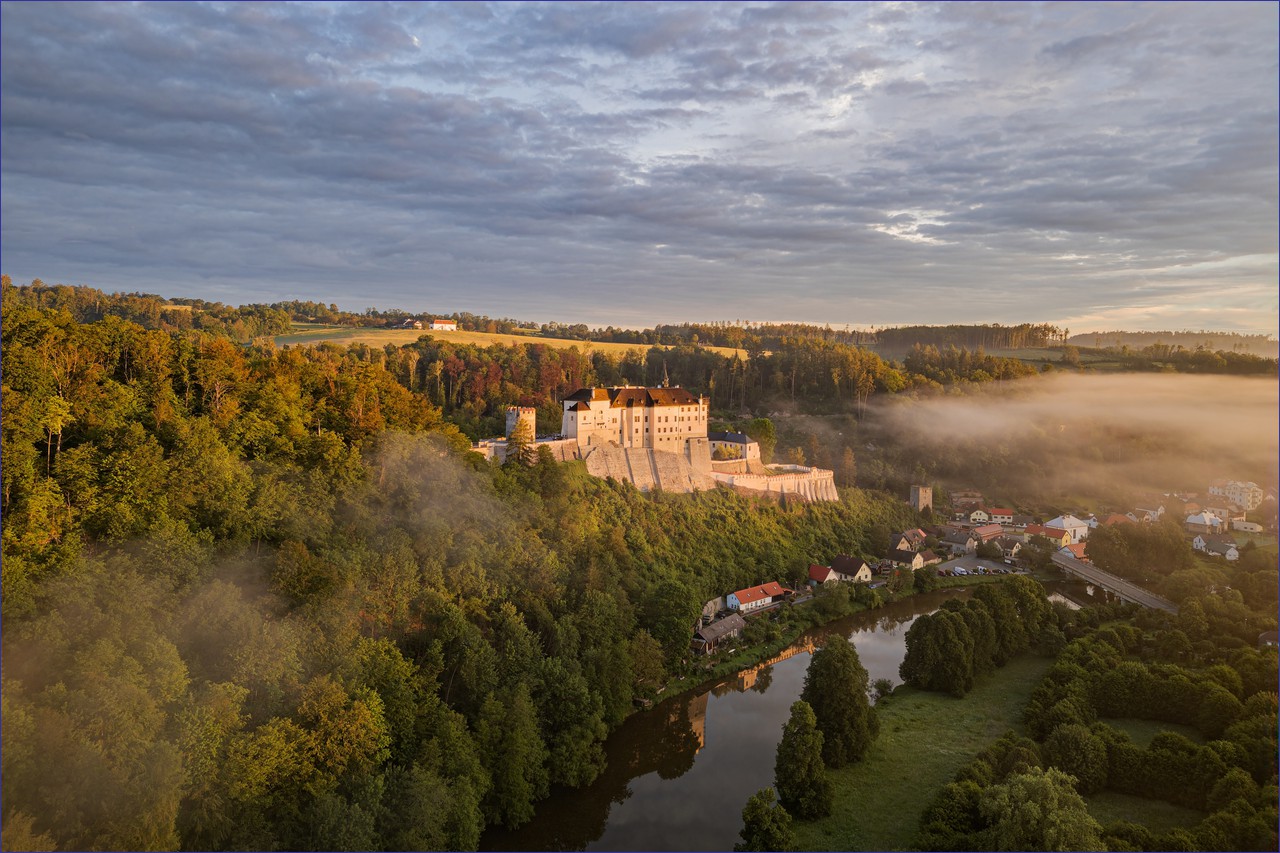
Český Šternberk – one of the most spectacular medieval castles in the Sázava valley located on a rocky promontory above the Sázava River, about 50 km southeast of Prague. The castle was founded around 1241 by Zdeslav of Divišov, ancestor of the Šternberk family. The castle remained closely associated with the family for much of its history and is one of Europe’s notable examples of a castle still connected with its founding dynasty. The original Gothic castle was extensively modified and expanded over the centuries. The interiors contain valuable furniture, paintings and historic collections. Its dramatic position on a rocky spur makes it one of the most picturesque castles in Central Bohemia. The nearest railway station is Český Šternberk – about two kilometers from the castle.
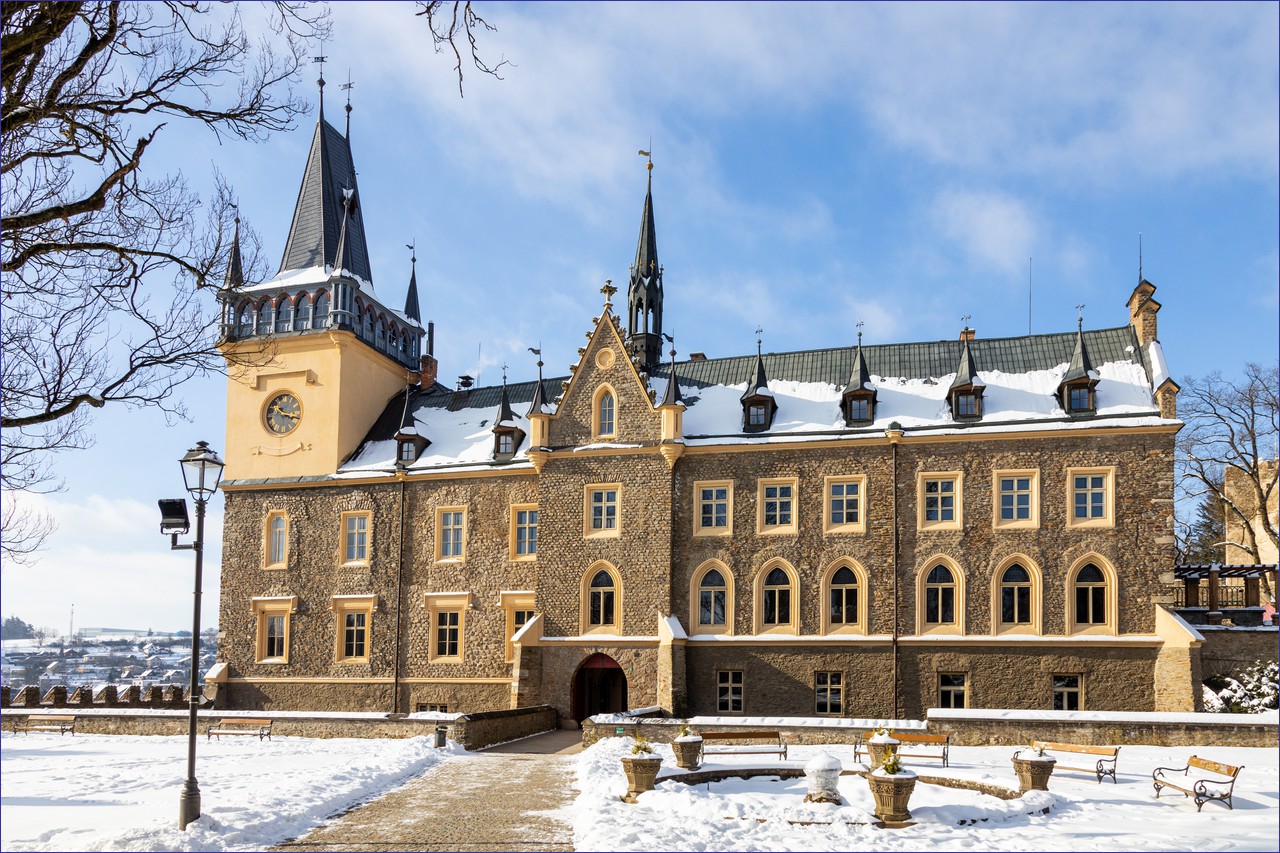
Zruč nad Sázavou – a small town on the Sázava River. The town’s principal monument is a large château, originally a medieval castle and later rebuilt in Neo-Gothic style. Various aristocratic owners influenced the development and appearance of the château. The extensive château park grounds contain mature trees and recreational paths. A pedestrian footbridge across the Sázava provides attractive views of the river and surrounding countryside.
Ledeč nad Sázavou – a small town in the Vysočina Region, situated on the Sázava River in the scenic Posázaví landscape. It is best known for its imposing medieval castle, river valley scenery and connections with Czech glassmaking and the writer Jaroslav Foglar. The river flows directly through the town and gives Ledeč much of its picturesque character. The town centre is protected as an urban monument zone and contains numerous historic buildings. Ledeč Castle is the dominant landmark. It stands dramatically on a limestone promontory above the Sázava. Its origins are Gothic, while later owners added Renaissance and Baroque elements. The cylindrical tower is about 32 metres high. Visitors can climb its 111 steps for panoramic views of the Sázava valley. The castle houses a museum with collections relating to local history, crafts, glass, porcelain, clocks, coins, weapons and paintings. Nearby Stvořidla, a scenic rocky section of the Sázava valley, is one of the most attractive natural destinations in the area.