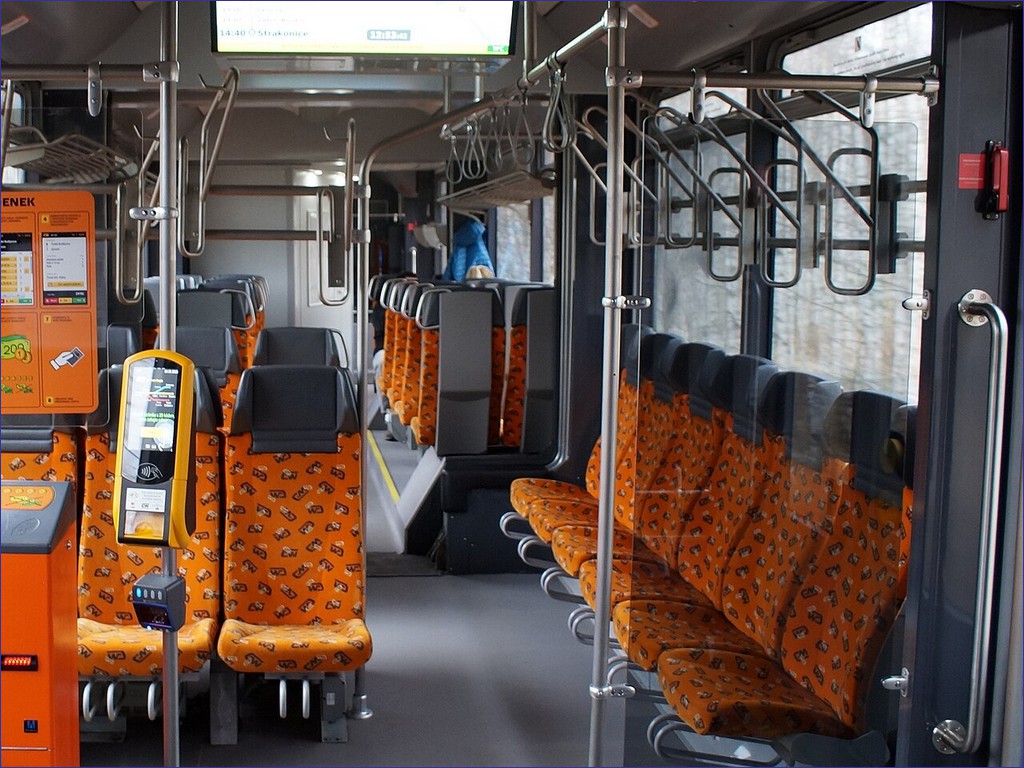
Train from Strakonice to Volary is a local train in South Bohemia. The train connection is operated by GW Train Regio. The railway line pass through picturesque towns and village in Šumava region.
The ride is slow but the railway line is scenic.
The connection is served by old diesel multiple units. These trains are equipped with air-conditioning, vacuum toilet and designated spaces for bikes and wheelchairs. Trains run every day all year round.
The train from Strakonice to Volary is sometimes called “Šumava Express” but the name is primarily used for popular trains České Budějovice – Nové Údolí also operated by GW Train Regio.
The train stops at Kubova Huť – the highest railway station in the Czech Republic.
Useful websites:
GW Train Regio – timetable
Train travel in the Czech Republic – a general overview
Most important stations:
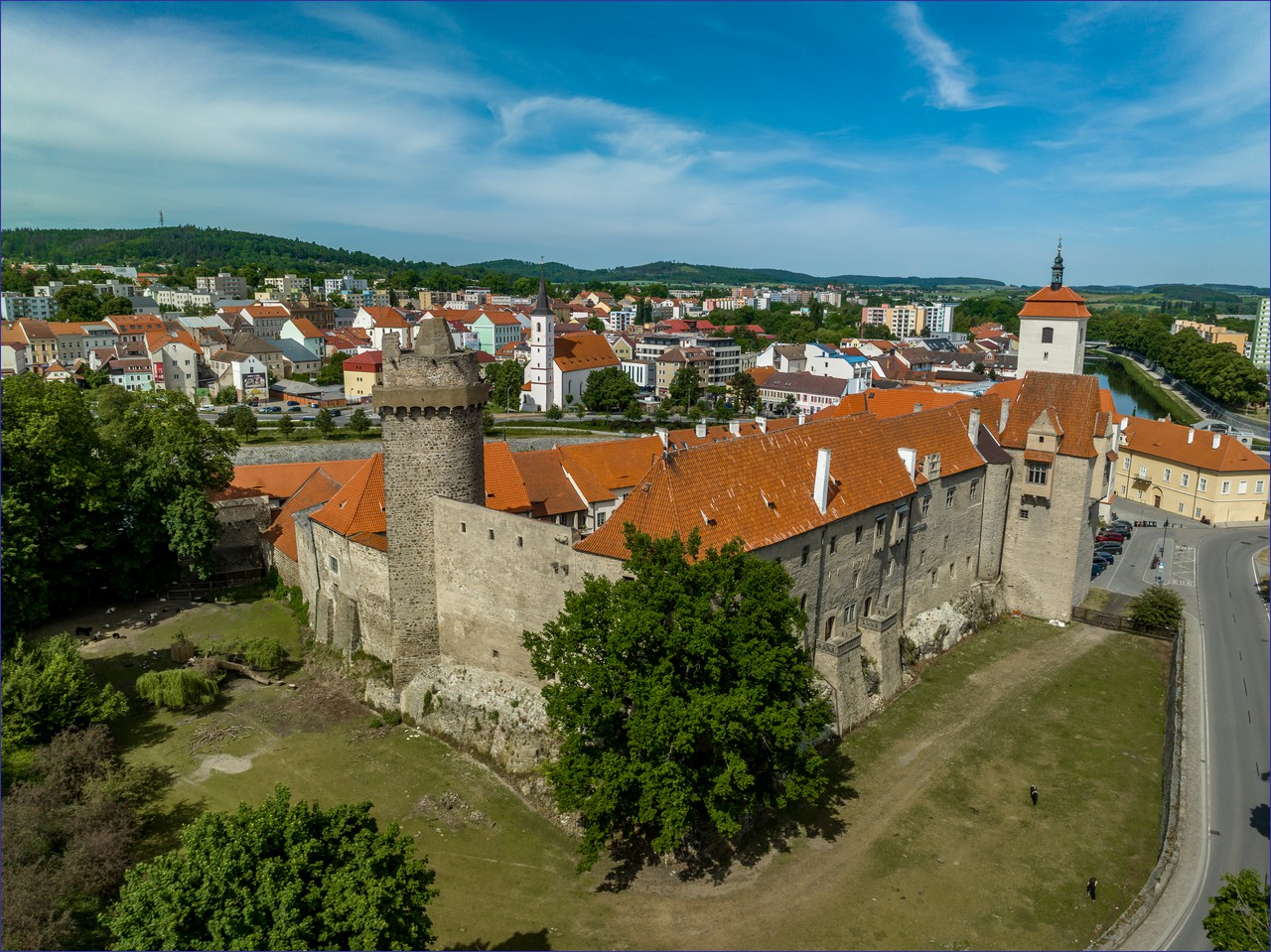
Strakonice – a town on the Otava River and an important railway junction. The town’s main landmark is a medieval castle situated at the confluence of the Otava and Volyňka rivers. The castle was an important seat of the Order of St. John (Knights Hospitaller). It contains the Church of St. Procopius and a distinctive tower. Strakonice is famous for its traditional Czech bagpipe culture. The town hosts the International Bagpipe Festival. Most of the historic city centre was demolished during 60’s. Strakonice historically developed an important textile industry. The town was also known for the production of ČZ motorcycles, manufactured by Česká zbrojovka Strakonice.
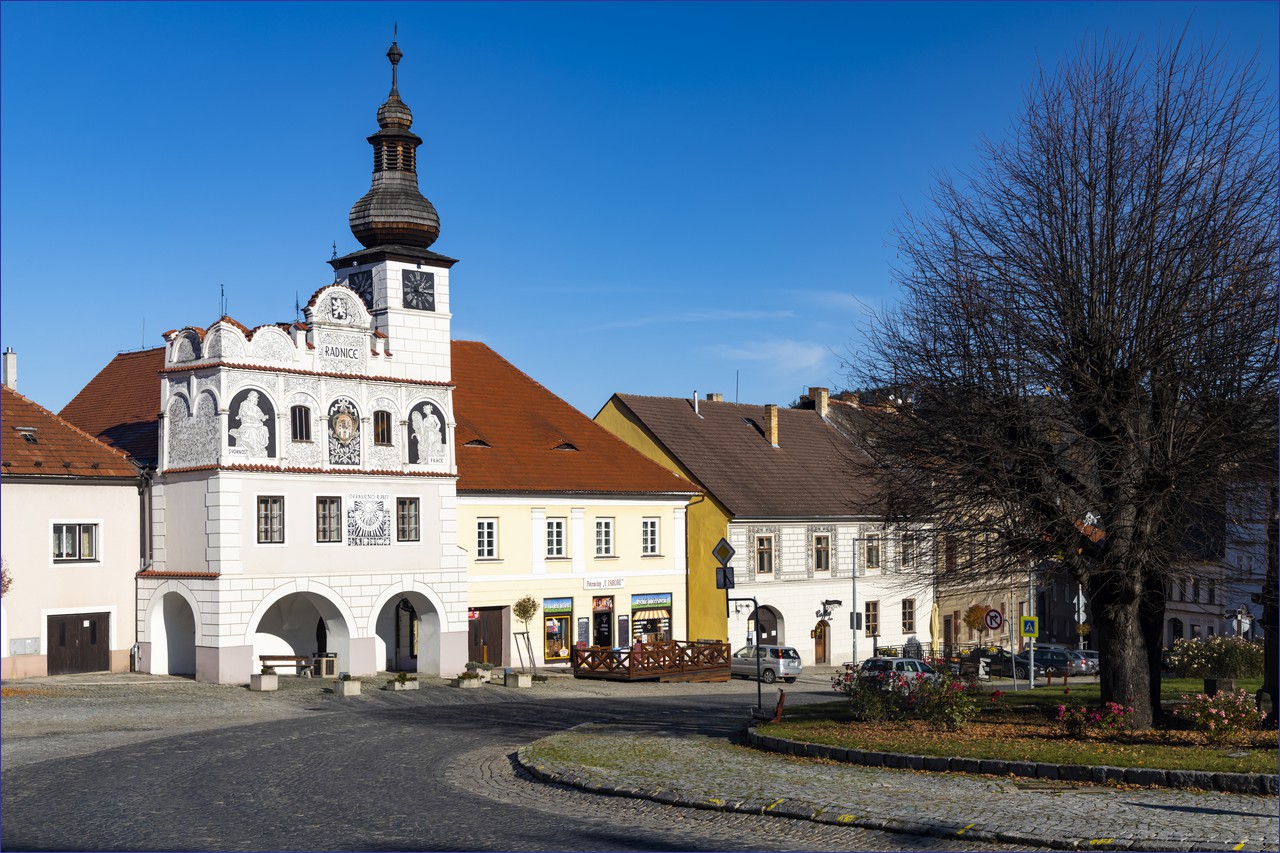
Volyně – a small town on the Volyňka River, on the way from Strakonice towards Šumava. Main landmark is a Town Hall. The main square contains traditional houses and remnants of the town’s medieval fortifications. Volyně had a Jewish community for centuries. The former synagogue and Jewish cemetery are important reminders of this history. The town has an interesting museum presenting regional architecture and rural life. The surrounding countryside is suitable for walking and cycling.
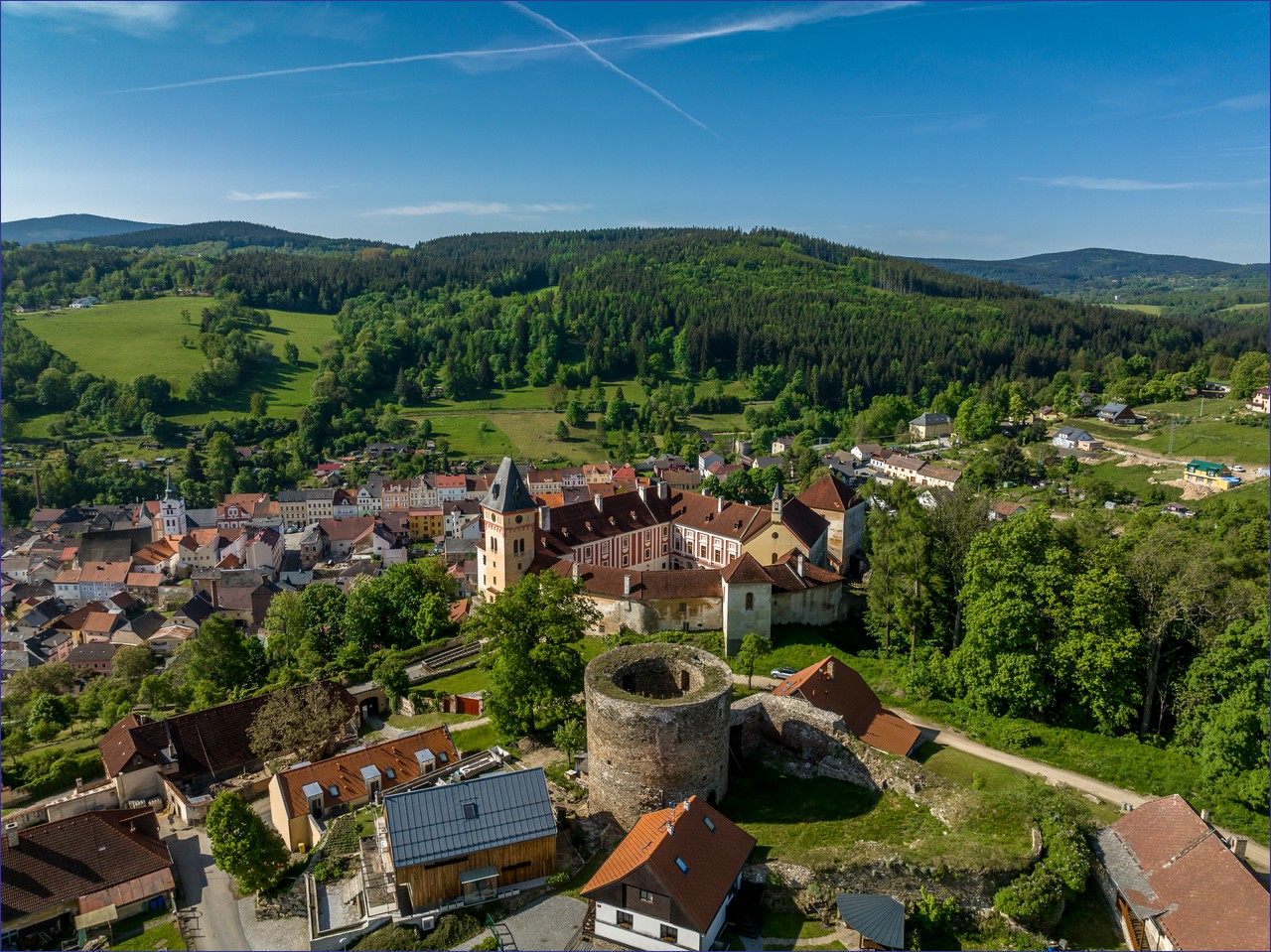
Vimperk – an interesting town in the foothills of Šumava and an important gateway to the national park. From the train windows you can see Vimperk Castle – most important landmark in the town. The castle dominates the town from a hill above the historic centre. It developed from a medieval castle into a Renaissance and Baroque residence. The city centre contains Renaissance and Baroque houses, churches and remnants of its medieval fortifications. Vimperk became famous for book printing from the late 15th century. The town was one of the earliest printing centres in Bohemia. Vimperk is situated close to the national park and is an excellent base for hiking and cycling. The famous Boubín Primeval Forest is located nearby and is one of the most valuable natural areas of Šumava.
Lenora – a small Šumava settlement in the upper Vltava valley, known for its forests, glassmaking heritage and railway location. Lenora was founded in connection with a glassworks established in the 19th century. The local glass industry played an important role in the development of the settlement. The village has exhibits documenting the traditional glassmaking industry of Šumava. One of Lenora’s curiosities is a historic communal bread oven, where traditional bread is still baked during special events. The upper Vltava flows through the area and is a popular destination for canoeing when water levels permit.
Volary – a 4,000 town in the heart of Šumava and one of the main gateways to the Czech-German border region. The town is famous for its distinctive large wooden houses, influenced by Alpine architecture. They are among the most characteristic examples of traditional Šumava architecture. Volary is an excellent starting point for exploring the national park and surrounding mountain landscapes. Numerous trails lead from Volary into the forests and mountain valleys.