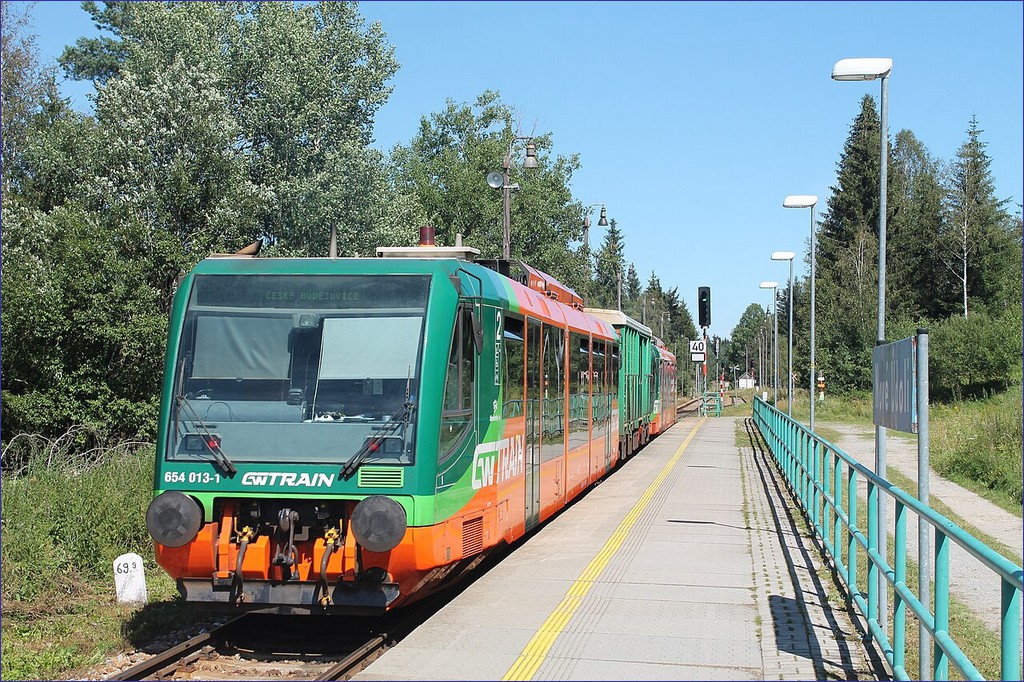
Šumava Express train (Šumavský expres) is a local train from České Budějovice to Nové Údolí. It runs every day and is operated by GW Train Regio. Šumava Express passes through picturesque areas of National Šumava Park and stops at many interesting stations near popular destinations, for example Český Krumlov. The length of the route is about 90 kilometers and travel time is 2 hours and 15 minutes.
The ride is slow but the railway line is scenic.
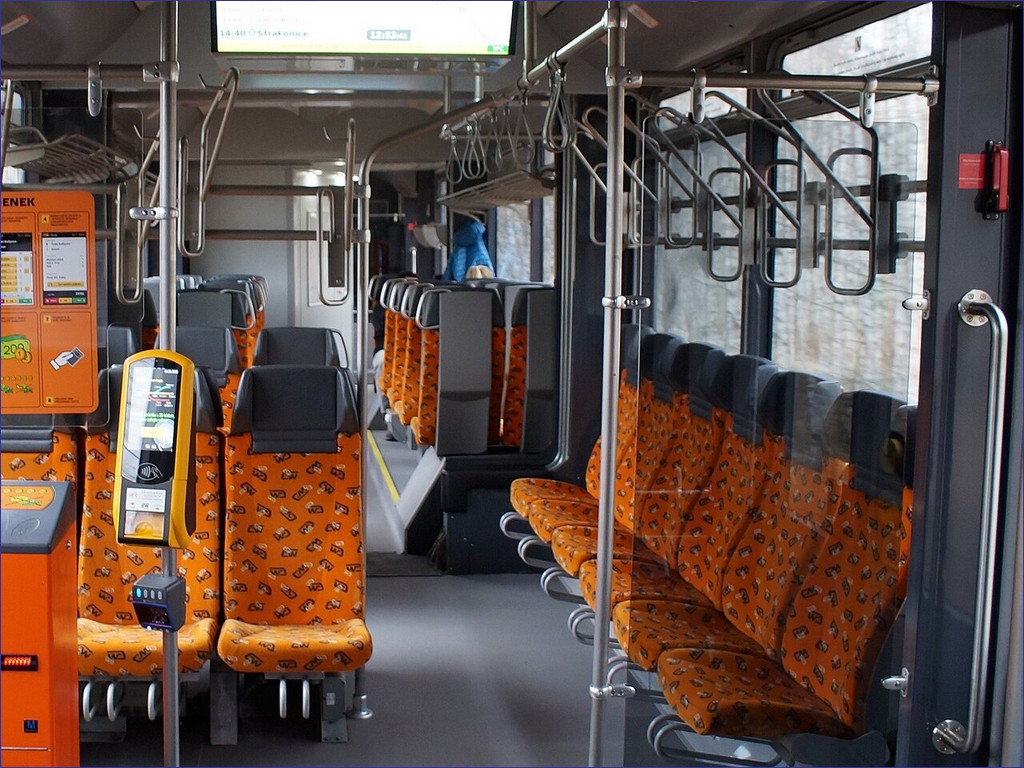
The connection is served by old diesel multiple units. These trains are equipped with air-conditioning, vacuum toilet and designated spaces for bikes and wheelchairs. During summer season on certain days special bike carriage is attached to the train.
Šumava Express name is used also for trains Strakonice – Volary and Číčenice – Nové Údolí also operated by GW Train Regio.
Useful websites:
GW Train Regio – timetable
Train travel in the Czech Republic – a general overview
Most important stations:
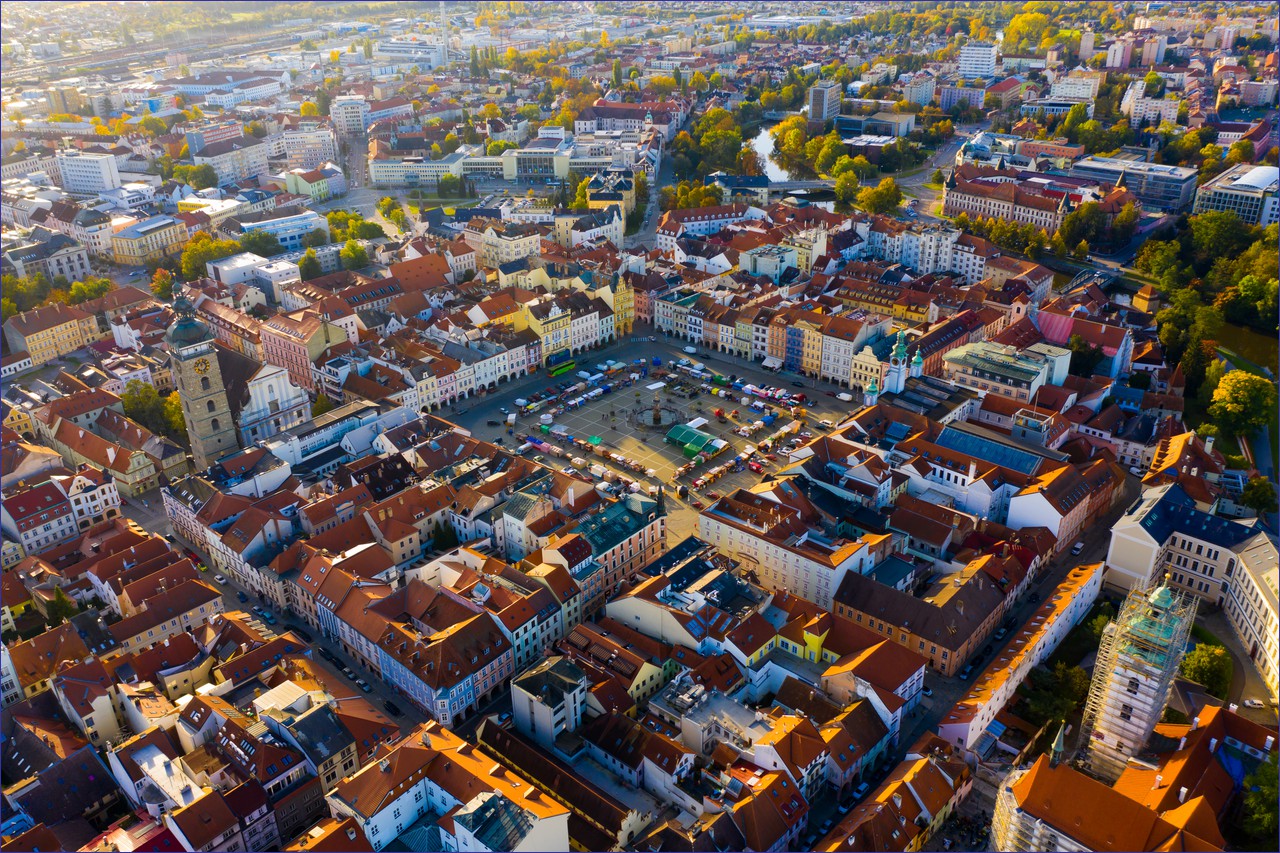
České Budějovice – the largest city in South Bohemia and the regional capital. It is a historic city at the confluence of the Vltava and Malše rivers, famous for its spacious main square, beer-brewing tradition and attractive old town. It’s a perfect destination for one-day train trip from Prague or a perfect starting point for one-day train trips. The medieval street layout has survived remarkably well, with Renaissance and Baroque houses surrounding the central square. Přemysl Otakar II Square is one of the largest medieval squares in Europe, measuring roughly 133 × 133 metres. In the middle of the square stands monumental Baroque Samson’s Fountain. Nearby the Černá věž (Black Tower) is a 16th-century bell and lookout tower. From the top there are excellent views over the historic centre and surrounding South Bohemian countryside. The Baroque Cathedral of St. Nicholad stands beside the Black Tower and forms one of the city’s most recognizable architectural ensembles. The former Dominican monastery, including the Church of the Presentation of the Virgin Mary, is among the oldest surviving complexes in the city. The two rivers, Vltava and Malše, meet in the city and provide pleasant riverside walking and cycling opportunities. České Budějovice is internationally famous for its brewing tradition, particularly Budweiser Budvar, known in Czechia as Budějovický Budvar. It’s possible to take a guided tour around the brewery. The South Bohemian Museum has extensive collections covering the history, archaeology, nature and culture of South Bohemia.
České Budějovice was the starting point of the famous Budweis–Linz horse-drawn railway, one of the earliest public railway systems on the European continent, opened in stages between 1827 and 1832. Today the city is one of the most important railway hubs in southern Czechia, with routes towards Prague, Plzeň, Český Krumlov, České Velenice, Tábor and Linz in Austria.
The railway station is located within walking distance from the Old Town.
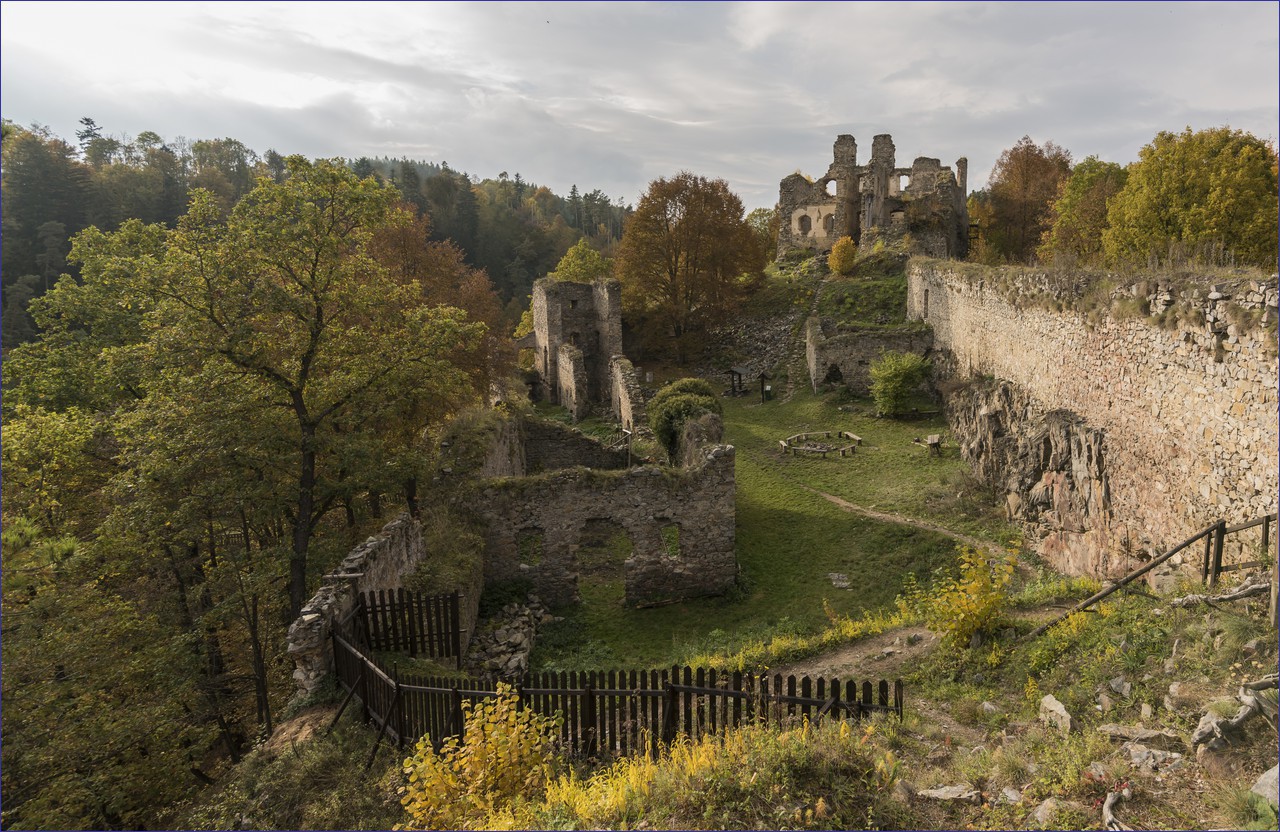
Dívčí Kámen Castle – one of the most impressive medieval castle ruins in southern Bohemia, situated on a rocky promontory above the Vltava, near the village of Třísov, west of Český Krumlov. The castle was founded in 1349 by the powerful Rožmberk (Rosenberg) family. Its location above the river gave the castle control over an important medieval route through southern Bohemia. Massive Gothic walls, towers and other remains survive, giving visitors a good impression of the castle’s former size. The castle was abandoned in the 16th century and gradually fell into ruin. The ruins are surrounded by the Blanský les Protected Landscape Area, with forests and rocky valleys. Dívčí Kámen is accessible by marked hiking trails, particularly from Třísov, where is located a train station (approx. 2 km from the ruins)
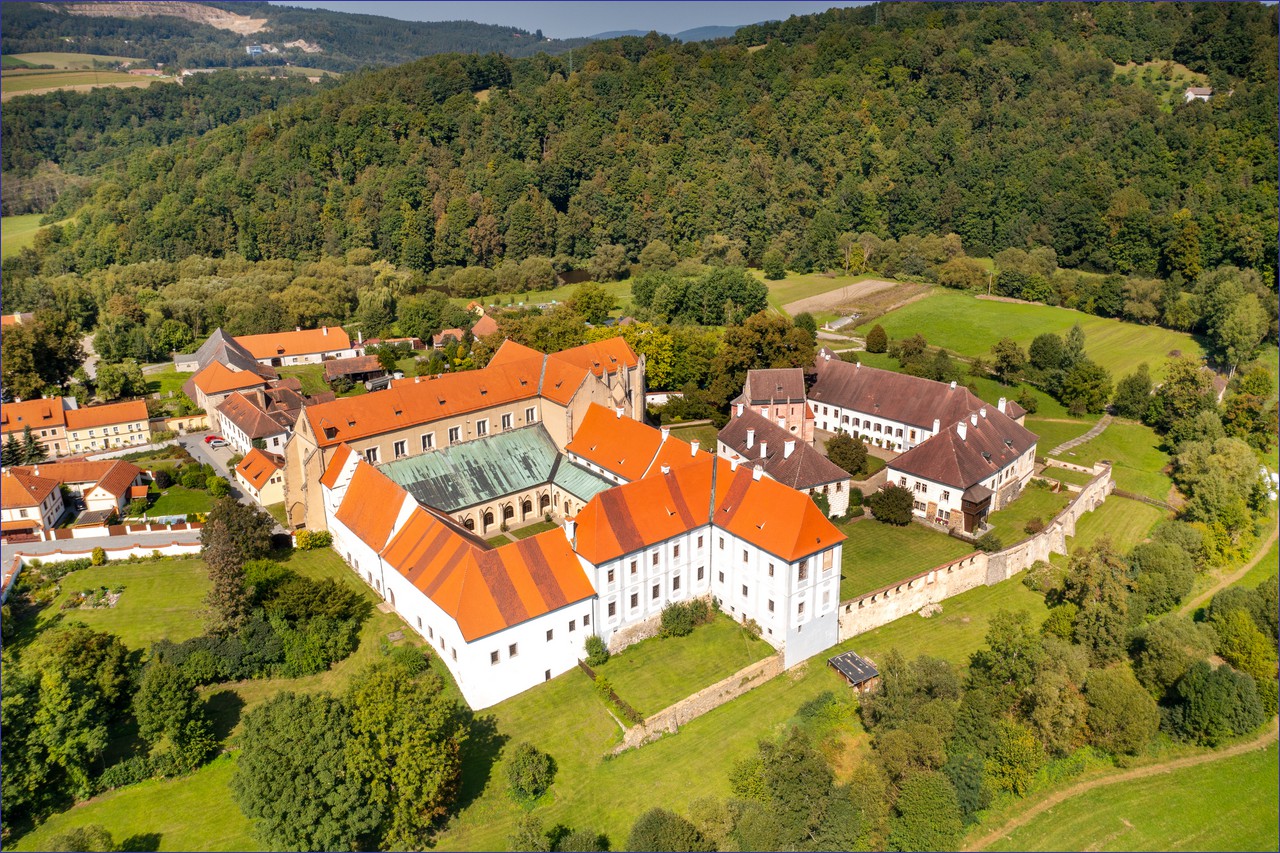
Zlatá Koruna Monastery – a remarkably preserved medieval Cistercian monastery in the village of Zlatá Koruna, north of Český Krumlov. The monastery was founded in 1263 by King Přemysl Otakar II. The monastery was abolished in 1785 during the reforms of Emperor Joseph II. The complex contains outstanding Gothic and Baroque buildings, including the monastery church and cloisters. The monastery preserves valuable historical collections and manuscripts. The surrounding landscape is characterized by forests, meadows and the winding Vltava.
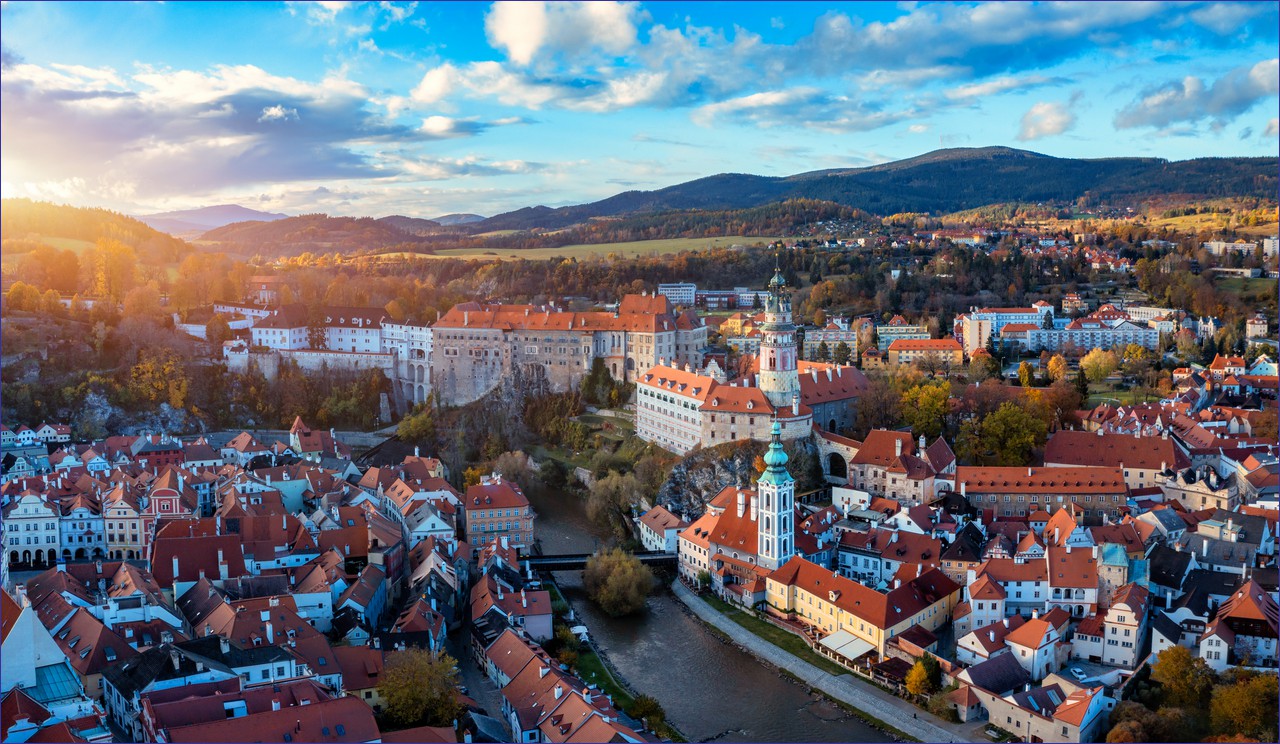
Český Krumlov – one of the best-preserved historic towns in Central Europe and the most famous tourist destination in southern Bohemia. The historic centre has been a UNESCO World Heritage Site since 1992. The enormous Český Krumlov Castle is one of the largest castle complexes in the Czech Republic. The castle contains one of the world’s best-preserved Baroque theatres, with original stage machinery and scenery. The colourful Renaissance-Baroque tower is one of the town’s most recognizable landmarks. The historic centre features Narrow medieval streets, Renaissance houses and Baroque buildings occupy the peninsula formed by the Vltava Canoeing and rafting on the river are popular activities in the surroundings. Český Krumlov is one of the most visited historic towns in the Czech Republic, although its popularity means the centre can become very crowded during summer.
Horní Planá – a small town on the shore of the Lipno Reservoir and an important recreational centre of the Šumava region. Horní Planá is the birthplace of Adalbert Stifter, the 19th-century Austrian writer and painter who described the landscape of the Šumava. The town has a memorial and museum dedicated to Stifter, including a monument on the nearby Stifter’s Hill.
The enormous Lipno Reservoir was created in the 1950s following the construction of the Lipno Dam on the Vltava. It is possible to do water sports: sailing, swimming, windsurfing, kayaking and other recreational activities, especially during summer. The town provides access to the forests and hiking routes of the Šumava region. Cycling routes around Lipno and through the surrounding countryside are particularly popular. In summer, ferry connections on Lipno can be used to reach other lakeside destinations.
Stožec – a small Šumava village surrounded by some of the most extensive forests in the Czech Republic. It has only a few hundred inhabitants. Stožec is situated within the national park and is surrounded by protected forests, meadows and mountain valleys. Chapel of Our Lady is a small wooden pilgrimage chapel stands near Stožec Rock and is accessible by a forest path. It is most popular attractions in this area. Stožec is an important starting point for marked hiking trails through the Šumava National Park.
Nové Údolí – a former border station. There is a short railway from the station which ends immediately beside the German border. It is known as a shortest international railway line in the world and is served by draisines.