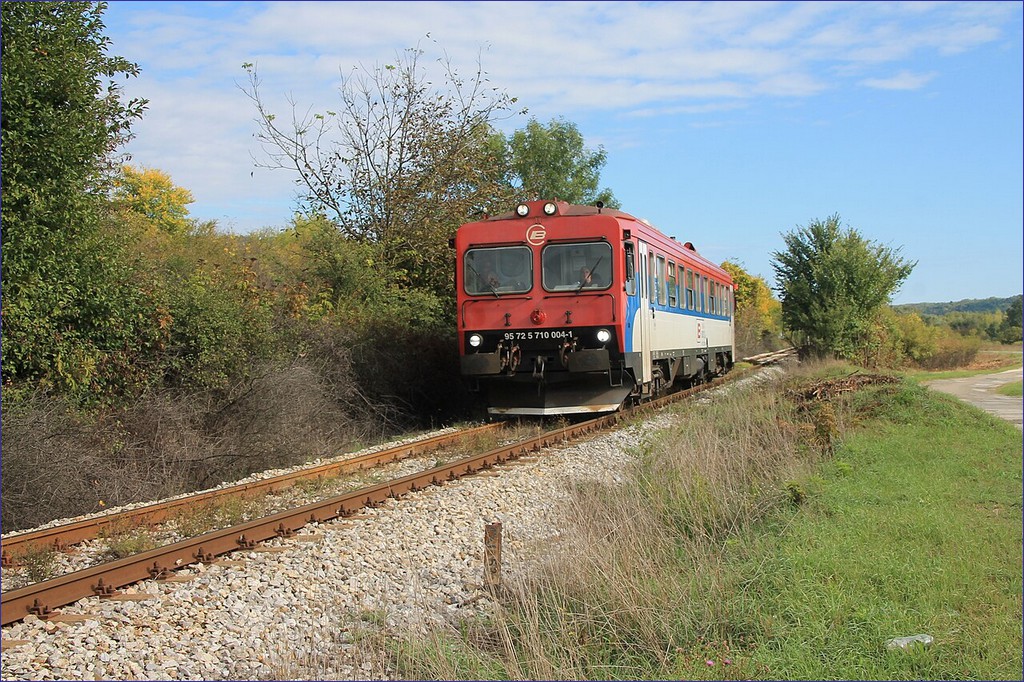
Train from Zaječar to Prahovo Pristanište is a regional train in the eastern Serbia. The railway ends at Prahovo Pristanište (Prahovo harbour) in the village Prahovo located on the river Danube at border with Bulgaria and Romania. There are believed to be about 200 Nazi ships on the floor of the Danube near Prahovo. In 2026 at least 20 World War II wrecks were visible to the naked eye from the banks of Prahovo.
There are plans to the construction of a 30-kilometre railway connection —2 kilometres of which would lie on Serbian territory—linking to the Mokranje border crossing.
The railway stop Kobišnica lies in short distance from the border with Bulgaria. The distance between the station and Bulgarian town of Bregovo is about 8 km.
Useful websites:
Srbija Voz – timetable
Train travel in Serbia – a general overview
Most important towns and cities:
Zaječar – the largest city in the Timok region of eastern Serbia. An average town with some interesting places. Zaječar is best known internationally for the nearby Roman archaeological site of Felix Romuliana. Felix Romuliana was a magnificent imperial palace complex built by Emperor Galerius, who was born in the region. The archaeological complex contains monumental walls, towers, gates, palaces, mosaics and religious buildings. Zaječar has an important local museum, the National Museum of Zaječar, which presents the archaeological and historical heritage of the region. The town is also famous for the Gitarijada, one of the oldest rock music festivals in Serbia and Zaječarsko beer. The surrounding region is known for vineyards and wine production, particularly around the Negotin area.
Rajac – a village famous for the old cemetery – one of the most unusual historical sites in eastern Serbia. It lies near the famous Rajac wine cellars (Rajačke pimnice). The cemetery contains distinctive old stone tombstones (stećak-like or local forms), many of them decorated with carvings. The cemetery is historically connected with the nearby wine-growing settlement and the local communities that lived in the region for generations. Some tombstones feature crosses, human figures, floral motifs, tools and other symbols, providing valuable evidence about local traditions and beliefs. The cemetery is particularly atmospheric because it is surrounded by vineyards and rolling hills. It is located close to the Rajačke pimnice, a remarkable complex of traditional stone wine cellars.
Negotin – a town in eastern Serbia, close to the borders with Romania and Bulgaria. It is particularly famous for its wine-growing tradition and association with the Serbian composer Stevan Mokranjac. The Mokranjac Memorial House commemorates the composer and his connection with Negotin. Negotin is famous for the traditional wine cellars known as pimnice. Negotin’s location near the Danube makes it part of an important cross-border region connecting Serbia, Romania and Bulgaria.