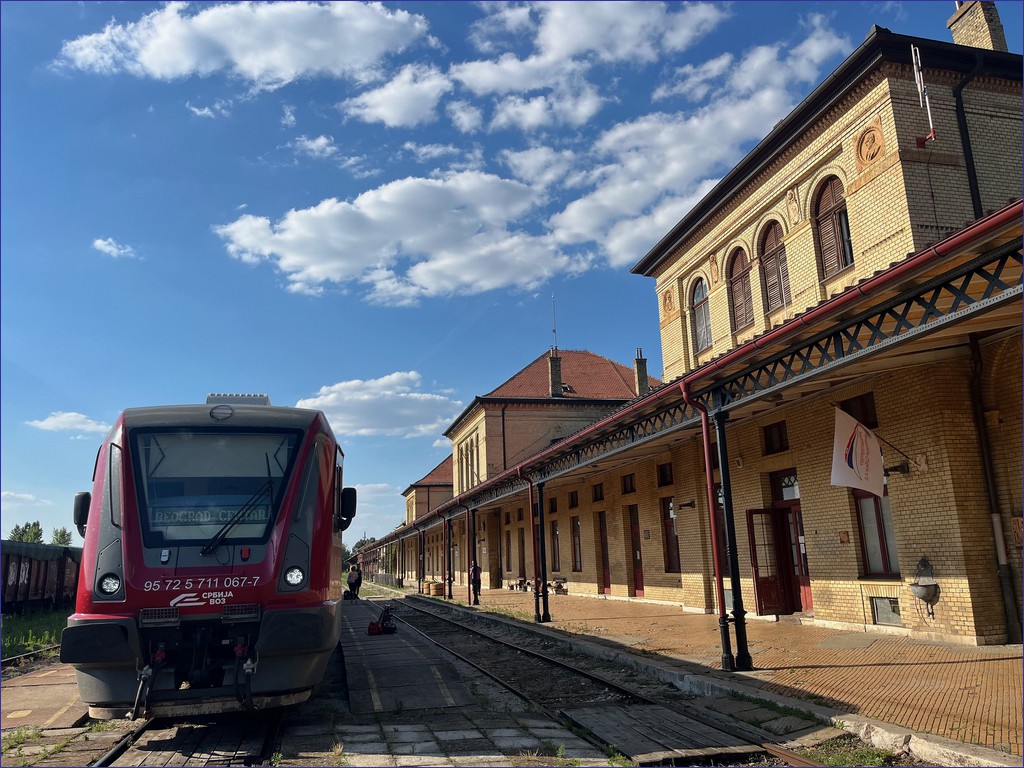
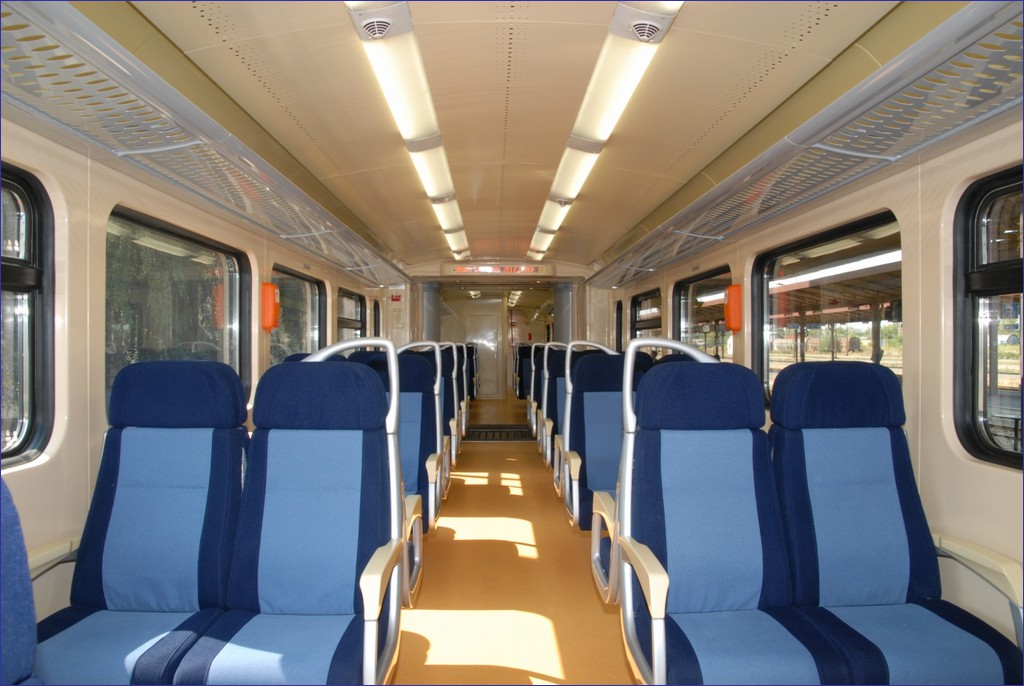
Train from Belgrade to Vršac is a regional train connection between the capital of Serbia and town situated at the border with Romania. The railway line is in my opinion better than average, the train speed is decent. The connection is served by Russian-made diesel multiple units of Srbija Voz. The trains usually start and end at Zemun station on the outskirts of Belgrade, stop at Belgrade Centar station and continue their ride towards Pančevo. There are local trains from Pančevo to Zrenjanin but in fact, sometimes these trains don’t run even if the official timetable of Srbija Voz shows them.
Useful websites:
Srbija Voz – timetable
Train travel in Serbia – a general overview
Most important towns and cities:
Belgrade – the capital and largest city of Serbia, situated at the confluence of the Sava and Danube rivers. The most famous historical landmark is Belgrade Fortress, surrounded by Kalemegdan Park. The site contains remains from Roman, Byzantine, medieval Serbian, Ottoman and Austro-Hungarian periods. Belgrade became the capital of modern Serbia in the 19th century and has remained the country’s political, economic and cultural centre. The monumental Church of Saint Sava is one of the largest Orthodox churches in the world. Knez Mihailova Street is the principal pedestrian and shopping street in the historic centre.
Another popular attraction is Skadarlija, a historic bohemian quarter, is famous for traditional restaurants, cafés and its 19th-century atmosphere.
Belgrade is an important railway hub, although its railway network has been substantially transformed by the construction of the modern Belgrade–Novi Sad–Subotica high-speed line. Beograd Centar train station is located a quite far from the city centre.
Pančevo – an industrial city in southern Banat, immediately northeast of Belgrade, on the Tamiš River near its confluence with the Danube. The city developed into an important military, commercial and industrial centre. Pančevo’s historic centre contains numerous Baroque and 19th-century buildings reflecting its Habsburg heritage. One of its best-known landmarks is the Church of the Assumption of the Blessed Virgin Mary, a Roman Catholic church built in the 18th century. The Church of the Transfiguration of the Lord is an important Serbian Orthodox monument. Pančevo is also associated with Georg Weifert, one of the most important Serbian industrialists and brewers of the 19th and early 20th centuries.
Vršac – a historic town in southern Banat, close to the Romanian border. It is particularly famous for its vineyards, mountains and medieval fortress. The town lies at the foot of the Vršac Mountains, an isolated mountain range rising dramatically above the otherwise extremely flat Banat plain. The most famous landmark is Vršac Tower (Vršačka kula), a medieval fortress on a hill above the town. The fortress probably dates from the 15th century and is associated with the Hungarian–Ottoman frontier. The town’s historic centre contains attractive Baroque, Classicist and Secessionist buildings. The Cathedral of St Nicholas is one of the most prominent Serbian Orthodox churches in Vršac. The Roman Catholic Church of St Gerhard reflects the town’s historic German and Hungarian population. The Vršac City Museum contains archaeological, historical and artistic collections. There is also an Old Chemistry.
Near the Vršac is located a small town Bela Crkva where the first railway station on a territory present-day Serbia was opened. Currently there are no train to Bela Crkva, but you can take a bus from Vršac. Bela Crkva is best known today for the Bela Crkva Lakes, a group of artificial lakes created through gravel extraction. The lakes have become a popular destination for swimming, fishing, boating and camping. The Glavaš family house, historic churches and other buildings provide evidence of the town’s Habsburg-era heritage.